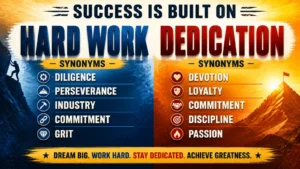
The closest everyday words for hard work are effort, lobar, toil, and diligence. Each one fits a slightly different case. Effort is neutral. Toil sounds heavy and tiring. Diligence praises careful, steady work.
The best choice depends on what you want to say. Some words stress body strain, and others stress mental focus or a strong work ethic. A few are casual or tired in tone.
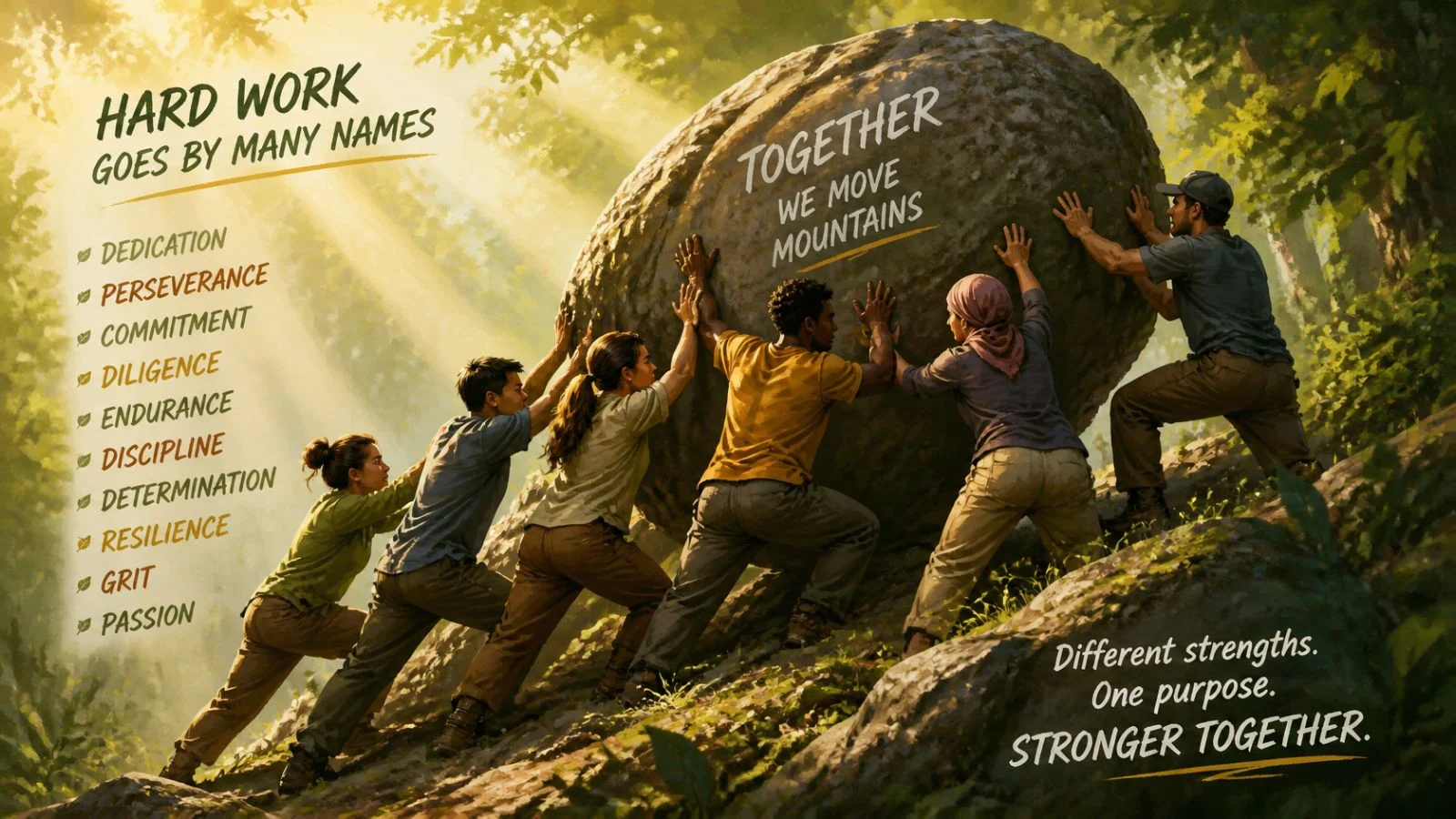
Quick list: effort, labor, toil, diligence, industry, perseverance, dedication, exertion, grind, elbow grease
This article covers 30 alternatives. Each one has an IPA guide, a simple meaning, a usage note, and an example.
At a Glance: Hard Work Synonyms and Related Alternatives
| Alternative | Part of Speech | Meaning | Register / Tone | Ideal Context |
| Diligence | Noun | Careful, steady work | Formal, positive | Praising a worker |
| Effort | Noun | Energy put into a task | Neutral | Everyday use |
| Labor | Noun | Physical or paid work | Neutral to formal | Jobs, trades, history |
| Toil | Noun, verb | Long, tiring work | Literary, heavy | Hard or painful work |
| Exertion | Noun | Strong physical or mental effort | Formal | Sport, health, science |
| Drudgery | Noun | Dull, tiring work | Negative | Boring chores |
| Perseverance | Noun | Not giving up | Formal, positive | Long goals |
| Dedication | Noun | Strong loyalty to a task | Positive | Career, study |
| Grind | Noun | Tiring daily work | Informal | Routine jobs |
| Elbow grease | Noun | Strong physical effort | Informal | Cleaning, repairs |
Which Word Should You Use?
| If you want to… | Use | Why |
| Praise careful, steady work | Diligence | It shows care and focus. |
| Describe any task that takes energy | Effort | It is neutral and common. |
| Show that work is long and painful | Toil | It stresses strain and tiredness. |
| Talk about boring daily tasks | Drudgery | It shows the work is dull. |
| Praise someone who never quits | Perseverance | It is about staying with a goal. |
| Talk about hard physical cleaning | Elbow grease | It is casual and friendly. |
| Describe a tiring job routine | Grind | It sounds informal and a little tiring. |
| Write in a formal report | Exertion | It suits science and health topics. |
Exploring the Multiple Meanings of “Hard Work”
1. Physical Effort
- Meaning: Work that uses the body and leaves you tired.
- Explanation: This sense is about strength and stamina. It also covers farm, building, and factory jobs.
- Example: Digging the garden was hard work in the summer heat.
2. Mental Effort
- Meaning: Work that needs deep thought and focus.
- Explanation: This sense covers study, writing, and problem solving. The body may stay still, but the mind works hard.
- Example: Learning a new language takes hard work every single day.
3. Steady Effort Over Time
- Meaning: Work that continues for weeks, months, or years.
- Explanation: Here the length of the effort matters most. It also shows that results come slowly.
- Example: Her fitness came from months of hard work at the gym.
4. Tiring or Dull Work
- Meaning: A task that feels heavy, slow, or boring.
- Explanation: This sense is often a complaint. People use it when a job is not fun.
- Example: Sorting those old files was hard work, and nobody enjoyed it.
5. A Strong Work Ethic
- Meaning: A habit of working with care and energy.
- Explanation: This sense praises a person’s character. It often appears in school and job settings.
- Example: His hard work earned him a place on the team.
Sources: Merriam-Webster Dictionary; Collins English Dictionary; Dictionary.com
Analyzing 30 Hard Work Alternatives in Detail
Some words below are direct synonyms. Others are related alternatives that fit only certain cases.
Core Synonyms
1. Diligence
IPA: (US and UK) /ˈdɪlɪdʒəns/
Definition: Diligence means careful and steady work. It also shows a person cares about the task.
- Usage: This is a close synonym. However, it stresses care more than strain.
- Example: The nurse checked every chart with great diligence.
2. Effort
IPA: US /ˈɛfərt/ · UK /ˈefət/
Definition: Effort means the energy you put into a task. It also covers mental work.
- Usage: This is a neutral, common synonym. Still, it does not say the work was long or tiring.
- Example: She made a real effort to finish the project early.
3. Labor
IPA: US /ˈleɪbər/ · UK /ˈleɪbə/
Definition: Labor means work, often physical or paid. It also names the workers as a group.
- Usage: This is a direct synonym for physical work. Also, Britons write it as “labour.”
- Example: The farm needed a lot of labor at harvest time.
4. Toil
IPA: (US and UK) /tɔɪl/
Definition: Toil means long, tiring work. It also suggests pain or strain.
- Usage: This is a strong synonym. In fact, it sounds literary and a little heavy.
- Example: The miners faced years of toil for very little pay.
5. Industry
IPA: (US and UK) /ˈɪndəstri/
Definition: Industry means steady, busy work. It also shows a habit of staying active.
- Usage: This sense is older and formal. Still, people rarely use it this way today.
- Example: The class praised the student’s industry throughout the year.
Strenuous Effort
6. Exertion
IPA: US /ɪɡˈzɝːʃən/ · UK /ɪɡˈzɜːʃən/
Definition: Exertion means a burst of strong effort. It also covers hard breathing and tired muscles.
- Usage: This is a formal synonym. However, it often fits sport and health topics.
- Example: The climb left him tired after hours of exertion.
7. Slog
IPA: US /slɑːɡ/ · UK /slɒɡ/
Definition: A slog is a long, hard stretch of work. It also feels slow and tiring.
- Usage: This is an informal, related word. In fact, it often shows a lack of joy.
- Example: Writing the report was a long slog.
8. Grind
IPA: (US and UK) /ɡraɪnd/
Definition: A grind is dull work you repeat every day. It also wears people down.
- Usage: This is an informal, related word. However, it can sound negative.
- Example: He quit the daily grind to start his own shop.
9. Drudgery
IPA: (US and UK) /ˈdrʌdʒəri/
Definition: Drudgery means dull, boring work. It also shows a task with no reward.
- Usage: This is a related word, not an exact synonym. It stresses boredom, so it is negative.
- Example: She hated the drudgery of washing dishes all day.
10. Sweat
IPA: (US and UK) /swɛt/
Definition: Sweat can mean hard work that tires the body. It also works as a casual image.
- Usage: This is a related, informal sense. For example, people say “blood, sweat, and tears.”
- Example: They put a lot of sweat into building the house.
Persistent Character
11. Perseverance
IPA: US /ˌpɝːsəˈvɪrəns/ · UK /ˌpɜːsɪˈvɪərəns/
Definition: Perseverance means staying with a goal. It also means you keep going when things get hard.
- Usage: This is a related word. However, it is about not quitting, not about the work itself.
- Example: Her perseverance helped her pass the final exam.
12. Persistence
IPA: US /pərˈsɪstəns/ · UK /pəˈsɪstəns/
Definition: Persistence means you keep trying and do not stop. It also shows firm will.
- Usage: This is a related word. Still, it can sound stubborn in some cases.
- Example: His persistence finally won him the job.
13. Determination
IPA: US /dɪˌtɝːməˈneɪʃən/ · UK /dɪˌtɜːmɪˈneɪʃən/
Definition: Determination means a firm choice to reach a goal. It also shows strong will.
- Usage: This is a related word. It is about driving, so it does not describe the work.
- Example: With great determination, she learned to swim.
14. Dedication
IPA: (US and UK) /ˌdɛdɪˈkeɪʃən/
Definition: Dedication means you give time and care to a task. It also shows deep loyalty.
- Usage: This is a positive, related word. In fact, bosses often use it in praise.
- Example: The coach thanked the team for their dedication.
15. Commitment
IPA: (US and UK) /kəˈmɪtmənt/
Definition: Commitment means a promise to stay with a task. It also shows steady loyalty.
- Usage: This is a related word. However, it stresses the promise more than the labor.
- Example: Their commitment to the project never faded.
Formal and Literary Alternatives
16. Assiduity
IPA: US /ˌæsɪˈduːəti/ · UK /ˌæsɪˈdjuːɪti/
Definition: Assiduity means close and constant care in work. It also shows steady focus.
- Usage: This is a rare, formal synonym. Still, plain words like “diligence” work better today.
- Example: The scholar worked with assiduity on her thesis.
17. Application
IPA: (US and UK) /ˌæplɪˈkeɪʃən/
Definition: Application means steady focus on a task. It also shows effort over time.
- Usage: This is a formal, older sense. However, most people now think of job forms first.
- Example: His application to his studies impressed the teachers.
18. Endeavor
IPA: US /ɪnˈdɛvər/ · UK /ɪnˈdevə/
Definition: Endeavor means a serious try or effort. It also names a big project.
- Usage: This is a formal, related word. Also, Britons write it as “endeavour.”
- Example: Building the bridge was a huge endeavor.
19. Travail
IPA: US /trəˈveɪl/ · UK /ˈtræveɪl/
Definition: Travail means painful, hard work. It also means deep suffering.
- Usage: This is a literary synonym. In fact, you will mostly see it in books.
- Example: The workers remembered the travail of building the railroad.
20. Striving
IPA: (US and UK) /ˈstraɪvɪŋ/
Definition: Striving means trying hard to reach a goal. It also shows steady hope.
- Usage: This is a related, literary word. However, it is about the aim, not the task.
- Example: Their striving for a better life inspired many people.
Informal and Practical Alternatives
21. Elbow Grease
IPA: US /ˈɛlboʊ ɡriːs/ · UK /ˈelbəʊ ɡriːs/
Definition: Elbow grease means strong physical effort. It also suggests rubbing or scrubbing.
- Usage: This is an informal synonym. Still, people mostly use it for cleaning and repairs.
- Example: A little elbow grease made the old table shine.
22. Graft
IPA: US /ɡræft/ · UK /ɡrɑːft/
Definition: Graft means hard work, mostly in British English. It also names a tough job.
- Usage: This is a casual British synonym. However, in US English it often means something else.
- Example: He got the job through years of hard graft.
23. Legwork
IPA: US /ˈlɛɡwɜːrk/ · UK /ˈleɡwɜːk/
Definition: Legwork means the tiring tasks of checking and gathering facts. It also covers walking and visiting.
- Usage: This is a related word. For example, reporters and sales staff do a lot of legwork.
- Example: The team did the legwork before the big meeting.
24. Grunt Work
IPA: US /ˈɡrʌnt wɜːrk/ · UK /ˈɡrʌnt wɜːk/
Definition: Grunt work means dull, routine tasks. It also means jobs nobody wants.
- Usage: This is a casual, related word. However, it often sounds negative.
- Example: The new intern did all the grunt work.
25. Hustle
IPA: (US and UK) /ˈhʌsəl/
Definition: Hustle means fast, eager work. It also shows a drive to get ahead.
- Usage: This is an informal, related word. Still, its meaning changes with the setting.
- Example: Her hustle helped her build a small business.
Related Qualities
26. Tenacity
IPA: US /təˈnæsəti/ · UK /təˈnæsɪti/
Definition: Tenacity means a firm hold on a goal. It also shows you do not give up.
- Usage: This is a related word. However, it names the trait, not the work.
- Example: Her tenacity got her through the long trial.
27. Zeal
IPA: (US and UK) /ziːl/
Definition: Zeal means strong energy and keen interest. It also drives people to work hard.
- Usage: This is a related, formal word. In fact, it shows the heart more than strain.
- Example: He took on the new job with zeal.
28. Drive
IPA: (US and UK) /draɪv/
Definition: Drive means a strong inner push to do well. It also shows a love of goals.
- Usage: This is a related word. Still, it shows motive more than action.
- Example: Her drive pushed her to practice every morning.
29. Grit
IPA: (US and UK) /ɡrɪt/
Definition: Grit means courage and the will to keep going. It also shows toughness.
- Usage: This is a related, casual word. However, it names a trait, not the work.
- Example: The runner showed real grit in the last mile.
30. Resolve
IPA: US /rɪˈzɑːlv/ · UK /rɪˈzɒlv/
Definition: Resolve means a firm choice to act. It also shows steady strength.
- Usage: This is a related, formal word. In short, it supports hard work but does not mean it.
- Example: Their resolve grew stronger after each setback.
Sources: Merriam-Webster Dictionary and Thesaurus; Collins English Dictionary and Collins Thesaurus; Dictionary.com
Hard Work vs. Diligence vs. Drudgery
These three words often get mixed up. They all link to effort, but each has its own tone.
| Word | Main Idea | Tone | Example |
| Hard work | Work that takes energy | Neutral to positive | Her hard work paid off. |
| Diligence | Careful, steady work | Positive | He checked the data with diligence. |
| Drudgery | Dull, tiring work | Negative | Filing papers felt like drudgery. |
First, pick hard work for general use. Next, choose diligence to praise care. Finally, use drudgery when the work feels dull.
Sources: Merriam-Webster Dictionary; Collins English Dictionary
Hard Work and Opposite/Paired Word Pairs
| Word | Paired Word | Note |
| Hard work | Laziness | The most common opposite. |
| Hard work | Idleness | Shows doing nothing. |
| Hard work | Easy work | Compare the size of the effort. |
| Hard work | Smart work | A contrast of method, not a true opposite. |
| Diligence | Negligence | Careful work against careless work. |
| Toil | Rest | Work against a break. |
| Effort | Ease | Strain against comfort. |
Some pairs are true opposites. Others, like smart work, are only a contrast. Also, people often use “hard work” with “dedication” and “talent” as a set.
Sources: Merriam-Webster Thesaurus; Collins English Thesaurus
Common Word Partners of “Hard Work”
| Pattern | Common Partners | Example |
| Verb + hard work | put in, reward, recognize, take | The job takes a lot of hard work. |
| Adjective + hard work | sheer, honest, steady | Honest hard work builds trust. |
| Hard work + noun/phrase | and dedication, and patience | Success needs hard work and patience. |
| Hard work + verb | pays off, shows | Her hard work finally paid off. |
| Preposition + hard work | through, by, with | He won through hard work. |
| Time + hard work | years of, months of | Years of hard work built the farm. |
Sources: Collins English Dictionary; Merriam-Webster Dictionary
Idiomatic Phrases Featuring “Hard Work”
These are well-known expressions. Most are sayings, not strict idioms.
1. Hard work pays off
- Meaning: Effort brings good results in the end.
- Example: He studied all year, and his hard work paid off.
2. Work hard, play hard
- Meaning: A person works with full energy and then enjoys free time just as much.
- Example: The team believes in working hard, playing hard.
3. Hard work never hurt anyone
- Meaning: Working hard is good for you.
- Example: Grandpa always said hard work never hurt anyone.
4. All in a day’s work
- Meaning: A task is normal for the job, even if it is hard.
- Example: Fixing the pipe was all in a day’s work.
Sources: Merriam-Webster Dictionary; Collins English Dictionary; Dictionary.com
Word Formation of “Hard Work”
Etymology & Structure
“Hard work” joins two old English words. “Hard” comes from Old English. “Work” comes from Old English weorc. Both come from older Germanic roots.
Date and History
Both words date back to Old English. As a two-word phrase, “hard work” is a plain adjective and noun pair. It is not a fixed compound.
Word Class Variations
- Noun: hard work, hard worker
- Adjective: hardworking, hard-working
- Verb phrase: work hard
- Adverb: hard (as in “she works hard”)
Sources: Etymonline; Merriam-Webster Dictionary; Collins English Dictionary
Common Word-Choice Mistakes
- Strong hard work: sheer hard work or a lot of hard work.
- Make hard work: do hard work or put in hard work.
- Hard working as a noun: write “hard worker” for a person.
- Toil for a short task: use effort or work instead.
- Drudgery as praise: it is negative, so choose diligence.
- Labour in US writing: US English uses “labor.”
- Perseverance as a task: it names a trait, not the work itself.
Frequently Asked Questions
What is the closest synonym for hard work?
Effort is the closest everyday synonym. Labor and toil also fit many cases.
What is a formal alternative to hard work?
Diligence and exertion suit formal writing. Assiduity is also formal but rare.
What is a literary word for hard work?
Toil and travail are literary choices. You will mostly find them in books and poems.
What is the opposite of hard work?
Laziness is the most common opposite. Idleness also works well.
What is the difference between toil and effort?
Effort is neutral and covers any task. Toil also shows pain and long hours.
Is drudgery a synonym for hard work?
Not exactly. Drudgery means dull and boring work, so it is more negative.
What is an informal word for hard work?
Elbow grease, grind, and graft are casual choices. Each one fits a different case.
Can hard work describe mental effort?
Yes. Hard work covers study, writing, and thinking as well as body work.
Is perseverance the same as hard work?
No. Perseverance means you keep going. Hard work is about the energy you use.
Which word praises a worker best?
Diligence and dedication both praise a worker well. Pick diligence for care and dedication for loyalty.
Conclusion
The closest alternatives to hard work are effort, labor, toil, and diligence. These words cover most everyday cases. Rarer words like travail and assiduity suit formal or literary writing.
Context matters most. Toil and exertion show strain. Perseverance and grit show character. Drudgery and grind show tiring or dull work.
To choose well, first ask what you want to stress. Then pick the word that matches that point. Use the tables above as a quick guide.

Olivia Martin is a passionate writer who enjoys exploring English vocabulary, synonyms, and language tips to help readers improve their writing skills.
At PressivoMedia.com, Olivia shares helpful language resources and easy-to-understand content to make communication clearer and more effective.