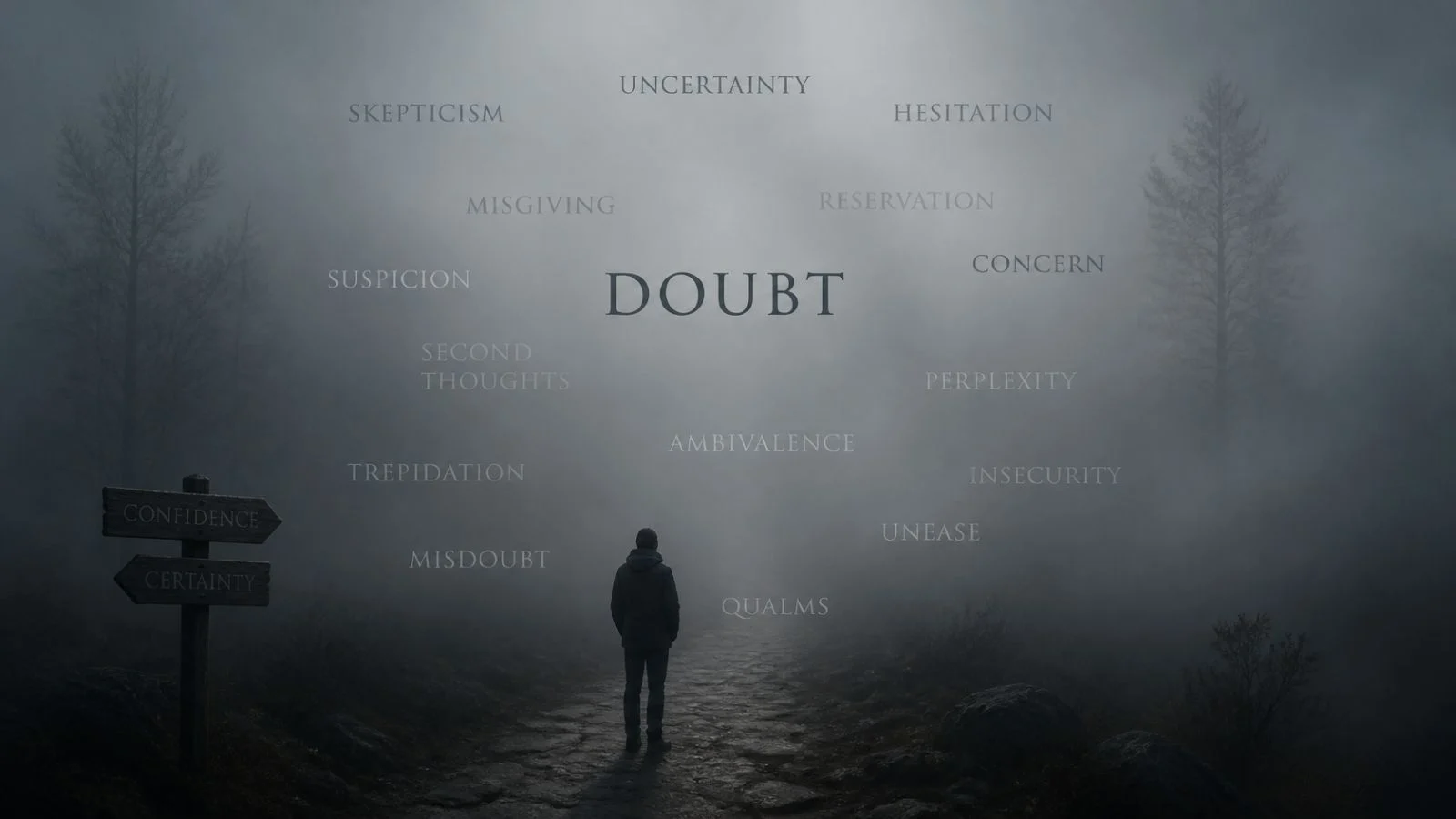
Uncertainty is the closest everyday word for doubt. Skepticism, mistrust, and suspicion also fit many cases. However, the best choice depends on context.
Doubt can mean not knowing, not trusting, or feeling uneasy. It can also be a verb, so some choices work as actions.
Quick list: uncertainty, skepticism, suspicion, misgiving, mistrust, hesitation, qualm, reservation, question, wariness
This guide covers 30 choices. Each one has a meaning, IPA, a usage note, and an example. You will also see tables, word pairs, and common mistakes.
At a Glance: Doubt Synonyms and Related Alternatives
| Alternative | Part of Speech | Meaning | Register / Tone | Ideal Context |
|---|---|---|---|---|
| Uncertainty | Noun | Not knowing what is true or what comes next | Neutral | General use |
| Skepticism | Noun | Asking for proof before you accept a claim | Neutral to formal | News, science, claims |
| Suspicion | Noun | A feeling that something is wrong | Neutral | Honesty and motives |
| Misgiving | Noun | A small worry about a plan | Slightly formal | Decisions, deals |
| Mistrust | Verb, noun | Lack of faith in someone | Neutral | People and sources |
| Hesitation | Noun | A pause caused by doubt | Neutral | Delay before acting |
| Qualm | Noun | A pang of unease about an act | Neutral to formal | Right and wrong |
| Reservation | Noun | A small doubt that limits approval | Polite, formal | Work and meetings |
| Question | Verb | To ask whether something is true | Neutral | Challenging facts |
| Wariness | Noun | Care taken because trouble may come | Neutral | Risk and danger |
Which Word Should You Use?
| If you want to… | Use | Why |
|---|---|---|
| Say you do not know the answer | Uncertainty | It is neutral and fits any open result. |
| Challenge a claim | Skepticism or question | Both focus on proof. |
| Show worry about honesty | Suspicion or mistrust | Both point to people and motives. |
| Voice a polite doubt at work | Reservation | It sounds calm and careful. |
| Show worry about a plan | Misgiving | It fits decisions that may fail. |
| Show guilt about an act | Qualm or scruple | Both involve right and wrong. |
| Show a pause before acting | Hesitation or reluctance | Both focus on the action. |
| Sound formal or literary | Dubiety or incertitude | These rare words have a polished tone. |
Exploring the Multiple Meanings of “Doubt”
1. Not being sure (noun)
- Meaning: A state of not knowing what is true or what will happen.
- Explanation: This is the most common sense. It often follows “no” or “little,” as in “no doubt.”
- Example: There is still some doubt about when the bridge will open.
2. A specific worry or objection (noun)
- Meaning: A particular reason to question a claim or plan.
- Explanation: People use the plural for several worries. The word then names the worry, not the state.
- Example: Several teachers raised doubts about the new test format.
3. To think something is unlikely (verb)
- Meaning: To believe that something is probably not true.
- Explanation: This sense often takes “that,” “if,” or “whether.” Also, “I doubt it” usually means “I think not.”
- Example: I doubt the store is open this late.
4. To lack trust in someone (verb)
- Meaning: To lack faith in a person’s word or skill.
- Explanation: This sense takes a person as its object. It sounds more personal than the sense above.
- Example: Nobody doubted her honesty after she returned the lost wallet.
5. An undecided state (in doubt)
- Meaning: A condition in which a result is not yet settled.
- Explanation: You often see it in phrases like “in doubt.”
- Example: The final score was in doubt until the last minute.
Sources: Merriam-Webster Dictionary, Collins English Dictionary, Dictionary.com
Analyzing 30 Doubt Alternatives in Detail
Some alternatives are direct synonyms, while others are related words for specific contexts.
Core Synonyms
1. Uncertainty
IPA: US /ʌnˈsɜːrtnti/ · UK /ʌnˈsɜːtnti/
Definition: You feel uncertainty when you do not know what is true or what comes next. It also covers a lack of clear answers.
- Usage: This is the closest everyday match. However, it feels softer than doubt and carries no sense of disbelief.
- Example: There is a lot of uncertainty about next year’s budget.
2. Skepticism
IPA: US /ˈskɛptɪˌsɪzəm/ · UK /ˈskɛptɪsɪzəm/
Definition: Skepticism is the habit of asking for proof before you accept a claim. It also shows a careful, testing mindset.
- Usage: It is a settled attitude, so it is stronger than a passing doubt. British writers spell it scepticism.
- Example: She viewed the miracle cure with healthy skepticism.
3. Suspicion
IPA: /səˈspɪʃən/ (US and UK)
Definition: Suspicion is a feeling that something is wrong or that someone did wrong. It also needs very little proof.
- Usage: This is a related alternative, not an exact synonym. However, it fits doubt about honesty or motives best.
- Example: The clerk looked at the strange coin with suspicion.
4. Misgiving
IPA: /mɪsˈɡɪvɪŋ/ (US and UK)
Definition: A misgiving is a small worry that a plan may go wrong. It also shows doubt you feel in advance.
- Usage: People often use the plural form. For example, you can say you have misgivings about a deal.
- Example: I had misgivings about signing the lease so quickly.
5. Hesitation
IPA: /ˌhɛzɪˈteɪʃən/ (US and UK)
Definition: Hesitation is a short pause caused by doubt or fear. It also shows that you are not ready to act.
- Usage: This is a related alternative because it names the pause, not the thought. It suits cases of delay.
- Example: She signed the form without a moment of hesitation.
Verb Alternatives
6. Question
IPA: /ˈkwɛstʃən/ (US and UK)
Definition: To question something is to ask whether it is true or right. It also means to treat a claim as open to doubt.
- Usage: Use it when you challenge a fact or a choice. However, it sounds calmer than the verb doubt.
- Example: Nobody dared question the coach’s decision after the game.
7. Mistrust
IPA: /mɪsˈtrʌst/ (US and UK)
Definition: To mistrust someone is to lack faith in them. It also can mean you expect a bad result.
- Usage: It leans toward people and sources, so it feels stronger than doubt about a fact. It works as a noun too.
- Example: Many voters mistrust promises made just before an election.
8. Suspect
IPA: /səˈspɛkt/ (US and UK)
Definition: To suspect is to think something is true without proof. It also can mean you think someone did wrong.
- Usage: This related word points the other way. For example, “I suspect it’s true” means yes, but “I doubt it” means no.
- Example: I suspect the leak came from the kitchen pipe.
9. Disbelieve
IPA: /ˌdɪsbɪˈliːv/ (US and UK)
Definition: To disbelieve is to refuse to accept that something is true. It also goes past doubt into rejection.
- Usage: This formal word is rare in daily speech. In fact, people more often say “do not believe.”
- Example: Many scientists disbelieved the bold claim when it first appeared.
10. Waver
IPA: US /ˈweɪvər/ · UK /ˈweɪvə/
Definition: To waver is to feel unsure and swing between choices. It also can mean to lose strength or firmness.
- Usage: This is a related word because it shows doubt that has not settled. It fits choices best.
- Example: He began to waver when the price went up.
Worry and Unease
11. Qualm
IPA: /kwɑːm/ (US and UK)
Definition: A qualm is a sudden pang of unease about an act. It also tends to involve right and wrong.
- Usage: People often use the plural or a negative form. For example, someone may say they feel no qualms.
- Example: She had no qualms about telling him the truth.
12. Scruple
IPA: /ˈskruːpəl/ (US and UK)
Definition: A scruple is a moral worry that holds you back from an act. It also works as a sense of right and wrong.
- Usage: This related word is formal. However, it focuses on conscience more than on facts.
- Example: He had no scruples about lying to win the deal.
13. Apprehension
IPA: /ˌæprɪˈhɛnʃən/ (US and UK)
Definition: Apprehension is worry about something bad that may happen. It also carries a hint of fear.
- Usage: This is a related alternative. Still, it can show doubt that comes mixed with fear.
- Example: He felt some apprehension before the job interview.
14. Reservation
IPA: US /ˌrɛzərˈveɪʃən/ · UK /ˌrɛzəˈveɪʃən/
Definition: A reservation is a small doubt that stops you from full approval. It also shows you agree only in part.
- Usage: People often say “I have reservations.” In short, it is a polite, common phrase at work.
- Example: Several managers had reservations about the new schedule.
15. Wariness
IPA: US /ˈwɛrinəs/ · UK /ˈweərinəs/
Definition: Wariness is care you take because you expect trouble. It also shows a lack of trust.
- Usage: This is a related alternative because it shows care more than disbelief. It fits cases of risk.
- Example: The old dog watched the visitor with quiet wariness.
Formal Alternatives
16. Incertitude
IPA: US /ɪnˈsɜːrtɪtuːd/ · UK /ɪnˈsɜːtɪtjuːd/
Definition: Incertitude is the state of not being sure. It also names a lasting kind of doubt.
- Usage: Writers use it in essays and books. However, you rarely hear it in daily speech.
- Example: The report ended on a note of deep incertitude.
17. Dubiety
IPA: US /duːˈbaɪəti/ · UK /djuːˈbaɪəti/
Definition: Dubiety is the state of feeling doubtful. It also appears in very formal writing.
- Usage: This is a very formal word. So it can sound stiff in everyday talk.
- Example: Her dubiety grew as the story kept changing.
18. Indecision
IPA: /ˌɪndɪˈsɪʒən/ (US and UK)
Definition: Indecision is the trouble of making up your mind. It also shows doubt about which option is best.
- Usage: This is a related alternative. However, it names the stuck state, not the doubt itself.
- Example: Her indecision about the job lasted for weeks.
19. Vacillation
IPA: /ˌvæsɪˈleɪʃən/ (US and UK)
Definition: Vacillation is the act of swinging back and forth between choices. It also hints at a weak will.
- Usage: This formal word is related, not exact. It is, in fact, the noun for the verb vacillate.
- Example: The leader’s vacillation left voters unsure about his plan.
20. Ambiguity
IPA: US /ˌæmbɪˈɡjuːəti/ · UK /ˌæmbɪˈɡjuːɪti/
Definition: Ambiguity is a quality of words or facts that can be read in more than one way. It also leaves the reader unsure.
- Usage: This is a related alternative, not a true synonym. Still, it fits cases where meaning is unclear.
- Example: The contract’s ambiguity led to a long dispute.
Attitude and Belief
21. Cynicism
IPA: US /ˈsɪnɪˌsɪzəm/ · UK /ˈsɪnɪsɪzəm/
Definition: Cynicism is a belief that people act only out of selfish reasons. It also shows deep distrust.
- Usage: It is stronger and more bitter than doubt. In short, it is doubt that has gone sour.
- Example: Years of broken promises led to cynicism in the town.
22. Incredulity
IPA: US /ˌɪnkrəˈduːləti/ · UK /ˌɪnkrɪˈdjuːlɪti/
Definition: Incredulity is an inability or refusal to believe something. It also shows in your face or voice.
- Usage: It fits sudden or shocking news, so it feels stronger than doubt. It is also a formal word.
- Example: She stared at the bill in complete incredulity.
23. Leeriness
IPA: US /ˈlɪrinəs/ · UK /ˈlɪərinəs/
Definition: Leeriness is a careful, doubtful feeling about someone or something. It also sounds casual.
- Usage: This related word is informal. For example, people often say they feel leery of a stranger.
- Example: His leeriness of strangers grew after the scam.
24. Reluctance
IPA: /rɪˈlʌktəns/ (US and UK)
Definition: Reluctance is a lack of will to do something. It also can grow from doubt.
- Usage: This is a related alternative. However, it shows doubt about acting, not about facts.
- Example: She agreed to the deal with obvious reluctance.
25. Agnosticism
IPA: US /æɡˈnɑːstɪˌsɪzəm/ · UK /æɡˈnɒstɪsɪzəm/
Definition: Agnosticism is the view that no one can know whether God exists. It also covers open doubt on faith.
- Usage: This is a context-specific, related word. In fact, it fits religion and belief only.
- Example: Her agnosticism grew stronger during her years at university.
Self-Doubt and Context
26. Insecurity
IPA: US /ˌɪnsɪˈkjʊrəti/ · UK /ˌɪnsɪˈkjʊərɪti/
Definition: Insecurity is a lack of faith in yourself. It also covers worry about your own worth.
- Usage: This related word fits self-doubt. For example, deep insecurity can drive constant self-doubt.
- Example: Her insecurity made her avoid speaking in meetings.
27. Diffidence
IPA: /ˈdɪfɪdəns/ (US and UK)
Definition: Diffidence is shyness that comes from low self-belief. It also shows doubt about your own ability.
- Usage: This is a formal, related alternative. However, it only fits self-doubt.
- Example: He spoke with diffidence about his own talents.
28. Perplexity
IPA: US /pərˈplɛksəti/ · UK /pəˈplɛksɪti/
Definition: Perplexity is the puzzled state of not knowing what to think. It also can come from a hard problem.
- Usage: This related word is about confusion more than distrust. So use it with care.
- Example: Tom looked at the broken machine in total perplexity.
29. Objection
IPA: /əbˈdʒɛkʃən/ (US and UK)
Definition: An objection is a stated reason for disagreeing. It also can put a doubt into words.
- Usage: It fits meetings and law. However, it states the doubt out loud.
- Example: No one raised an objection to the new rule.
30. Second thoughts
IPA: /ˌsɛkənd ˈθɔːts/ (US and UK)
Definition: Second thoughts are a change of mind after you think again. It also shows new doubt about a choice.
- Usage: This phrase is informal, so it suits speech. For example, “have second thoughts” is very common.
- Example: He had second thoughts just before the wedding.
Sources: Merriam-Webster Dictionary, Collins English Dictionary, Collins Thesaurus, Dictionary.com
Doubt vs. Suspicion vs. Skepticism
These three words overlap, but each one points in a different direction. Doubt questions a claim. Suspicion senses a wrong. Skepticism demands proof.
| Word | Core Idea | Points Toward | Example |
|---|---|---|---|
| Doubt | Not sure something is true | A claim or plan | I doubt the bus will come. |
| Suspicion | Feeling something is wrong | A person or motive | She felt suspicion toward the seller. |
| Skepticism | Asking for proof first | Evidence | He treats ads with skepticism. |
| Uncertainty | Not knowing the answer | The future or facts | Uncertainty filled the room. |
The verbs “doubt” and “suspect” can also trap learners. “I suspect he lied” means you think he lied. “I doubt he lied” means you think he did not.
Sources: Merriam-Webster Dictionary, Collins English Dictionary, Dictionary.com
Doubt and Opposite/Paired Word Pairs
| Word | Paired Word | Note |
|---|---|---|
| Doubt | Certainty | This is the most direct opposite. |
| Doubt | Confidence | It fits self-doubt and self-confidence. |
| Doubt | Trust | It fits doubt about people. |
| Doubt | Belief | It fits claims and ideas. |
| Doubt | Faith | It fits religion and loyalty. |
| Doubt | Conviction | A conviction is a firm belief with no room for doubt. |
| Skepticism | Credulity | Credulity means believing too easily. |
Not every pair is a perfect opposite. Some words match only one sense of doubt. For example, trust is the best partner for doubt about a person.
Sources: Merriam-Webster Dictionary, Collins Thesaurus, Dictionary.com
Common Word Partners of “Doubt”
| Pattern | Common Partners | Example |
|---|---|---|
| Verb + doubt | have, express, raise, voice | Many fans raised doubts about the coach. |
| cast + doubt on | cast doubt on | New facts cast doubt on his story. |
| Remove + doubt | dispel, ease, settle | The test results dispelled our doubts. |
| Adjective + doubt | nagging, lingering, serious, genuine, growing | A nagging doubt kept her awake. |
| Preposition phrases | in doubt, no doubt, without doubt, little doubt | There is little doubt about the cause. |
| Adverb + doubt (verb) | seriously, really, never, still | I seriously doubt he will finish on time. |
| doubt + that / if / whether | doubt that, doubt if, doubt whether | I doubt that she knows the answer. |
| Self-doubt + verb | overcome, fight, deal with | He learned to overcome self-doubt. |
Sources: Collins English Dictionary, Merriam-Webster Dictionary, Oxford Collocations Dictionary
Idiomatic Phrases Featuring “Doubt”
1. Give someone the benefit of the doubt
- Meaning: To trust a person when you have no proof either way.
- Example: I gave him the benefit of the doubt and let him explain.
2. Doubting Thomas
- Meaning: A person who will not believe without proof. The name comes from the apostle Thomas in the Gospel of John.
- Example: My brother is a doubting Thomas and checks every fact.
3. Beyond a shadow of a doubt
- Meaning: This fixed expression means with complete certainty.
- Example: The video proved her story beyond a shadow of a doubt.
4. Beyond a reasonable doubt
- Meaning: This is an established legal phrase more than an idiom. It means enough proof that a sensible person has no real doubt.
- Example: The jury must be sure beyond a reasonable doubt.
Sources: Merriam-Webster Dictionary, Collins English Dictionary, Cambridge Dictionary
Word Formation of “Doubt”
Etymology & Structure
Doubt comes from Old French douter, which came from Latin dubitare. The Latin verb means to waver or hesitate. It links to dubius, meaning uncertain.
English once spelled the word with no b. Writers later added the b to match the Latin form. The b stays silent today.
Date and History
Merriam-Webster dates both the verb and the noun to the 13th century. So doubt has lived in English for about 800 years.
Word Class Variations
- Verb: doubt, doubts, doubted, doubting
- Noun: doubt, doubts, doubter, doubtfulness, self-doubt
- Adjective: doubtful, doubting, undoubted
- Adverb: doubtfully, doubtless, undoubtedly
The related words dubious and indubitable share the same Latin root.
Sources: Etymonline, Merriam-Webster Dictionary, Collins English Dictionary
Common Word-Choice Mistakes
- “I have doubt about the plan.” Use “I have doubts about the plan” for a specific worry.
- “There is no doubts.” Use “There is no doubt.”
- “I doubt him to win.” Use “I doubt that he will win.”
- “I suspect he is not honest” to show doubt. Use “I doubt he is honest.”
- “He is doubtless to win.” Use “He will doubtless win.”
- “She is skeptical for the claim.” Use “skeptical about” or “skeptical of.”
- “I am doubt about my plan.” Use “I am unsure about my plan.”
Frequently Asked Questions
What is the closest synonym for doubt?
Uncertainty is the closest everyday synonym. For the verb, question or mistrust often fit.
What is a formal word for doubt?
Dubiety and incertitude are formal. Reservation also sounds polished at work.
What is the difference between doubt and suspicion?
Doubt questions whether something is true. Suspicion feels that something is wrong, often about a person.
Is “suspect” the same as “doubt”?
No. “I suspect” leans toward yes, while “I doubt” leans toward no.
What is a word for doubt about yourself?
Insecurity, diffidence, and self-doubt all fit. Self-doubt is the plainest and most common.
What is the opposite of doubt?
Certainty is the main opposite. Confidence, trust, and belief also work in some cases.
Can doubt be used as a verb?
Yes. For example, “I doubt it will rain” is common.
What is a polite way to voice doubt at work?
Say “I have a few reservations.” It sounds calm and careful.
What does “no doubt” mean?
It means “surely” or “almost certainly.” People use it to show strong belief.
Why is the b in doubt silent?
English writers added it to match the Latin spelling. The sound never followed.
Conclusion
Uncertainty, skepticism, and suspicion are the closest everyday words for doubt. Misgiving, mistrust, and reservation also work well in many cases.
Context matters because doubt has several shades. It can mean not knowing, not trusting, or feeling uneasy. Some words also work only as verbs or as nouns.
First, pick the meaning you need. Next, check the tone, from casual to formal. Finally, test the word in your own sentence.

Emily Davis is a passionate writer who enjoys exploring English vocabulary, synonyms, and language tips to help readers improve their communication skills.
At PressivoMedia.com, she focuses on creating simple, engaging, and informative content that makes learning English easier and more enjoyable.