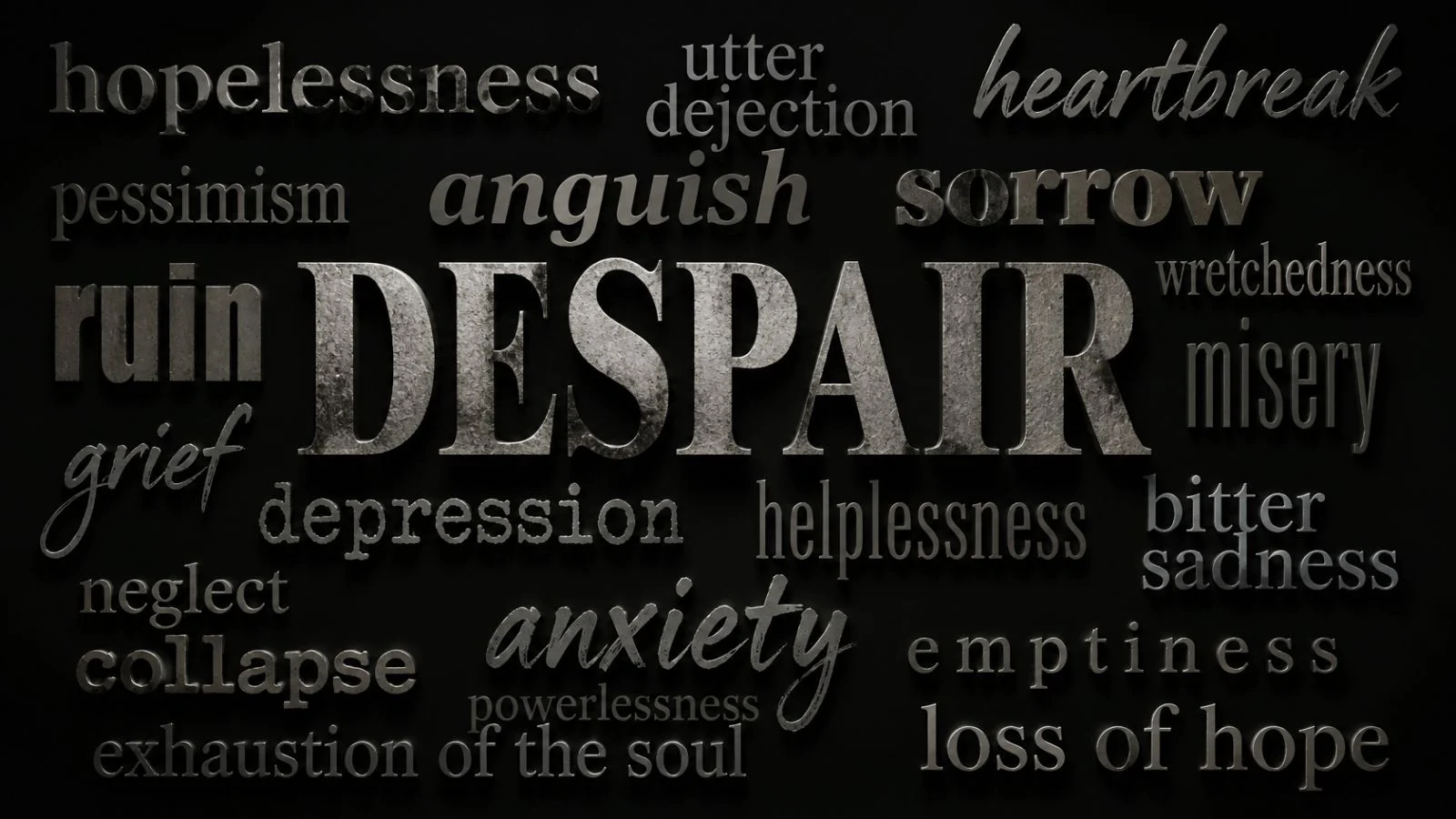
The closest everyday words for despair are hopelessness, desperation, and despondency. Each one shows a loss of hope, but each has its own shade. The best choice depends on meaning and context.
Some words stress deep sadness, like misery and anguish. Others stress giving up, like resignation. A few sound formal or poetic, like woe and dolor.
Quick list: hopelessness, desperation, despondency, misery, anguish, dejection, desolation, resignation, helplessness, gloom
This article covers 30 alternatives. Each one has a meaning, IPA, a usage note, and an example. You will also see how the words differ in real contexts.
At a Glance: Despair Synonyms and Related Alternatives
| Alternative | Part of Speech | Meaning | Register / Tone | Ideal Context |
| Hopelessness | Noun | Feeling that nothing will improve | Neutral | General writing and speech |
| Desperation | Noun | Panic from lacking any good choice | Neutral | Risky or urgent acts |
| Despondency | Noun | Low mood from lost hope | Formal | Essays, news, reports |
| Misery | Noun | Deep unhappiness and suffering | Neutral | Hard times, poor conditions |
| Anguish | Noun | Sharp mental pain | Strong, literary | Loss, shock, guilt |
| Dejection | Noun | Sadness after failure | Formal | Defeat, rejection |
| Desolation | Noun | Empty, lonely hopelessness | Literary | Loss, isolation |
| Resignation | Noun | Quiet acceptance of defeat | Neutral | Giving up the fight |
| Helplessness | Noun | Feeling you cannot change things | Neutral | Crises, lack of control |
| Gloom | Noun | Heavy, dark mood | Neutral | Group moods, atmosphere |
Which Word Should You Use?
| If you want to… | Use | Why |
| Say a person has lost all hope | Hopelessness | It is plain and direct |
| Show panic that pushes someone to act | Desperation | It links fear with action |
| Write in a formal tone | Despondency | It suits essays and reports |
| Show sharp, raw pain | Anguish | It stresses suffering |
| Show sadness after a loss at a contest | Dejection | It fits failure and defeat |
| Show quiet giving up | Resignation | It shows acceptance, not panic |
| Describe a sad mood in a place or group | Gloom | It fits atmosphere |
| Write a poem or a story | Woe | It has an old, poetic sound |
Exploring the Multiple Meanings of “Despair”
1. Total Loss of Hope (Noun)
- Meaning: A state in which a person sees no hope at all.
- Explanation: This is the main sense. It is often deeper than sadness because it also removes the will to try.
- Example: She sat in despair after the bank refused her last loan.
2. A Cause of Hopelessness (Noun)
- Meaning: A person or thing that makes others lose hope.
- Explanation: This sense appears in the phrase “the despair of.” It often has a light, humorous tone.
- Example: The messy garden was the despair of her neighbors.
3. To Lose All Hope (Verb)
- Meaning: To stop hoping that things will get better.
- Explanation: The verb is often negative, as in “don’t despair.” It can also stand alone.
- Example: Don’t despair, because the doctors have not given up yet.
4. To Give Up on One Thing (Verb with “of”)
- Meaning: To lose hope about a certain outcome.
- Explanation: People use “despair of” with a noun or an -ing word. It sounds formal.
- Example: He despaired of ever finding his lost dog.
Sources: Merriam-Webster, Collins Dictionary, Dictionary.com
Analyzing 30 Despair Alternatives in Detail
Some alternatives are direct synonyms. Others are related words that fit only certain contexts. The Usage note for each word says which type it is.
Core Synonyms
1. Hopelessness
IPA: US /ˈhoʊpləsnəs/ · UK /ˈhəʊpləsnəs/
Definition: A feeling that nothing good will happen. It also means you see no way out.
- Usage: This is the plainest match for despair. However, it names the feeling, not the pain behind it.
- Example: Hopelessness settled over the town after the factory closed for good.
2. Desperation
IPA: (US and UK) /ˌdespəˈreɪʃn/
Definition: A state of needing a fix so badly that you take risks. It also carries fear and panic.
- Usage: Desperation is close to despair, but it pushes people to act. In fact, despair often feels quiet.
- Example: In desperation, she sold her car to pay the rent.
3. Despondency
IPA: US /dɪˈspɑːndənsi/ · UK /dɪˈspɒndənsi/
Definition: A low mood that comes from lost hope. It also suggests a slow, heavy sadness.
- Usage: This is a formal match for despair. Still, it feels milder and more lasting.
- Example: Months of rejection left him in deep despondency.
4. Dejection
IPA: (US and UK) /dɪˈdʒekʃn/
Definition: A sad, low feeling after a loss or failure. It also shows how a person looks.
- Usage: Dejection is milder than despair. For example, a lost game can cause it.
- Example: Dejection showed on their faces after the final whistle.
5. Discouragement
IPA: US /dɪsˈkɜːrɪdʒmənt/ · UK /dɪsˈkʌrɪdʒmənt/
Definition: The loss of confidence or the will to keep trying. It also follows repeated setbacks.
- Usage: This is a related word, not an exact synonym. It is weaker, so use it when hope is still alive.
- Example: After three failed exams, his discouragement turned into doubt.
Words for Deep Sadness
6. Misery
IPA: (US and UK) /ˈmɪzəri/
Definition: Deep unhappiness caused by pain or hard times. It also covers poor living conditions.
- Usage: Misery is a close, common synonym. However, it stresses suffering more than lost hope.
- Example: She wrote about the misery of life in the camp.
7. Sorrow
IPA: US /ˈsɑːroʊ/ · UK /ˈsɒrəʊ/
Definition: Sadness that comes from loss or regret. It also feels quiet and deep.
- Usage: Sorrow is related, not exact. In fact, you can feel sorrow and still have hope.
- Example: He felt great sorrow when the old farm sold.
8. Grief
IPA: (US and UK) /ɡriːf/
Definition: Strong sadness after a death or a big loss. It also can last a long time.
- Usage: Grief is a related word with a clear cause. Still, deep grief can slide into despair.
- Example: Her grief was so heavy that she could not eat.
9. Gloom
IPA: (US and UK) /ɡluːm/
Definition: A mood of sadness and low energy. It also means a dim, dark place.
- Usage: Gloom is a related word. For example, writers use it for a mood that hangs over a group.
- Example: Gloom hung over the office after the boss announced the layoffs.
10. Heartbreak
IPA: US /ˈhɑːrtbreɪk/ · UK /ˈhɑːtbreɪk/
Definition: Crushing sadness, often from lost love. It also fits any deep loss.
- Usage: Heartbreak is a related word. However, it tends to point to love and trust.
- Example: The long wait for news was pure heartbreak.
Words for Giving Up
11. Resignation
IPA: (US and UK) /ˌrezɪɡˈneɪʃn/
Definition: Calm acceptance of a bad fact you cannot change. It also shows you stopped fighting.
- Usage: This is a related word. In fact, it can be a quiet form of despair.
- Example: He nodded with resignation and signed the papers.
12. Defeatism
IPA: (US and UK) /dɪˈfiːtɪzəm/
Definition: The habit of expecting to lose. It also means giving up before you try.
- Usage: Defeatism is a related word. However, it names a mindset, not a sudden feeling.
- Example: Her defeatism spread through the team and hurt their work.
13. Pessimism
IPA: (US and UK) /ˈpesɪmɪzəm/
Definition: A habit of expecting the worst. It also colors how you see the future.
- Usage: Pessimism is related, not exact. In short, it is mild, while despair is deep.
- Example: Pessimism about the job market kept him from applying.
14. Demoralization
IPA: US /dɪˌmɔːrələˈzeɪʃn/ · UK /dɪˌmɒrəlaɪˈzeɪʃn/
Definition: A loss of spirit and drive in a person or group. It also hurts trust in leaders.
- Usage: People use this word in work and war settings. Still, it fits group despair well.
- Example: Constant cuts caused demoralization across the whole staff.
15. Surrender
IPA: US /səˈrendər/ · UK /səˈrendə/
Definition: The act of giving up the fight. It also can mean accepting what you cannot change.
- Usage: Surrender is a stretch for despair. However, it fits cases where despair ends the struggle.
- Example: Her quiet surrender worried her friends more than her tears.
Words for Intense Suffering
16. Anguish
IPA: (US and UK) /ˈæŋɡwɪʃ/
Definition: Sharp mental pain or suffering. It also feels sudden and raw.
- Usage: Anguish is a strong match for despair. However, it stresses pain over lost hope.
- Example: He cried out in anguish when he saw the damage.
17. Agony
IPA: (US and UK) /ˈæɡəni/
Definition: Extreme pain of the body or mind. It also describes long, hard waiting.
- Usage: Agony is a related word. For example, people use it for the pain of not knowing.
- Example: The family waited in agony for news of the missing boy.
18. Torment
IPA: US /ˈtɔːrment/ · UK /ˈtɔːment/
Definition: Severe suffering of the mind or body. It also means a cause of such pain.
- Usage: Torment is a related word. In fact, it often points to a cause, not just a feeling.
- Example: Guilt became a daily torment for him.
19. Wretchedness
IPA: (US and UK) /ˈretʃɪdnəs/
Definition: A state of deep misery and poor condition. It also can describe a sad, pitiful scene.
- Usage: This is a formal and somewhat old word. Still, it fits despair in books.
- Example: The novel shows the wretchedness of life in the slums.
20. Devastation
IPA: (US and UK) /ˌdevəˈsteɪʃn/
Definition: Great shock and grief after a harsh loss. It also means heavy damage to a place.
- Usage: Devastation is a related word. For example, it fits a sudden blow more than a slow decline.
- Example: Devastation filled the room when the doctor shared the news.
Formal and Literary Alternatives
21. Melancholy
IPA: US /ˈmelənkɑːli/ · UK /ˈmelənkəli/
Definition: A deep, thoughtful sadness. It also can last for no clear reason.
- Usage: Melancholy is a literary, related word. However, it is softer than despair.
- Example: A quiet melancholy followed her through the autumn months.
22. Woe
IPA: US /woʊ/ · UK /wəʊ/
Definition: Great sorrow or trouble. It also appears in old and poetic writing.
- Usage: Woe is a literary alternative. In fact, you will mostly see it in poems and set phrases.
- Example: The old song tells of love, loss, and woe.
23. Desolation
IPA: (US and UK) /ˌdesəˈleɪʃn/
Definition: A feeling of being empty, alone, and without hope. It also means a bare, ruined place.
- Usage: This is a strong match for despair. For example, it fits loss that leaves a person alone.
- Example: Desolation swept over him in the silent, empty house.
24. Forlornness
IPA: US /fərˈlɔːrnnəs/ · UK /fəˈlɔːnnəs/
Definition: The feeling of being lonely and left behind. It also suggests a sad, hopeless mood.
- Usage: Forlornness is a related word. However, it stresses loneliness more than despair does.
- Example: Her forlornness showed as she waited at the empty station.
25. Dolor
IPA: US /ˈdoʊlər/ · UK /ˈdɒlə/
Definition: Deep sorrow or mental pain. It also appears as “dolour” in British spelling.
- Usage: Dolor is a rare literary word. Still, it can add a poetic tone.
- Example: The poem opens with a tale of dolor and loss.
Related States and Context-Specific Terms
26. Depression
IPA: (US and UK) /dɪˈpreʃn/
Definition: A long low mood that affects daily life. It also can be a medical condition.
- Usage: Depression is related, not a synonym. However, it is a medical term, so use it with care.
- Example: He sought help when his depression made work feel impossible.
27. Distress
IPA: (US and UK) /dɪˈstres/
Definition: Strong worry, pain, or sorrow. It also can mean being in danger.
- Usage: Distress is a weaker, related word. However, it fits many cases of pain.
- Example: The news caused great distress to the whole family.
28. Helplessness
IPA: (US and UK) /ˈhelpləsnəs/
Definition: The feeling that you cannot change what happens. It also leads to giving up.
- Usage: Helplessness is a related word. In fact, it is often part of despair.
- Example: Helplessness grew as the water rose around the house.
29. Dismay
IPA: (US and UK) /dɪsˈmeɪ/
Definition: A sudden shock and sadness at bad news. It also shows worry about what comes next.
- Usage: Dismay is a milder, related word. Still, it can be the first step toward despair.
- Example: She looked at the empty shelves with dismay.
30. Angst
IPA: US /ɑːŋkst/ · UK /æŋst/
Definition: A deep worry about life or the future. It also comes from German.
- Usage: Angst is a related word. However, it feels more anxious than hopeless.
- Example: Teen angst fills the pages of her old diary.
Sources: Merriam-Webster, Collins Dictionary, Dictionary.com
Despair vs. Despondency vs. Desperation vs. Depression
These four words look alike, but they are not the same. First, check what each one stresses.
| Word | Core Idea | Typical Use |
| Despair | Total loss of hope | Strong feeling in many contexts |
| Despondency | Low mood from lost hope | Formal, more lasting and milder |
| Desperation | Panic that drives risky action | Urgent, active situations |
| Depression | Long low mood or medical condition | Health and daily life |
Despair and despondency both talk about lost hope. However, despair is stronger and sharper. Desperation adds action, because a desperate person tries to escape. Depression is a health term, so it is not a simple synonym.
Sources: Merriam-Webster, Collins Dictionary
Despair and Opposite/Paired Word Pairs
| Word | Paired Word | Note |
| Despair | Hope | The clearest opposite |
| Despair | Optimism | Opposite outlook on the future |
| Despair | Confidence | Opposite belief in success |
| Despair | Joy | Opposite feeling, not just opposite hope |
| Despair | Cheer | Opposite mood in everyday speech |
| Hope | Despair | A common pair in titles and speeches |
Hope is the true opposite of despair. The other words are looser contrasts. Writers also use “hope and despair” as a pair to show two extremes.
Sources: Merriam-Webster, Collins Thesaurus
Common Word Partners of “Despair”
| Pattern | Common Partners | Example |
| Adjective + despair | deep, utter, total, sheer | He felt utter despair after the news. |
| Verb + despair | sink into, fall into, give way to | She sank into despair after the loss. |
| Despair + preposition | at, over, about | They felt despair over the missing child. |
| In despair | in despair | She threw down her pen in despair. |
| Noun + of + despair | cry, sense, feeling, depths | A cry of despair filled the hall. |
| Drive + someone + to despair | drive to despair | The delays drove him to despair. |
Sources: Collins Dictionary, Merriam-Webster
Idiomatic Phrases Featuring “Despair”
These are strongly established expressions. Most are fixed phrases rather than full idioms.
1. In the depths of despair
- Meaning: In a state of the deepest hopelessness.
- Example: He wrote the letter in the depths of despair.
2. Throw up your hands in despair
- Meaning: Give up on a problem because it feels impossible.
- Example: The teacher threw up her hands in despair at the noisy class.
3. Be the despair of someone
- Meaning: Cause someone to lose hope or patience.
- Example: My untidy desk was the despair of my manager.
4. Drive someone to despair
- Meaning: Push someone to feel hopeless.
- Example: Months of delays drove the builders to despair.
Sources: Merriam-Webster, Collins Dictionary
Word Formation of “Despair”
Etymology & Structure
Despair comes from Middle English despeir. That word came from Anglo-French and Old French. It goes back to Latin desperare, which means “to be without hope.” The Latin word joins de- (“without”) and sperare (“to hope”).
Date and History
Merriam-Webster dates both the noun and the verb to the 14th century. Etymonline also places the word in Middle English.
Word Class Variations
- Verb: despair, despairs, despaired, despairing
- Noun: despair
- Adjective: despairing
- Adverb: despairingly
- Related words from the same root: desperate, desperately, desperation
Sources: Merriam-Webster, Etymonline
Common Word-Choice Mistakes
- “He is in desperation” is fine, but “He is desperation” is wrong. Write “He is desperate.”
- “She despaired to win” is wrong. Write “She despaired of winning.”
- “They felt despair on the news” is wrong. Write “despair at the news” or “over the news.”
- “Dispair” is wrong. Write “despair.”
- “He is desperate for help” is wrong. Write “desperate for help.”
- “I felt depressed after the match” sounds medical. Write “I felt dejected” for a short low mood.
- “A desperate person” is wrong. Write “a despairing person.”
Frequently Asked Questions
What is the closest synonym for despair?
Hopelessness is the closest everyday synonym. Despondency is a close formal choice.
What is a formal word for despair?
Despondency and dejection both sound formal. They suit essays, reports, and news writing.
What is a poetic word for despair?
Woe, dolor, and desolation have a literary tone. You will mostly see them in poems and novels.
What is the opposite of despair?
Hope is the opposite. Optimism and confidence also work as contrasts.
What is the difference between despair and desperation?
Despair is a loss of hope. Desperation is panic that pushes a person to act.
Is despair the same as depression?
No. Despair is a strong feeling, while depression can be a medical condition. A doctor can help with depression.
Can despair be used as a verb?
Yes. The verb often takes “of,” as in “despair of finding a job.”
Is misery a good synonym for despair?
It is a close match. However, misery stresses suffering more than lost hope.
What word fits a group or team?
Demoralization and gloom fit groups well. They describe a shared mood.
What does “the despair of” mean?
It means a person or thing that makes others lose patience. The tone is often light.
Conclusion
The closest alternatives to despair are hopelessness, despondency, and desperation. Misery, anguish, and desolation also fit when pain is strong. Formal and poetic words like dejection, woe, and dolor suit careful or literary writing.
Context and small differences in meaning decide the best word. Desperation adds panic, while resignation shows quiet giving up. Depression is a health term, so it is not a simple swap.
To choose well, ask what you want to show. Think about the cause, the strength, and the tone. Then pick the word that fits your reader and your sentence.

Olivia Martin is a passionate writer who enjoys exploring English vocabulary, synonyms, and language tips to help readers improve their writing skills.
At PressivoMedia.com, Olivia shares helpful language resources and easy-to-understand content to make communication clearer and more effective.