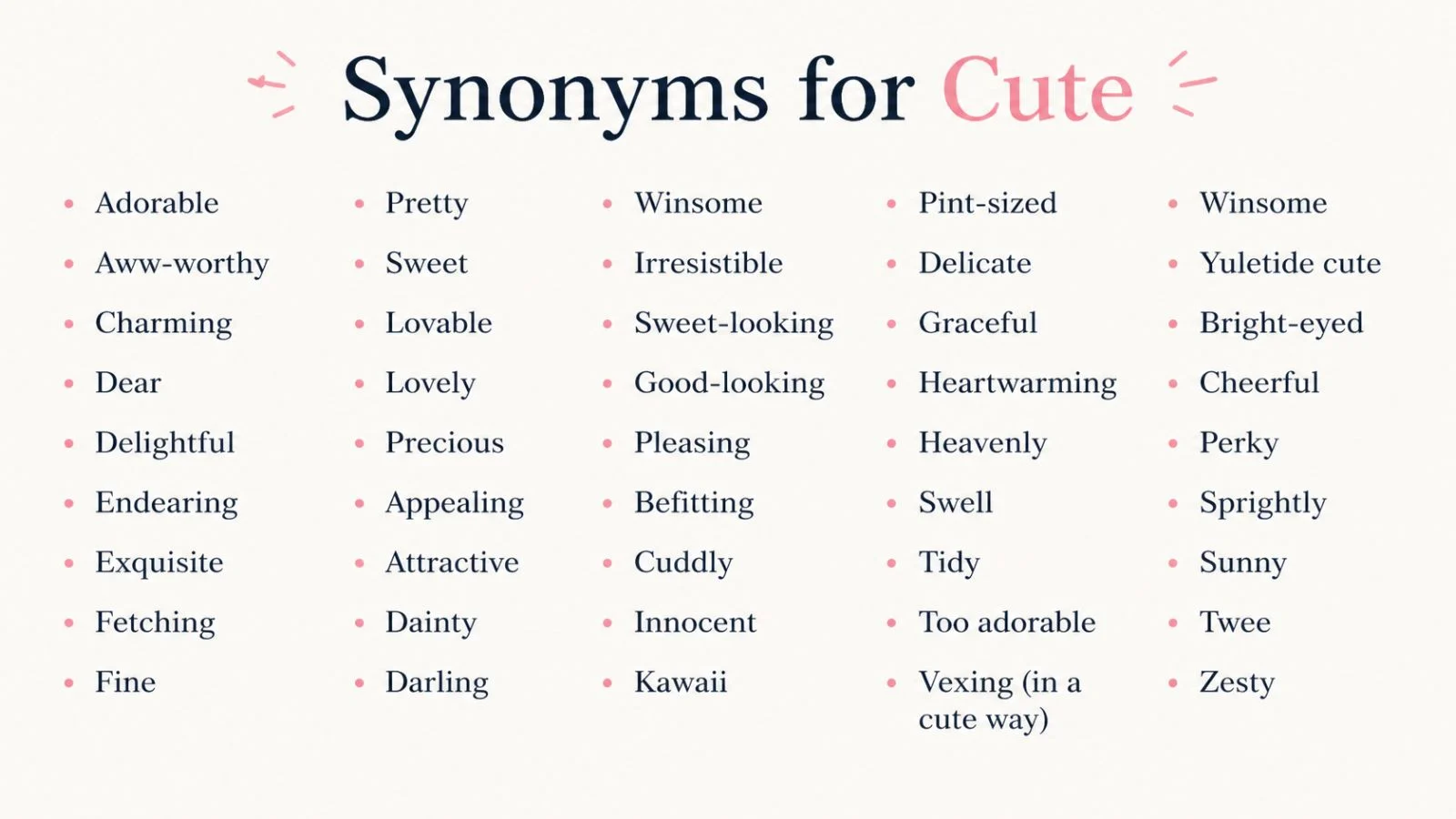
The closest everyday words for cute are adorable, sweet, pretty, and charming. Each one fits a slightly different case. Adorable suits for babies and pets. Pretty is about looks. Charming fits people, places, and manners.
The best choice depends on meaning and context. Cute can describe looks, small size, or a sweet nature. It can also mean clever, or even too sweet to be real.
Quick list: adorable, sweet, pretty, charming, lovely, darling, cuddly, endearing, precious, delightful
This article covers 30 alternatives. Each one has a meaning, IPA, usage note, and example. You will also see how to match the word to the situation.
At a Glance: Cute Synonyms and Related Alternatives
| Alternative | Part of Speech | Meaning | Register / Tone | Ideal Context |
| Adorable | Adjective | Very cute and lovable | Neutral, warm | Babies, pets, kids |
| Sweet | Adjective | Kind and gentle in a charming way | Informal, warm | Acts, gifts, people |
| Pretty | Adjective | Nice to look at | Neutral | Clothes, places, faces |
| Charming | Adjective | Pleasant and winning | Neutral to formal | Towns, shops, manners |
| Lovely | Adjective | Pleasing and nice | Warm, polite | Scenes, people, plans |
| Cuddly | Adjective | Soft and nice to hug | Informal | Toys, pets, small kids |
| Precious | Adjective | Dear and tender | Warm | Kids, moments |
| Dainty | Adjective | Small and delicate | Neutral, a bit dated | Cups, lace, jewelry |
| Endearing | Adjective | Making people fond of you | Neutral | Habits, flaws, smiles |
| Cutesy | Adjective | Too cute | Informal, critical | Packaging, decor |
Which Word Should You Use?
| If you want to… | Use | Why |
| Praise a baby or puppy | Adorable | It shows strong, warm delight. |
| Praise a kind act | Sweet | It points to kindness, not looks. |
| Describe a neat outfit | Pretty | It focuses on appearance. |
| Describe a small old town | Quaint | It adds an old-fashioned feel. |
| Describe a soft toy | Cuddly | It adds the idea of touch. |
| Write a formal card | Delightful | It sounds polite and warm. |
| Criticize fake sweetness | Cutesy | It shows the charm feels forced. |
| Praise a funny flaw | Endearing | It shows you like the person more. |
Exploring the Multiple Meanings of “Cute”
1. Pretty or Charming
- Meaning: Nice to look at in a soft, light way.
- Explanation: This is the most common modern sense. It often fits small things and young people.
- Example: She wore a cute hat with a small yellow flower.
2. Sweet and Lovable
- Meaning: Likable because of a gentle nature or small acts.
- Explanation: Here, cute is about feeling, not looks. A shy smile can be cute.
- Example: It was cute of him to bring her soup.
3. Clever or Sharp
- Meaning: Quick to think, often in a smart way.
- Explanation: This is the older sense. It still appears in informal American English.
- Example: That was a cute trick, but it did not work.
4. Too Clever or Fake
- Meaning: Trying too hard to charm or impress.
- Explanation: This sense is often critical. Speakers use it when something feels forced.
- Example: Stop being cute and give me a straight answer.
Sources: Merriam-Webster, Collins Dictionary, Etymonline
Analyzing 30 Cute Alternatives in Detail
Some words below are direct synonyms. Others are related words that fit only certain cases.
Core Everyday Synonyms
1. Adorable
IPA: US /əˈdɔːrəbəl/ · UK /əˈdɔːrəbəl/
Definition: Means very cute in a way that makes you smile. It also fits babies, pets, and small things.
- Usage: Adorable is a close synonym and a stronger form of cute. However, it can feel too much for plain objects.
- Example: The puppy tripped over its own ears and looked adorable.
2. Sweet
IPA: /swiːt/ (US and UK)
Definition: Shows a kind, gentle charm. It also fits acts and people, not just looks.
- Usage: Sweet often praises kind acts. For example, a sweet gift is cute because it is thoughtful.
- Example: Her sweet note made the whole team smile.
3. Lovely
IPA: /ˈlʌvli/ (US and UK)
Definition: Means pleasing and nice to look at. It also fits scenes, people, and plans.
- Usage: Lovely is warmer and more polite than cute. In fact, British speakers use it a lot.
- Example: You have a lovely little garden behind the house.
4. Charming
IPA: US /ˈtʃɑːrmɪŋ/ · UK /ˈtʃɑːmɪŋ/
Definition: Means pleasant in a way that wins people over. It also fits manners and places.
- Usage: Charming is a bit more formal than cute. Still, it works well for small towns and shops.
- Example: We found a charming café near the old bridge.
5. Darling
IPA: US /ˈdɑːrlɪŋ/ · UK /ˈdɑːlɪŋ/
Definition: Means much loved and very dear. It also names a person you love.
- Usage: Darling is an old-fashioned but warm choice. Also, as a noun it works as a pet name.
- Example: Their darling baby slept through the whole party.
Looks-Based Alternatives
6. Pretty
IPA: /ˈprɪti/ (US and UK)
Definition: Means nice to look at in a soft way. It also fits things that are small and neat.
- Usage: Pretty is about looks only. However, cute can add charm or humor as well.
- Example: She wore a pretty dress with tiny blue flowers.
7. Dainty
IPA: /ˈdeɪnti/ (US and UK)
Definition: Means small, light, and delicate. It also shows neat, careful grace.
- Usage: Dainty is a related word, not an exact synonym. In fact, it fits tea cups and lace better than puppies.
- Example: She sipped tea from a dainty china cup.
8. Fetching
IPA: /ˈfetʃɪŋ/ (US and UK)
Definition: Means attractive in a way that catches the eye. It also sounds a bit old-fashioned.
- Usage: Fetching is a related word that praises a person’s look. Still, people rarely use it for pets.
- Example: He looked fetching in his new red scarf.
9. Appealing
IPA: /əˈpiːlɪŋ/ (US and UK)
Definition: Means pleasing enough to draw you in. It also fits ideas, food, and offers.
- Usage: Appealing is a neutral choice. However, it lacks the soft, playful feel of cute.
- Example: The shop has an appealing mix of toys and books.
10. Attractive
IPA: /əˈtræktɪv/ (US and UK)
Definition: Means good-looking or pleasing to the eye. It also fits plans and prices.
- Usage: Attractive is a related word with a formal tone. For example, you can use it for a room or a person.
- Example: The hotel has an attractive lobby with warm lighting.
Affectionate and Baby-Like Alternatives
11. Precious
IPA: /ˈpreʃəs/ (US and UK)
Definition: Means dear and worth much to you. It also fits small kids and tender moments.
- Usage: Precious works for sweet, tender scenes. However, it can sound sarcastic if overused.
- Example: The photo shows a precious moment between mother and son.
12. Lovable
IPA: /ˈlʌvəbəl/ (US and UK)
Definition: Means easy to love because of a warm nature. It also fits pets and kind people.
- Usage: Lovable is about character, not looks. As a result, it suits a grumpy but kind dog well.
- Example: Our lovable old dog greets every guest with a wag.
13. Cuddly
IPA: /ˈkʌdli/ (US and UK)
Definition: Means soft and nice to hug. It also fits toys, pets, and gentle people.
- Usage: Cuddly is a close cousin of cute. In short, it adds the idea of touch and comfort.
- Example: She bought a cuddly bear for her baby cousin.
14. Endearing
IPA: US /ɪnˈdɪrɪŋ/ · UK /ɪnˈdɪərɪŋ/
Definition: Means making people feel fond of you. It also fits small flaws that charm others.
- Usage: Endearing is about the feeling it gives. For example, a shy smile can be endearing.
- Example: His clumsy little dance was oddly endearing to the whole room.
15. Cherubic
IPA: /tʃəˈruːbɪk/ (US and UK)
Definition: Means round, soft, and sweet like a baby angel. It also fits innocent faces.
- Usage: Cherubic is a literary word for baby-like faces. Still, it is rare in daily conversation.
- Example: The cherubic toddler grinned at everyone in the line.
Small and Playful Alternatives
16. Petite
IPA: /pəˈtiːt/ (US and UK)
Definition: Means small and slim in a neat way. It also appears in clothing sizes.
- Usage: Petite is a related word about size. However, it does not always carry charm.
- Example: She is petite and wears a tiny silver ring.
17. Quaint
IPA: /kweɪnt/ (US and UK)
Definition: Means charming in an old-fashioned way. It also fits small towns and old shops.
- Usage: Quaint is a related word for places and things. In fact, it can sound unkind to people.
- Example: We stayed in a quaint cottage by the lake.
18. Whimsical
IPA: /ˈwɪmzɪkəl/ (US and UK)
Definition: Means playful and a little odd. It also shows a light, fun mood.
- Usage: Whimsical is a related word for playful design. For example, you can use it for toys or art.
- Example: The café has whimsical lamps shaped like tiny teapots.
19. Pert
IPA: US /pɜːrt/ · UK /pɜːt/
Definition: Means lively and a little bold in a cheerful way. It also fits bright faces.
- Usage: Pert is a related word with a dated feel. Still, it can describe a cute, cheeky look.
- Example: The girl gave a pert smile and skipped away.
20. Impish
IPA: /ˈɪmpɪʃ/ (US and UK)
Definition: Means playfully naughty in a harmless way. It also fits grins and kids.
- Usage: Impish is a related word. However, it stresses mischief more than charm.
- Example: The boy gave an impish grin and hid the keys.
Formal and Literary Alternatives
21. Delightful
IPA: /dɪˈlaɪtfəl/ (US and UK)
Definition: Means very pleasing and fun. It also fits people, events, and small things.
- Usage: Delightful is a polite, slightly formal choice. As a result, it works well in cards and letters.
- Example: Your daughter is a delightful child and great company.
22. Enchanting
IPA: US /ɪnˈtʃæntɪŋ/ · UK /ɪnˈtʃɑːntɪŋ/
Definition: Means so charming that it feels like magic. It also fits places and voices.
- Usage: Enchanting is a literary, stronger word. For example, you can use it for a magical garden.
- Example: The enchanting little village glowed under soft evening lights.
23. Captivating
IPA: /ˈkæptɪveɪtɪŋ/ (US and UK)
Definition: Means holding your attention with charm. It also fits stories, eyes, and smiles.
- Usage: Captivating is a related word. However, it is more about pull than sweetness.
- Example: Her captivating smile made everyone in the room relax.
24. Winsome
IPA: /ˈwɪnsəm/ (US and UK)
Definition: Means sweetly attractive in a way that wins hearts. It also sounds literary.
- Usage: Winsome is a rare, formal match for cute. In fact, you will mostly see it in books.
- Example: The winsome child won over every guest at dinner.
25. Beguiling
IPA: /bɪˈɡaɪlɪŋ/ (US and UK)
Definition: Means charming in a way that pulls you in. It also hints at a trick.
- Usage: Beguiling is a related word with a hint of mystery. However, it is not a plain synonym for cute.
- Example: The cat gave a beguiling stare and got extra treats.
Informal and Other-Sense Alternatives
26. Cutesy
IPA: /ˈkjuːtsi/ (US and UK)
Definition: Means too cute or trying hard to be cute. It also sounds negative.
- Usage: Cutesy is informal and often critical. In short, it fits things that feel fake.
- Example: I found the cutesy packaging a bit too much.
27. Adorbs
IPA: US /əˈdɔːrbz/ · UK /əˈdɔːbz/
Definition: Is a slang short form of adorable. It also appears in texts and posts.
- Usage: Adorbs is a very informal, playful word. So, avoid it in school or work writing.
- Example: Look at those tiny socks, they are so adorbs!
28. Dreamy
IPA: /ˈdriːmi/ (US and UK)
Definition: Means very attractive in a way that makes people sigh. It also works as slang for a crush.
- Usage: Dreamy is an informal, related word. For example, people use it for a good-looking person.
- Example: Everyone agreed that the new teacher was a bit dreamy.
29. Clever
IPA: US /ˈklevər/ · UK /ˈklevə/
Definition: Means quick to think and sharp. It also matches the oldest sense of cute.
- Usage: Clever shares only the older sense. However, it does not mean pretty or sweet.
- Example: That was a clever way to fix the broken shelf.
30. Shrewd
IPA: /ʃruːd/ (US and UK)
Definition: Means sharp and smart, mostly about money or people. It also hints at being careful.
- Usage: Shrewd is a related word for the old sense of cute. In fact, it has nothing to do with looks.
- Example: The shrewd shopper waited for the best deal.
Sources: Merriam-Webster, Collins Dictionary, Collins Thesaurus, Dictionary.com
Cute vs. Pretty vs. Adorable vs. Charming
These four words overlap, but each has its own focus. The table shows the main difference.
| Word | Main Focus | Typical Subject |
| Cute | Soft charm, often small or playful | Babies, pets, outfits |
| Pretty | Looks only | Faces, dresses, places |
| Adorable | Strong, warm delight | Babies, puppies, kids |
| Charming | Winning manner or style | People, towns, shops |
In short, pick pretty for looks and adorable for strong feeling. Pick charming for style and cute for a light, friendly tone.
Sources: Merriam-Webster, Collins Dictionary
Cute and Opposite/Paired Word Pairs
| Word | Paired Word | Note |
| Cute | Ugly | The most direct opposite about looks. |
| Cute | Plain | A softer contrast with no charm. |
| Cute | Cool | A common contrast between sweet and stylish. |
| Cute | Cuddly | A common pair for soft toys and pets. |
| Cute | Clumsy | A pair that shows a flaw can be endearing. |
Cute has no single perfect opposite. Ugly fits looks, but it is harsh. Plain, rough, or unappealing may fit better in some cases.
Sources: Merriam-Webster, Collins Thesaurus
Common Word Partners of “Cute”
| Pattern | Common Partners | Example |
| cute + person | baby, kid, couple | They make a cute couple. |
| cute + animal | puppy, kitten, bunny | The kitten looks so cute. |
| cute + thing | outfit, dress, hat | I love your cute jacket. |
| cute + detail | smile, name, voice | She has a cute laugh. |
| so / too / really + cute | so cute, too cute | That video is too cute. |
| cute + and + adjective | cute and funny, cute and cuddly | The toy is cute and cuddly. |
Sources: Collins Dictionary, Merriam-Webster
Idiomatic Phrases Featuring “Cute”
1. Cute as a button
- Meaning: Very cute, often about a baby or child.
- Example: Their new baby is cute as a button.
2. Cute as a bug’s ear
- Meaning: Very cute, mainly in informal American English.
- Example: Her little dog is cute as a bug’s ear.
3. Don’t get cute
- Meaning: Do not try to be clever or cheeky.
- Example: Don’t get cute with me, just answer the question.
Sources: Merriam-Webster, Collins Dictionary
Word Formation of “Cute”
Etymology & Structure
Cute began as a short form of acute. English speakers dropped the first syllable. Linguists call this process aphesis.
Date and History
Etymonline places the first use in the 1700s with the sense “clever.” The sense “pretty” appeared in American English in the 1800s.
Word Class Variations
- Adjective: cute, cuter, cutest
- Adverb: cutely
- Noun: cuteness, cutie
- Related adjective: cutesy
Sources: Etymonline, Merriam-Webster
Common Word-Choice Mistakes
- A cute mountain view: a stunning mountain view.
- More cute: cuter is the usual form.
- A cute dress: a cute dress.
- A winsome text to a friend: a sweet text to a friend.
- A dainty bus: a small bus, or a big bus.
- Adorable for a plain pen: a cute pen.
- A cute idea in a serious meeting: a clever idea.
Frequently Asked Questions
What is the closest synonym for cute?
Adorable is the closest for strong charm. Pretty is the closest for looks.
What is a formal alternative to cute?
Delightful and charming work well in formal writing. Attractive also fits.
What is a literary alternative to cute?
Winsome, cherubic, and enchanting suit books and poems. They are rare in daily speech.
What is the opposite of cute?
Ugly is the usual opposite for looks. Plain also works.
Can cute describe a man?
Yes, it can. However, it often sounds playful and not very serious.
What is the difference between cute and pretty?
Pretty is about looks. Cute also covers charm, size, and playful behavior.
Is cute the same as adorable?
Not quite. Adorable is stronger and shows deeper delight.
Can cute mean clever?
Yes, in older and informal American English. Today, this sense is less common.
What does cutesy mean?
It means too cute or fake. People often use it in a critical way.
What is a slang word for cute?
Adorbs is a common slang form. It fits texts and casual posts.
Conclusion
Adorable, sweet, pretty, and charming are the best everyday alternatives to cute. Each one adds a small shift in meaning. Adorable shows strong delight pretty is about looks.
Context matters most. Cute can mean sweet, small, clever, or even fake. A word that fits a puppy may not fit a town or a speech.
To choose well, ask three questions. Do you mean looks, feeling, or size? Is the tone casual or formal? Then pick the word that matches. Rare words like winsome and cherubic add flavor, but plain words often work best.

Emily Davis is a passionate writer who enjoys exploring English vocabulary, synonyms, and language tips to help readers improve their communication skills.
At PressivoMedia.com, she focuses on creating simple, engaging, and informative content that makes learning English easier and more enjoyable.