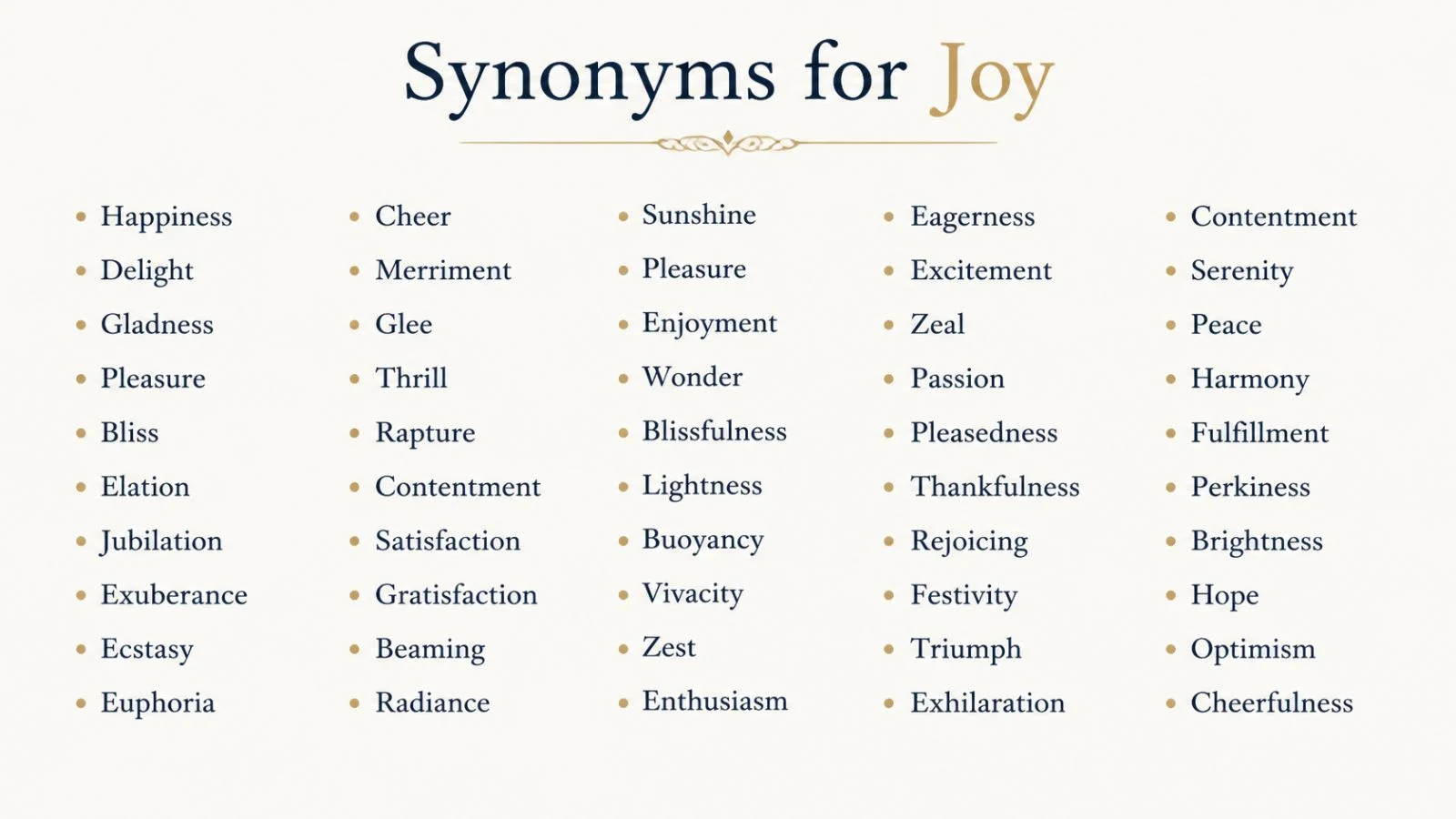
Another word for joy is happiness. Other close choices are delight, pleasure, and gladness. The best choice depends on the meaning and the context.
Joy can mean a strong feeling, a calm state, or a person who brings delight. Some words fit loud parties. Others fit quiet moments or personal goals.
Quick list: happiness, delight, pleasure, gladness, bliss, elation, glee, jubilation, ecstasy, contentment
This article looks at 30 alternatives. Each one has a meaning, IPA, a usage note, and an example. You will also learn which word fits each context.
At a Glance: Joy Synonyms and Related Alternatives
| Alternative | Part of Speech | Meaning | Register / Tone | Ideal Context |
| Happiness | Noun | A good, glad state of mind | Neutral | Everyday talk and writing |
| Delight | Noun | Great pleasure, often from a surprise | Neutral, warm | Gifts, news, small wonders |
| Pleasure | Noun | A mild good feeling | Neutral | Hobbies and daily life |
| Gladness | Noun | A warm feeling of being pleased | Slightly formal | Relief and kind wishes |
| Bliss | Noun | Deep, perfect joy | Poetic | Rare, perfect moments |
| Elation | Noun | A sudden rush of high spirits | Neutral | Wins and good news |
| Glee | Noun | Open, playful joy | Informal | Kids, games, mischief |
| Jubilation | Noun | Loud, joyful celebration | Formal | Crowds and big victories |
| Contentment | Noun | Quiet joy with what you have | Calm | Home and steady life |
| Satisfaction | Noun | A good feeling that a need is met | Neutral | Work and goals |
Which Word Should You Use?
| If you want to… | Use | Why |
| Use the simplest, most common word | Happiness | Everyone knows it, and it fits most cases. |
| Show joy at a happy surprise | Delight | It fits gifts, news, and small wonders. |
| Show a sudden rush of joy | Elation | It stresses a quick lift in mood. |
| Show deep, perfect joy | Bliss | It suggests a peaceful, ideal state. |
| Describe loud group joy | Jubilation | It fits crowds and big celebrations. |
| Describe quiet, steady joy | Contentment | It shows calm joy with no strong spark. |
| Describe joy from a win | Triumph | It links joy to success. |
| Call a person or thing a source of joy | Treat | It fits the “a joy to see” sense. |
Exploring the Multiple Meanings of “Joy”
1. A Strong Feeling of Happiness
- Meaning: A deep, glad feeling that comes from good events.
- Explanation: This is the main sense of joy. It often follows good news, success, or love.
- Example: She felt pure joy when her son walked across the stage.
2. A State of Happiness
- Meaning: A lasting condition of being happy.
- Explanation: Here joy is a way of living, not a quick burst. Writers often use it for faith or family life.
- Example: They found joy in simple days at home.
3. A Source of Delight
- Meaning: A person or thing that makes you happy.
- Explanation: This sense often appears in the pattern “a joy to.” It praises the person or thing.
- Example: Her garden is a joy to walk through.
4. Success or Satisfaction (Informal, Mostly British)
- Meaning: Luck or success when you try to get something.
- Explanation: People use this sense mostly in questions and negatives. It is casual speech.
- Example: I called the shop twice but got no joy.
Sources: Merriam-Webster (joy); Collins English Dictionary (joy); Dictionary.com (joy)
Analyzing 30 Joy Alternatives in Detail
Some alternatives are direct synonyms. Others are related words that fit only certain contexts.
Core Everyday Alternatives
1. Happiness
IPA: (US and UK) /ˈhæpinəs/
Definition: Happiness means a state of feeling good and glad. It also covers calm, lasting well-being.
- Usage: Happiness is the plainest synonym for joy. However, joy often feels stronger and more sudden.
- Example: Her happiness showed on her face when she heard the news.
2. Delight
IPA: (US and UK) /dɪˈlaɪt/
Definition: Delight means great pleasure, often from a happy surprise. It also shows in a bright look or voice.
- Usage: Delight is a close synonym. For example, you can feel delight at a gift or a good plan.
- Example: The children squealed with delight when the puppy ran in.
3. Pleasure
IPA: US /ˈplɛʒɚ/ · UK /ˈplɛʒə/
Definition: Pleasure means a good feeling from something you enjoy. It can also be a mild feeling.
- Usage: Pleasure is gentler than joy. In fact, it often fits small, daily things.
- Example: She read in the garden for pleasure every Sunday.
4. Gladness
IPA: (US and UK) /ˈɡlædnəs/
Definition: Gladness means a warm feeling of being pleased. It also fits the relief after bad news.
- Usage: Gladness sounds soft and kind. Still, it sounds a little formal today.
- Example: He felt gladness when his friend came home safe.
5. Cheer
IPA: US /tʃɪr/ · UK /tʃɪə/
Definition: Cheer means a bright, happy mood. It also means the joy people show by smiling or shouting.
- Usage: Cheer is a related alternative, not an exact match. For example, people spread cheer at holiday parties.
- Example: The nurses brought cheer to every room on the ward.
6. Enjoyment
IPA: (US and UK) /ɪnˈdʒɔɪmənt/
Definition: Enjoyment means the good feeling you get from doing something. It also covers the act of having fun.
- Usage: Enjoyment is a related word. It often follows an activity, so it feels more active than joy.
- Example: Her enjoyment of the game was clear to everyone.
Intense Alternatives
7. Bliss
IPA: (US and UK) /blɪs/
Definition: Bliss means deep, perfect joy. It also suggests a peaceful state with no worries.
- Usage: Bliss is stronger than joy. As a result, writers use it for rare, perfect moments.
- Example: They sat by the lake in quiet bliss.
8. Elation
IPA: (US and UK) /ɪˈleɪʃən/
Definition: Elation means a burst of high spirits. It also follows good news or a win.
- Usage: Elation is a close synonym for sudden joy. However, it often fades fast.
- Example: She felt elation when her exam results arrived.
9. Ecstasy
IPA: (US and UK) /ˈɛkstəsi/
Definition: Ecstasy means joy so strong that it takes over your mind. It can also describe a trance-like state.
- Usage: Ecstasy is very intense. Also, the word names a drug, so choose it with care.
- Example: The crowd screamed in ecstasy when the band walked on stage.
10. Euphoria
IPA: (US and UK) /juːˈfɔːriə/
Definition: Euphoria means an intense feeling of happiness and well-being. It also tends to last a short time.
- Usage: Euphoria is close to joy in feeling. However, doctors also use it for an unusually high mood.
- Example: Euphoria swept the city after the team won the title.
11. Rapture
IPA: US /ˈræptʃɚ/ · UK /ˈræptʃə/
Definition: Rapture means joy so great that you forget everything else. It also has a deep, almost holy feel.
- Usage: Rapture is literary. In fact, writers often use it for love, music, or faith.
- Example: He listened to the old song with rapture.
12. Exhilaration
IPA: (US and UK) /ɪɡˌzɪləˈreɪʃən/
Definition: Exhilaration means a thrilled, lifted feeling. It also comes from speed, risk, or success.
- Usage: Exhilaration is a related alternative. It also stresses energy more than calm joy.
- Example: Skiing down the hill gave her a rush of exhilaration.
Festive and Outward Alternatives
13. Glee
IPA: (US and UK) /ɡliː/
Definition: Glee means open, playful joy. It can also show spite at someone’s bad luck.
- Usage: Glee is a close synonym for lively joy. However, glee sometimes carries a hint of mischief.
- Example: The kids shouted with glee in the fresh snow.
14. Jubilation
IPA: (US and UK) /ˌdʒuːbɪˈleɪʃən/
Definition: Jubilation means loud, joyful celebration. It also shows the joy of a group.
- Usage: Jubilation is a related alternative. For example, it fits crowds after a big win.
- Example: Jubilation filled the streets when the home team won.
15. Merriment
IPA: (US and UK) /ˈmɛrimənt/
Definition: Merriment means cheerful fun and laughter. It also fits parties and gatherings.
- Usage: Merriment is a related alternative. However, it sounds a little old-fashioned, so it suits festive writing.
- Example: Laughter and merriment filled the hall on New Year’s Eve.
16. Mirth
IPA: US /mɝːθ/ · UK /mɜːθ/
Definition: Mirth means joy shown through laughter. It also feels light and playful.
- Usage: Mirth is a related word, not an exact one. In fact, it points to laughing joy more than deep joy.
- Example: His silly joke caused great mirth at the table.
17. Gaiety
IPA: (US and UK) /ˈɡeɪəti/
Definition: Gaiety means a bright, lively, cheerful mood. It also describes festive fun.
- Usage: Gaiety is a related alternative. Still, it focuses on lively mood more than inner joy.
- Example: The gaiety of the festival lifted everyone’s spirits.
18. Jollity
IPA: US /ˈdʒɑːləti/ · UK /ˈdʒɒləti/
Definition: Jollity means cheerful, noisy fun. It also suggests friendly company.
- Usage: Jollity is a related alternative. It is also rare and formal, so use it in stories.
- Example: Jollity filled the old pub on Christmas Eve.
19. Exultation
IPA: (US and UK) /ˌɛɡzʌlˈteɪʃən/
Definition: Exultation means great joy over a win or success. It also shows pride.
- Usage: Exultation is a literary synonym. For example, writers use it after a victory.
- Example: She raised her arms in exultation as she crossed the line.
Calm and Lasting Alternatives
20. Contentment
IPA: (US and UK) /kənˈtɛntmənt/
Definition: Contentment means quiet joy with what you have. It also feels calm and steady.
- Usage: Contentment is a related alternative. However, it lacks the spark that joy often has.
- Example: He felt deep contentment sitting by the fire.
21. Satisfaction
IPA: (US and UK) /ˌsætɪsˈfækʃən/
Definition: Satisfaction means a good feeling that your needs are met. It also comes from finishing a goal.
- Usage: Satisfaction is a related word. In fact, it is calmer than joy.
- Example: She smiled with satisfaction at the finished painting.
22. Fulfillment
IPA: (US and UK) /fʊlˈfɪlmənt/
Definition: Fulfillment means joy from reaching a goal or purpose. It also feels deep and lasting.
- Usage: Fulfillment is a related alternative. Also, British English spells it fulfilment.
- Example: Teaching gave her a deep sense of fulfillment.
23. Gratification
IPA: (US and UK) /ˌɡrætɪfɪˈkeɪʃən/
Definition: Gratification means pleasure from getting what you want. It can also be quick and short.
- Usage: Gratification is a related word. However, it points to wants more than deep joy.
- Example: The quick gratification of a sweet snack faded soon.
24. Felicity
IPA: (US and UK) /fɪˈlɪsəti/
Definition: Felicity means great happiness. It can also mean a fitting, graceful phrase.
- Usage: Felicity is a formal, literary synonym. In fact, you will rarely hear it in daily talk.
- Example: The couple wished their guests health and felicity.
Excitement and Fun Alternatives
25. Thrill
IPA: (US and UK) /θrɪl/
Definition: Thrill means a sudden wave of excited joy. It can also cause a shiver.
- Usage: Thrill is a related alternative. However, it stresses excitement more than lasting joy.
- Example: The first drop of the roller coaster gave her a huge thrill.
26. Triumph
IPA: (US and UK) /ˈtraɪəmf/
Definition: Triumph means joy from a great win. It also means the win itself.
- Usage: Triumph is a related alternative. For example, it fits sports and hard-won goals.
- Example: Her face showed pure triumph as she held the trophy.
27. Amusement
IPA: (US and UK) /əˈmjuːzmənt/
Definition: Amusement means light joy from something funny. It also means a fun activity.
- Usage: Amusement is a related alternative. Still, it is weaker than joy.
- Example: He watched the puppies play with great amusement.
Source-of-Joy Alternatives
28. Treat
IPA: (US and UK) /triːt/
Definition: A treat is something that gives you special pleasure. It can also be a small gift.
- Usage: Treat matches the “source of joy” sense of joy. For example, a trip can be a treat.
- Example: A walk on the beach was a real treat.
29. Blessing
IPA: (US and UK) /ˈblɛsɪŋ/
Definition: A blessing is something that brings you luck or joy. It can also mean thanks to a higher power.
- Usage: Blessing also matches the “source of joy” sense. For example, a child can be a blessing.
- Example: Her new baby was a blessing to the whole family.
30. Treasure
IPA: US /ˈtrɛʒɚ/ · UK /ˈtrɛʒə/
Definition: A treasure is a person or thing you love very much. It can also mean gold or jewels.
- Usage: Treasure fits the sense of a person who brings delight. In fact, you can call a loved one a treasure.
- Example: She is a treasure to everyone on our team.
Sources: Merriam-Webster (entries for each word above); Collins English Dictionary and Collins Thesaurus (joy); Dictionary.com (joy)
Joy vs. Happiness vs. Delight vs. Pleasure
These four words overlap a lot. Still, people often use them in slightly different ways. The table shows the usual pattern in everyday English.
| Word | Usual Feel | Typical Use | Example |
| Joy | Strong, warm, deep | Big events and deep feelings | Joy filled the room at the wedding. |
| Happiness | Broad, steady | A general state of mind | Money does not always bring happiness. |
| Delight | Bright, quick | A happy surprise | She gasped with delight at the gift. |
| Pleasure | Mild, gentle | Small, daily things | He takes pleasure in a quiet morning. |
In short, joy is the strongest of the four. Happiness covers the widest range. Delight fits a quick reaction. Pleasure fits the smallest moments.
Sources: Merriam-Webster (joy, happiness, delight, pleasure); Collins English Dictionary
Joy and Opposite/Paired Word Pairs
| Word | Paired Word | Note |
| Joy | Sorrow | The most common opposite, often used in writing |
| Joy | Grief | Grief means deep sadness, often after a loss |
| Joy | Sadness | The plainest everyday opposite |
| Joy | Misery | Misery means a state of great unhappiness |
| Joy | Despair | Despair means a loss of hope |
| Joy | Gloom | Gloom means a dark, low mood |
| Bliss | Misery | Both words are very strong |
Writers often put joy and sorrow side by side. They do this to show life’s highs and lows. Some opposites, like grief, fit only certain events.
Sources: Merriam-Webster (joy, sorrow, grief, misery, despair, gloom); Collins Thesaurus
Common Word Partners of “Joy”
| Pattern | Common Partners | Example |
| Adjective + joy | pure joy, great joy, sheer joy, deep joy | She felt sheer joy at the finish line. |
| Verb + joy | bring joy, feel joy, share joy, spread joy, find joy | Music brings her joy every day. |
| Joy + of + noun | the joy of reading, the joy of giving | He loves the joy of giving gifts. |
| Preposition + joy | with joy, in joy, for joy | The kids cried with joy. |
| Noun + of joy | tears of joy, a moment of joy, a source of joy | Her puppy is a source of joy. |
| A joy to + verb | a joy to watch, a joy to see, a joy to behold | Her garden is a joy to see. |
Sources: Collins English Dictionary (joy); Merriam-Webster (joy)
Idiomatic Phrases Featuring “Joy”
1. Jump for joy
- Meaning: To feel or show great happiness, often with excitement.
- Example: He jumped for joy when he got the job.
2. Pride and joy
- Meaning: A person or thing you love and feel proud of.
- Example: His old car is his pride and joy.
3. Tears of joy (established expression)
- Meaning: Tears that come from happiness, not sadness.
- Example: She wept tears of joy at the reunion.
4. No joy (informal expression)
- Meaning: No luck or success when you try something.
- Example: We tried the front door, but no joy.
Sources: Merriam-Webster (jump for joy, pride and joy); Collins English Dictionary (joy, no joy)
Word Formation of “Joy”
Etymology and Structure
Joy comes into English from Old French joie. The French word comes from Latin gaudia, the plural of gaudium. Latin gaudium means “joy” or “gladness.” It links to the verb gaudere, which means “to rejoice.” Joy is a base word with no prefix or suffix.
Date and History
Etymonline dates the noun to about 1200 with the sense of a feeling of pleasure. The “source of pleasure” sense appears by about 1300. The Old French word dates to the 11th century. The verb is older than many people expect. It appears in the mid-13th century.
Word Class Variations
- Noun: joy
- Verb: joy (rare and literary, as in “to joy in something”)
- Adjective: joyful, joyous, joyless, overjoyed
- Adverb: joyfully, joyously, joylessly
- Related words: enjoy, enjoyment, rejoice, joyride
Sources: Etymonline (joy, joyful, joyous, enjoy, rejoice); Merriam-Webster (joy)
Common Word-Choice Mistakes
- Jump of joy: jump for joy.
- Tears from joy: tears of joy.
- I am very joy: I am full of joy, or I am very joyful.
- A joy day: a joyful day.
- Find joy on small things: find joy in small things.
- I felt ecstasy about my lunch: I felt delight or pleasure.
- A bliss weekend: a blissful weekend.
Frequently Asked Questions
What is the closest synonym for joy?
Happiness is the closest everyday synonym. Delight is also very close.
What is a stronger word than joy?
Bliss, ecstasy, and rapture are stronger. They show very deep or intense joy.
What is the difference between joy and happiness?
Happiness is a broad state of mind. Joy usually feels warmer and more intense.
What is a formal alternative to joy?
Felicity and jubilation are formal choices. Gladness also sounds a little formal.
What is a literary alternative to joy?
Rapture, exultation, and bliss suit poetry and stories. Felicity is also literary.
What is the opposite of joy?
Sorrow is the most common opposite. Sadness, grief, and misery also work.
Can joy describe a person?
Yes. You can say “she is a joy to teach.” This means she brings delight.
Is joy a noun or a verb?
Joy is mainly a noun. The verb is rare and literary.
What word means quiet joy?
Contentment means quiet joy. Satisfaction also fits calm, steady feelings.
What word fits joy after a win?
Triumph and exultation fit a win. Elation fits the sudden rush of good news.
Conclusion
The closest everyday alternatives to joy are happiness, delight, pleasure, and gladness. These words work in most daily situations. They are simple and easy to understand.
Context changes the best choice. Bliss, ecstasy, and rapture show strong joy. Contentment and satisfaction show calm joy. Jubilation and glee fit lively moments. Treat, blessing, and treasure fit the sense of a person or thing that brings joy.
To choose well, first ask how strong the feeling is. Next, ask whether it is calm or loud. Finally, check the tone of your writing. A simple word often works best.

Olivia Martin is a passionate writer who enjoys exploring English vocabulary, synonyms, and language tips to help readers improve their writing skills.
At PressivoMedia.com, Olivia shares helpful language resources and easy-to-understand content to make communication clearer and more effective.