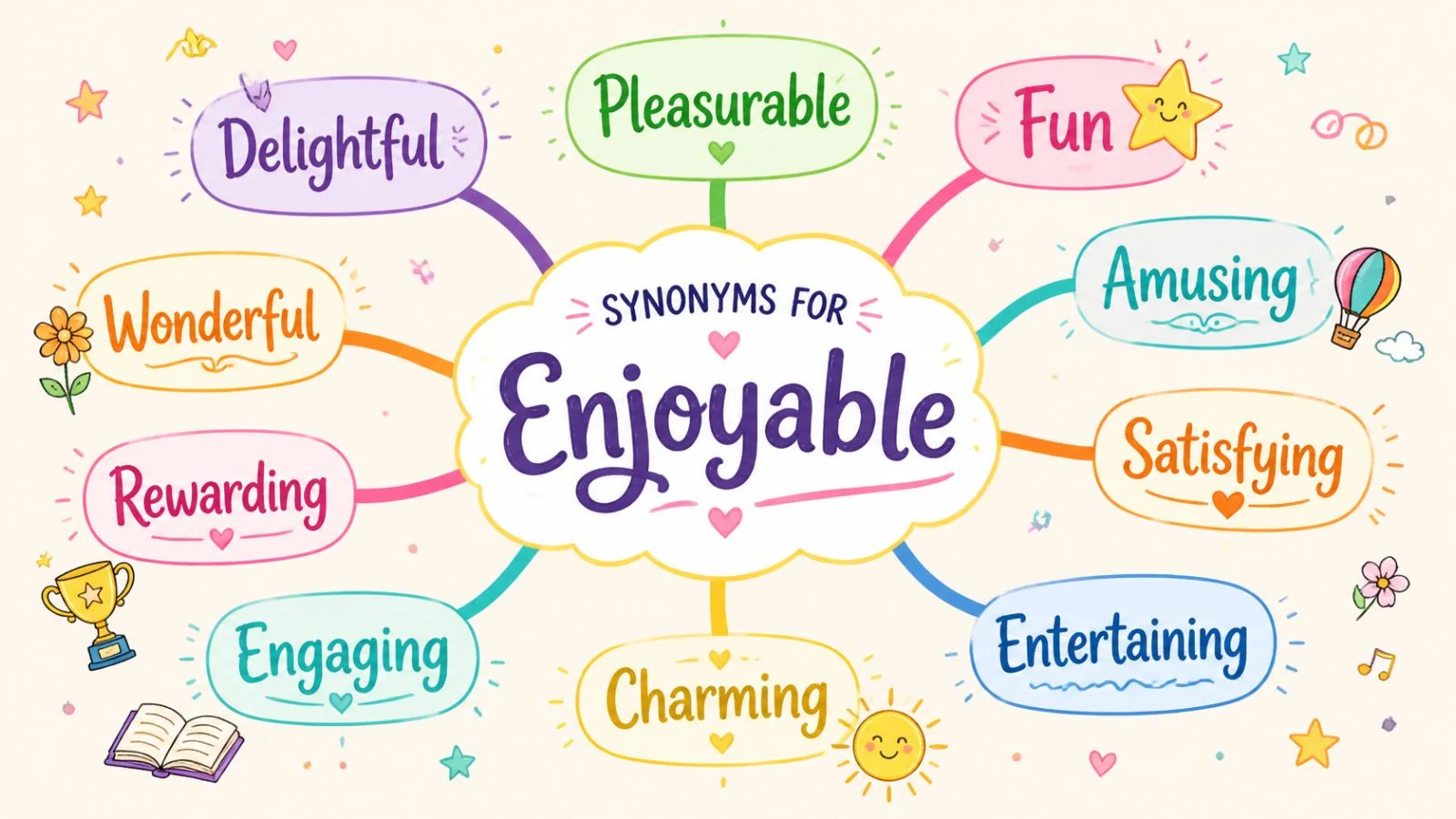
Another word for enjoyable is pleasant. Fun, pleasurable, and delightful also work well. Each one fits a different mood.
The right word depends on meaning and context. Some words show light fun, like amusing. Others show deep joy, like fulfilling, or calm comfort, like relaxing.
Quick list: pleasant, fun, pleasurable, delightful, lovely, entertaining, satisfying, rewarding, relaxing, agreeable
This article looks at 30 alternatives. Each entry has a meaning, IPA, a usage note, and an example. You will also see tables, word pairs, and common mistakes.
At a Glance: Enjoyable Synonyms and Related Alternatives
| Alternative | Part of Speech | Meaning | Register / Tone | Ideal Context |
| Pleasant | Adjective | Mildly good and pleasing | Neutral | Everyday events, weather, people |
| Fun | Adjective | Playful and light | Casual | Games, trips, parties |
| Pleasurable | Adjective | Bringing pleasure | Formal | Writing, reviews |
| Delightful | Adjective | Very pleasing | Warm | Special moments, gifts |
| Entertaining | Adjective | Holds interest with fun | Neutral | Shows, talks, stories |
| Satisfying | Adjective | Leaves you content | Neutral | Meals, tasks, results |
| Rewarding | Adjective | Worth the effort | Neutral | Work, study, hobbies |
| Relaxing | Adjective | Eases stress | Neutral | Breaks, trips, hobbies |
| Agreeable | Adjective | Pleasing and polite | Formal | Company, weather, terms |
| Lovely | Adjective | Very pleasing | Warm, British feel | Days, meals, visits |
Which Word Should You Use?
| If you want to… | Use | Why |
| Describe a mild, simple good time | pleasant | It is calm and safe in any setting. |
| Sound casual and playful | fun | People use it often in speech. |
| Sound formal in writing | pleasurable | It is polished but still clear. |
| Give strong praise | delightful | It shows real joy. |
| Praise a show or a talk | entertaining | It points to amusement. |
| Praise hard but good work | rewarding | It shows the effort was worth it. |
| Describe a calm break | relaxing | It points to ease, not thrills. |
| Describe friendly company | congenial | It fits people and groups. |
Exploring the Multiple Meanings of “Enjoyable”
“Enjoyable” is an adjective with one core idea. Its shades of meaning change with the setting.
1. Giving General Pleasure
- Meaning: Gives you pleasure or joy.
- Explanation: This is the main sense. It fits events, places, and things.
- Example: We had an enjoyable evening with old friends.
2. Fun and Entertaining
- Meaning: Fun to do or watch.
- Explanation: People use it for games, shows, and trips. It sounds lighter than “rewarding”.
- Example: The quiz game was enjoyable for kids and adults.
3. Calm and Comfortable
- Meaning: Pleasant in a calm, easy way.
- Explanation: It fits slow, quiet moments. In this sense, “relaxing” is a close match.
- Example: A slow walk through the park was enjoyable.
4. Satisfying to Do
- Meaning: Good to do, even when it takes effort.
- Explanation: Work, study, and hobbies can be enjoyable in this way. Here, “rewarding” is a close match.
- Example: Learning the piano turned out to be very enjoyable.
Sources: Merriam-Webster (entries for “enjoy” and “enjoyable”)
Analyzing 30 Enjoyable Alternatives in Detail
Some words below are direct synonyms. Others are related alternatives for special contexts.
Core Synonyms
1. Pleasant
IPA: (US and UK) /ˈplɛzənt/
Definition: Means giving you a mild, good feeling. It also fits people, weather, and places.
- Usage: It is the safest everyday match. However, it feels calmer than “enjoyable”.
- Example: We had a pleasant walk along the river after lunch.
2. Fun
IPA: (US and UK) /fʌn/
Definition: Means giving light, playful pleasure. It also works as a noun, as in “have fun”.
- Usage: This is the most casual choice. In fact, people use it more in speech than in formal writing.
- Example: The board game night was really fun for everyone.
3. Pleasurable
IPA: (US and UK) /ˈplɛʒərəbəl/
Definition: Means bringing pleasure or joy. It also sounds more formal than “pleasant”.
- Usage: It is a close synonym. Still, people use it more in writing than in speech.
- Example: Reading by the fire was a pleasurable way to spend Sunday.
4. Nice
IPA: (US and UK) /naɪs/
Definition: Means good or kind in a simple way. It also covers pleasing events.
- Usage: It is a broad, casual word. However, it can sound vague.
- Example: We had a nice dinner with my cousins last night.
5. Agreeable
IPA: (US and UK) /əˈɡriːəbəl/
Definition: Means pleasing to the senses or mind. It also can mean willing to agree.
- Usage: Use it as a polite, formal choice. However, only its “pleasing” sense fits enjoyable.
- Example: The hotel offered an agreeable stay at a fair price.
6. Satisfying
IPA: (US and UK) /ˈsætɪsfaɪɪŋ/
Definition: Means meeting a need and leaving you content. It also suits meals and tasks.
- Usage: It is a related alternative. For example, a task can be satisfying without being fun.
- Example: Finishing the puzzle was deeply satisfying for the whole family.
Strong Praise
7. Delightful
IPA: (US and UK) /dɪˈlaɪtfəl/
Definition: Means very pleasing. It also suggests joy that you can feel.
- Usage: This is a stronger form of “enjoyable”. However, it can sound a little formal.
- Example: The garden party was a delightful surprise for my aunt.
8. Lovely
IPA: (US and UK) /ˈlʌvli/
Definition: Means very pleasing or beautiful. It also shows warm feelings in British English.
- Usage: It is common in British speech. Still, it suits any warm, friendly event.
- Example: We spent a lovely afternoon at the beach.
9. Wonderful
IPA: US /ˈwʌndərfəl/ · UK /ˈwʌndəfəl/
Definition: Means very good and full of joy. It also shows strong praise.
- Usage: It is a strong match. In fact, it can sound bigger than a small event.
- Example: The trip to the coast was a wonderful change.
10. Terrific
IPA: (US and UK) /təˈrɪfɪk/
Definition: Means excellent or very good. It also marks strong, casual praise.
- Usage: It is informal and upbeat. However, its oldest sense was “causing fear”.
- Example: The concert was terrific from the first song to the last.
11. Splendid
IPA: (US and UK) /ˈsplɛndɪd/
Definition: Means grand and very good. It also fits events that feel special.
- Usage: It sounds formal and a little old-fashioned. Still, it works well in warm praise.
- Example: We had a splendid time at the harvest fair.
Entertaining and Lively
12. Entertaining
IPA: US /ˌɛntərˈteɪnɪŋ/ · UK /ˌɛntəˈteɪnɪŋ/
Definition: Means holding your interest in a fun way. It also fits shows, talks, and hosts.
- Usage: Use it for things that amuse. However, a calm walk is enjoyable, not entertaining.
- Example: His stories made the long train ride entertaining.
13. Amusing
IPA: (US and UK) /əˈmjuːzɪŋ/
Definition: Means funny or light-hearted. It also keeps you smiling.
- Usage: It is a related alternative. However, it points to humor, not to every kind of pleasure.
- Example: The toddler’s amusing dance made the whole room laugh.
14. Lively
IPA: (US and UK) /ˈlaɪvli/
Definition: Means full of energy and life. It also fits busy, cheerful places.
- Usage: This is a related alternative. For example, a lively party is enjoyable but noisy.
- Example: We found a lively café near the market square.
15. Diverting
IPA: US /dɪˈvɜːrtɪŋ/ · UK /daɪˈvɜːtɪŋ/
Definition: Means pulling your mind from worries in a light way. It also suggests a short break.
- Usage: It is a formal, slightly dated word. Still, writers use it for light, fun things.
- Example: The magazine offered a few diverting puzzles for the flight.
16. Engaging
IPA: (US and UK) /ɪnˈɡeɪdʒɪŋ/
Definition: Means holding your attention in a pleasant way. It also fits people with a warm style.
- Usage: It is a related alternative. However, it stresses interest more than pleasure.
- Example: She gave an engaging talk about birds in our town.
Fulfilling and Rewarding
17. Rewarding
IPA: US /rɪˈwɔːrdɪŋ/ · UK /rɪˈwɔːdɪŋ/
Definition: Means giving a good return for your effort. It also brings a sense of pride.
- Usage: This is a related alternative. In fact, a rewarding task can be hard and still good.
- Example: Teaching my niece to swim was rewarding work.
18. Gratifying
IPA: (US and UK) /ˈɡrætɪfaɪɪŋ/
Definition: Means giving a deep sense of pleasure or pride. It also suits good results.
- Usage: It is a formal, related word. For example, people use it for success.
- Example: It was gratifying to see the garden bloom again.
19. Fulfilling
IPA: (US and UK) /fʊlˈfɪlɪŋ/
Definition: Means giving a sense of purpose. It also suggests lasting joy.
- Usage: This is a related alternative. However, it is deeper than a simple good time.
- Example: She found volunteering at the shelter deeply fulfilling.
20. Heartwarming
IPA: US /ˈhɑːrtˌwɔːrmɪŋ/ · UK /ˈhɑːtˌwɔːmɪŋ/
Definition: Means causing warm, kind feelings. It also fits touching stories.
- Usage: It is a related alternative. Still, it fits moving moments more than fun ones.
- Example: The video of the puppy meeting the baby was heartwarming.
Calm and Comfortable
21. Relaxing
IPA: (US and UK) /rɪˈlæksɪŋ/
Definition: Means easing stress or tension. It also suits calm places and slow days.
- Usage: It is a related alternative. For example, a bath can be relaxing, not exciting.
- Example: A relaxing weekend at the lake was just what I needed.
22. Comfortable
IPA: US /ˈkʌmftərbəl/ · UK /ˈkʌmftəbəl/
Definition: Means easy, calm, and free from stress. It also fits chairs and rooms.
- Usage: This is a related alternative. However, it stresses ease more than pleasure.
- Example: The cabin felt comfortable after a long, cold drive.
23. Soothing
IPA: (US and UK) /ˈsuːðɪŋ/
Definition: Means calming and gentle. It also fits sounds and touch.
- Usage: It is a related alternative. In fact, it points to calm, not joy.
- Example: The soothing music helped the kids fall asleep.
24. Cozy
IPA: US /ˈkoʊzi/ · UK /ˈkəʊzi/
Definition: Means warm, snug, and homely. It also suggests small, friendly spaces.
- Usage: It is a related alternative. Still, it fits places and moods more than activities.
- Example: We spent a cozy evening with tea and old movies.
Formal and Literary Alternatives
25. Congenial
IPA: (US and UK) /kənˈdʒiːniəl/
Definition: Means friendly and pleasant to be with. It also fits groups and settings.
- Usage: It is a formal choice. For example, you can describe a congenial team or host.
- Example: The dinner party had a congenial mood from the start.
26. Convivial
IPA: (US and UK) /kənˈvɪviəl/
Definition: Means friendly and lively, often with food and drink. It also fits social gatherings.
- Usage: It is a formal, related word. However, it fits only social events.
- Example: The reunion had a convivial feel, full of food and laughter.
27. Delectable
IPA: (US and UK) /dɪˈlɛktəbəl/
Definition: Means very pleasing, especially to taste. It also appears in formal writing.
- Usage: It is a related alternative. However, it mostly describes food.
- Example: The bakery sells delectable pies made with fresh plums.
28. Blissful
IPA: (US and UK) /ˈblɪsfəl/
Definition: Means full of great happiness. It also suggests perfect peace.
- Usage: It is a strong, literary alternative. Still, it can sound too big for small events.
- Example: We had a blissful week in the mountains.
29. Idyllic
IPA: US /aɪˈdɪlɪk/ · UK /ɪˈdɪlɪk/
Definition: Means perfectly peaceful and pleasing. It also paints a dream-like picture.
- Usage: It is a related alternative. However, it fits scenes more than activities.
- Example: They spent an idyllic summer by the lake.
30. Joyous
IPA: (US and UK) /ˈdʒɔɪəs/
Definition: Means full of joy. It also fits events people celebrate together.
- Usage: It is a formal, literary choice. In fact, people use it for weddings and holidays.
- Example: The joyous crowd sang late into the night.
Sources: Merriam-Webster (entries for “enjoy” and “enjoyable”)
Enjoyable vs. Pleasant vs. Fun
These three words are the most common choices. They overlap, but they do not feel the same.
| Word | Strength | Tone | Best For |
| Enjoyable | Medium | Neutral | Events, meals, books, trips |
| Pleasant | Mild | Calm, polite | Weather, company, short visits |
| Fun | Medium to strong | Casual, playful | Games, parties, outings |
Sources: Merriam-Webster (entries for “enjoyable” and “enjoy”)
Enjoyable and Opposite/Paired Word Pairs
| Word | Paired Word | Note |
| enjoyable | unpleasant | The most direct opposite. |
| enjoyable | boring | Fits dull events and talks. |
| enjoyable | tedious | Fits slow, long tasks. |
| enjoyable | dreadful | A strong opposite for very bad events. |
| enjoyable | miserable | Shows deep unhappiness. |
| enjoyable | informative | A common pair in reviews, as in “enjoyable and informative”. |
Opposites change with the setting. For a task, “tedious” fits best. For an event, “unpleasant” is the safest choice.
Sources: Merriam-Webster (entry for “enjoyable”)
Common Word Partners of “Enjoyable”
| Pattern | Common Partners | Example |
| enjoyable + noun | experience, evening, meal, read, afternoon | It was an enjoyable read from start to end. |
| adverb + enjoyable | thoroughly, highly, quite, mildly | The trip was thoroughly enjoyable. |
| enjoyable to + verb | watch, read, play, use | The game is easy and enjoyable to play. |
| enjoyable and + adjective | informative, relaxing, rewarding | The class was enjoyable and informative. |
| make + noun + enjoyable | it, the trip, the day | Good friends make the trip enjoyable. |
| enjoyable for people | all ages, kids, everyone | The show is enjoyable for all ages. |
Sources: Merriam-Webster (entry for “enjoyable”)
Idiomatic Phrases Featuring “Enjoyable”
“Enjoyable” has no true idioms of its own. The expressions below use its root verb, “enjoy”. They are fixed phrases, not idioms in the strict sense.
1. Enjoy yourself
- Meaning: Have a good time.
- Example: Go to the party and enjoy yourself tonight.
2. Enjoy the ride
- Meaning: Take pleasure in an event or journey while it lasts.
- Example: The job is new, so just enjoy the ride.
3. Enjoy the fruits of your labor
- Meaning: Take pleasure in the results of your hard work.
- Example: After years of saving, they enjoyed the fruits of their labor.
4. Enjoy your meal
- Meaning: A polite wish said to someone about to eat.
- Example: The waiter smiled and said, “Enjoy your meal.”
Sources: Merriam-Webster (entry for “enjoy”)
Word Formation of “Enjoyable”
Etymology and Structure
“Enjoyable” is built from the verb “enjoy” plus the ending “-able”. The ending means “able to be”. Merriam-Webster traces “enjoy” to Middle English enjoien. That form came from Anglo-French enjoir or enjoier, meaning “to gladden” or “enjoy”. The French word joins en- and joie, which means “joy”.
Date and History
Merriam-Webster dates the verb “enjoy” to the 15th century. Its first sense was “to have for one’s use, benefit, or lot”. The sense of pleasure grew later. That entry does not give a date for “enjoyable” itself.
Word Class Variations
- Verb: enjoy
- Adjective: enjoyable
- Adverb: enjoyably
- Noun: enjoyment, enjoyableness, enjoyer
Sources: Merriam-Webster (entries for “enjoy,” “enjoyable,” “enjoyably,” and “enjoyableness”)
Common Word-Choice Mistakes
- “It is enjoyable to read”: use “It is enjoyable to read.”
- “The film was very enjoyable”: use “The film was very enjoyable.”
- “An enjoying day”: use “an enjoyable day.”
- “Enjoyful trip”: use “enjoyable trip” or “joyful trip.”
- “The party was delicious”: use “The party was delightful.”
- “A convivial walk alone”: use “a relaxing walk alone.”
- “The beach trip was amusing”: use “The beach trip was enjoyable.”
Frequently Asked Questions
What is the closest synonym for enjoyable?
“Pleasant” is the closest everyday match. “Pleasurable” is a close, more formal choice.
What is the difference between enjoyable and fun?
“Fun” is casual and playful. “Enjoyable” is calmer and fits more settings.
What is a formal alternative to enjoyable?
Try “pleasurable,” “agreeable,” “congenial,” or “gratifying.” They suit reports, reviews, and polite writing.
What is a literary alternative?
“Blissful,” “idyllic,” and “joyous” fit stories and poems. They sound stronger than “enjoyable”.
What is the opposite of enjoyable?
“Unpleasant” is the safest opposite. “Boring” and “tedious” fit dull events and tasks.
Can you describe people?
Yes, but it often works better with company. For example, you can say “enjoyable to talk to”.
Is enjoyable the same as enjoyed?
No. “Enjoyable” describes what gives pleasure. “Enjoyed” shows what someone did.
Can enjoyable describe food?
Yes. Still, “delicious” or “delectable” fits the taste better.
Is enjoyable only an adjective?
Yes. Its adverb is “enjoyably,” and its noun forms include “enjoyableness”.
Which word fits hard but good work?
“Rewarding” and “fulfilling” fit best. They show the effort was worth it.
Conclusion
The closest alternatives to “enjoyable” are “pleasant,” “fun,” and “pleasurable”. They work in most everyday cases. “Delightful” and “lovely” add warmth.
Context shapes the best choice. “Entertaining” points to amusement, while “relaxing” points to calm. “Rewarding” shows effort that pays off.
To choose well, first ask what kind of pleasure you mean. Next, check the tone you need. Finally, pick the word that fits both.

Emily Davis is a passionate writer who enjoys exploring English vocabulary, synonyms, and language tips to help readers improve their communication skills.
At PressivoMedia.com, she focuses on creating simple, engaging, and informative content that makes learning English easier and more enjoyable.