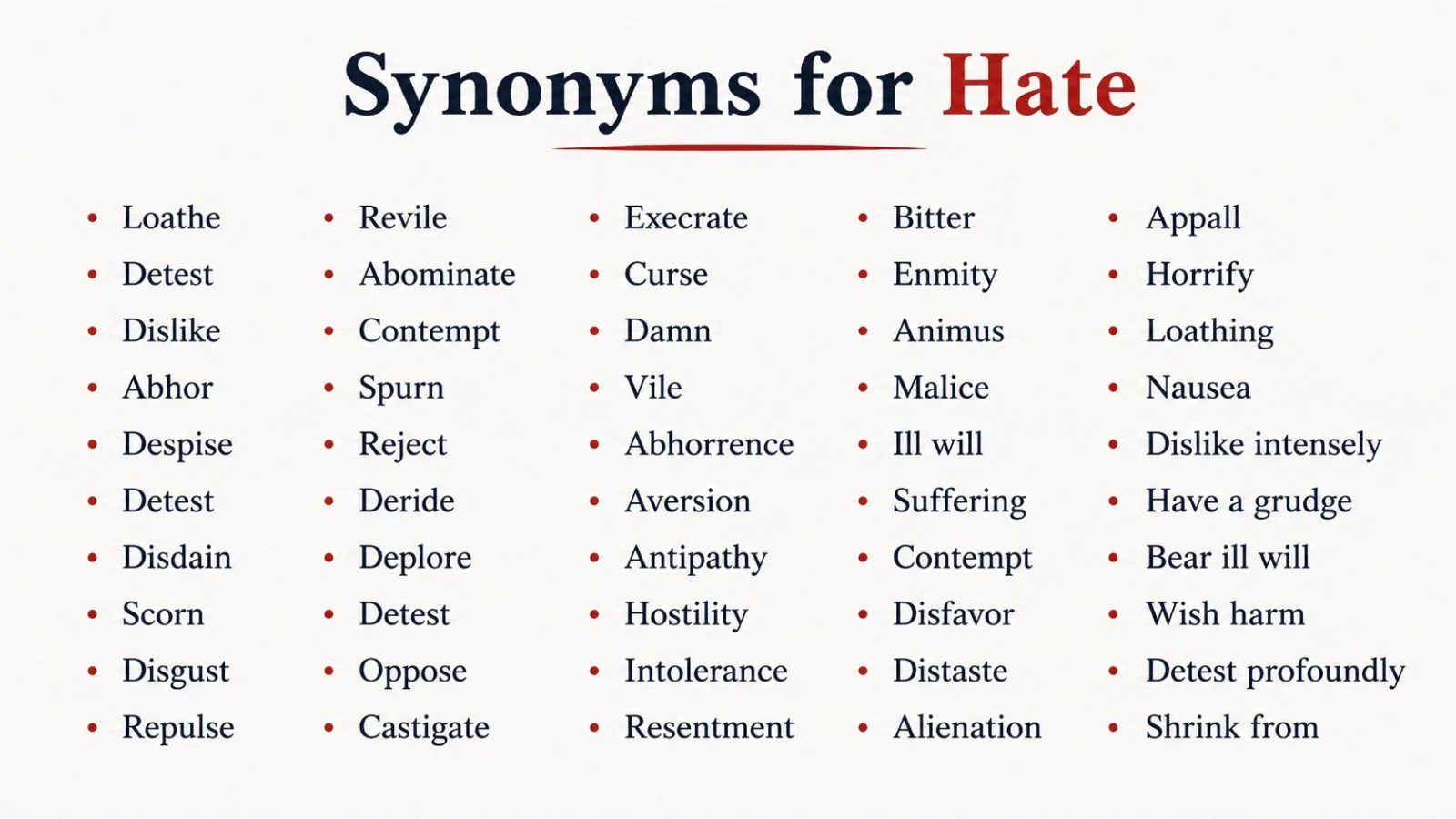
The closest everyday words for hate are detest, loathe, and despise. Each one shows strong dislike. However, the best choice depends on your meaning. You may mean anger, disgust, scorn, or a long grudge.
Hate works as a verb and a noun. So the word you pick also depends on that. For example, “hatred” and “enmity” are nouns. “Abhor” and “scorn” are verbs.
Quick list: detest, loathe, despise, abhor, dislike, hatred, hostility, contempt, aversion, resent
This article looks at 30 alternatives. Each one has a meaning, IPA, a usage note, and an example. You will also see tables, word pairs, idioms, and common mistakes.
At a Glance: Hate Synonyms and Related Alternatives
| Alternative | Part of Speech | Meaning | Register / Tone | Ideal Context |
| Detest | Verb | Dislike very strongly | Neutral to formal | Everyday strong dislike |
| Loathe | Verb | Feel deep disgust for | Neutral | Food, habits, people |
| Despise | Verb | Look down on with hate | Neutral to formal | People you do not respect |
| Abhor | Verb | Hate with horror | Formal | Moral or serious topics |
| Dislike | Verb | Not like | Neutral, mild | Polite, soft statements |
| Hatred | Noun | Intense ill will | Neutral | The feeling itself |
| Hostility | Noun | Open unfriendly feeling | Formal | Conflict and politics |
| Contempt | Noun | Total lack of respect | Formal | Scorn for people or acts |
| Aversion | Noun | Strong wish to avoid | Formal | Fear or disgust |
| Resent | Verb | Feel bitter about | Neutral | Unfair treatment |
Which Word Should You Use?
| If you want to… | Use | Why |
| Show strong dislike in daily talk | Detest | It is clear and not too harsh. |
| Show disgust at food or smells | Loathe | It carries a sense of revulsion. |
| Show you see someone as lesser | Despise | It mixes hate with scorn. |
| Show moral horror | Abhor | It fits cruelty or injustice. |
| Stay polite | Dislike | It is mild and safe. |
| Name the feeling as a noun | Hatred | It is the standard noun. |
| Describe a long bitter feeling | Rancor | It means hate that lasts. |
| Describe open conflict | Hostility | It shows hate in action. |
Exploring the Multiple Meanings of “Hate”
1. Intense dislike of a person or group
- Meaning: To feel strong anger and ill will toward someone.
- Explanation: This sense is the strongest. It can also describe hate aimed at whole groups.
- Example: He hates his old boss for what happened.
2. Strong dislike of a thing or activity
- Meaning: To dislike something very much.
- Explanation: This sense is common and often light. People use it for food, chores, and weather.
- Example: I hate waking up early on cold mornings.
3. Polite regret
- Meaning: To feel sorry or awkward about doing something.
- Explanation: Here, hate is not about anger. People use it to soften bad news or requests.
- Example: I hate to bother you, but I need help.
4. The feeling of hate (noun)
- Meaning: Strong dislike or ill will.
- Explanation: Many writers prefer “hatred” in this sense. However, “hate” is also correct.
- Example: Her speech was full of hate.
5. A thing that someone hates (noun)
- Meaning: An object of strong dislike.
- Explanation: This sense is mostly British. It appears in the phrase “pet hate.”
- Example: Loud chewing is my biggest pet hate.
Sources: Merriam-Webster; Collins Dictionary; Dictionary.com
Analyzing 30 Hate Alternatives in Detail
Some words below are direct synonyms. Others are related alternatives for certain contexts.
Core Verb Synonyms
1. Detest
IPA: /dɪˈtɛst/ (US and UK)
Definition: This verb means to hate something very much. It also shows a clear, firm dislike.
- Usage: It is a direct synonym. Still, it sounds a bit more formal than “hate.”
- Example: She detests rude drivers who never signal.
2. Loathe
IPA: US /loʊð/ · UK /ləʊð/
Definition: This verb means to feel deep disgust for something. It also suggests you cannot stand it.
- Usage: It is a direct synonym. However, it is stronger than “dislike.”
- Example: I loathe the smell of burnt toast.
3. Despise
IPA: /dɪˈspaɪz/ (US and UK)
Definition: This verb means to hate and look down on someone. It also shows a lack of respect.
- Usage: It is a direct synonym. In fact, it adds scorn to the hate.
- Example: They despise people who lie to friends.
4. Abhor
IPA: US /æbˈhɔːr/ · UK /əbˈhɔː/
Definition: This verb means to hate with deep horror. It also fits serious moral cases.
- Usage: It is a formal synonym. For example, writers use it for cruelty.
- Example: Most people abhor violence against children.
5. Dislike
IPA: /dɪsˈlaɪk/ (US and UK)
Definition: This verb means not to enjoy or approve of something. It also stays mild.
- Usage: It is a weaker alternative to hate. So it works when you want a polite tone.
- Example: I dislike crowded trains, but I use them.
6. Resent
IPA: /rɪˈzɛnt/ (US and UK)
Definition: This verb means to feel bitter about something unfair. It also points to a hurt feeling.
- Usage: It is a related alternative, not an exact synonym. Still, it often grows into hate.
- Example: He resents his brother for getting all the praise.
Formal and Literary Verbs
7. Abominate
IPA: US /əˈbɑːməneɪt/ · UK /əˈbɒmɪneɪt/
Definition: This verb means to hate something as evil or vile. It also sounds very strong.
- Usage: It is a formal synonym. However, it is rare in daily speech.
- Example: The poet abominated every form of tyranny.
8. Execrate
IPA: /ˈɛksɪkreɪt/ (US and UK)
Definition: This verb means to hate and curse something loudly. It also appears in old or literary writing.
- Usage: It is a rare synonym. In fact, most readers will not know it.
- Example: Crowds executed the ruler in the town square.
9. Scorn
IPA: US /skɔːrn/ · UK /skɔːn/
Definition: This verb means to reject someone as unworthy. It also shows open disrespect.
- Usage: It is a related alternative. It stresses disrespect more than anger.
- Example: She scorned their offer of free advice.
10. Disdain
IPA: /dɪsˈdeɪn/ (US and UK)
Definition: This verb means to look down on something beneath you. It also suggests pride.
- Usage: It is a related alternative. However, it is cooler than hate.
- Example: He disdains anyone who has not read the classics.
11. Revile
IPA: /rɪˈvaɪl/ (US and UK)
Definition: This verb means to criticize someone in a harsh, angry way. It also shows strong hate.
- Usage: It is a related alternative. It focuses on speech, so it is formal.
- Example: Critics revealed the film in their reviews.
12. Deplore
IPA: US /dɪˈplɔːr/ · UK /dɪˈplɔː/
Definition: This verb means to strongly disapprove of something. It also shows sorrow.
- Usage: It is a related alternative. However, it is milder than hate.
- Example: The mayor deplored the attack on the school.
Noun Synonyms
13. Hatred
IPA: /ˈheɪtrɪd/ (US and UK)
Definition: This noun means very strong dislike or ill will. It also names the feeling itself.
- Usage: It is the closest noun synonym. In short, it is the standard choice.
- Example: Years of hatred split the family in two.
14. Loathing
IPA: US /ˈloʊðɪŋ/ · UK /ˈləʊðɪŋ/
Definition: This noun means deep disgust and strong dislike. It also feels very personal.
- Usage: It is a direct synonym. However, it often points to disgust.
- Example: He looked at the dirty room with loathing.
15. Abhorrence
IPA: US /æbˈhɔːrəns/ · UK /əbˈhɒrəns/
Definition: This noun means horror and hate toward something wrong. It also sounds formal.
- Usage: It is a formal synonym. For example, it fits law and ethics.
- Example: The group voiced its abhorrence of cruelty.
16. Detestation
IPA: /ˌdiːtɛˈsteɪʃən/ (US and UK)
Definition: This noun means strong dislike. It also sounds old and formal.
- Usage: It is a rare synonym. So most writers choose “hatred” instead.
- Example: His detestation of noise was well known.
17. Antipathy
IPA: /ænˈtɪpəθi/ (US and UK)
Definition: This noun means a deep, lasting dislike. It also often has no clear cause.
- Usage: It is a related alternative. However, it is calmer than hatred.
- Example: She felt instant antipathy toward the new manager.
18. Animosity
IPA: US /ˌænɪˈmɑːsəti/ · UK /ˌænɪˈmɒsəti/
Definition: This noun means strong ill will between people. It also shows open anger.
- Usage: It is a related alternative. In fact, it fits fights and rivals.
- Example: Old animosity kept the two teams apart.
Hostile Feelings
19. Enmity
IPA: /ˈɛnməti/ (US and UK)
Definition: This noun means a state of deep hate between people. It also lasts a long time.
- Usage: It is a related alternative. For example, it fits families and nations.
- Example: The enmity between the clans lasted for decades.
20. Hostility
IPA: US /hɑːˈstɪləti/ · UK /hɒˈstɪləti/
Definition: This noun means unfriendly or angry behavior. It also covers open conflict.
- Usage: It is a related alternative. However, it stresses actions over feelings.
- Example: The visitors met hostility at the border.
21. Spite
IPA: /spaɪt/ (US and UK)
Definition: This noun means a wish to hurt or upset someone. It also suggests petty revenge.
- Usage: It is a related alternative. Still, it is smaller than true hatred.
- Example: She broke his phone out of spite.
22. Malice
IPA: /ˈmælɪs/ (US and UK)
Definition: This noun means a wish to do harm. It also shows a cruel plan.
- Usage: It is a related alternative. In fact, law texts use it often.
- Example: He spoke without malice, so nobody took offense.
23. Venom
IPA: /ˈvɛnəm/ (US and UK)
Definition: This noun means hate shown in bitter words. It also gives a sense of poison.
- Usage: It is a figurative alternative. For example, writers use it for harsh speech.
- Example: Her letter was full of venom.
24. Rancor
IPA: US /ˈræŋkər/ · UK /ˈræŋkə/
Definition: This noun means deep, long-lasting bitterness. It also shows hate that will not fade.
- Usage: It is a related alternative. However, it is formal.
- Example: The two writers argued without rancor.
Dislike and Disgust
25. Aversion
IPA: US /əˈvɜːrʒən/ · UK /əˈvɜːʃən/
Definition: This noun means a strong wish to avoid something. It also comes from dislike or fear.
- Usage: It is a related alternative. So it is not always about hate.
- Example: He has a strong aversion to crowds.
26. Distaste
IPA: /dɪsˈteɪst/ (US and UK)
Definition: This noun means mild dislike. It also shows a feeling that something is wrong.
- Usage: It is a weaker alternative. However, it is polite and calm.
- Example: She looked at the messy kitchen with distaste.
27. Revulsion
IPA: /rɪˈvʌlʃən/ (US and UK)
Definition: This noun means a sudden feeling of disgust. It also makes people pull back.
- Usage: It is a related alternative. In fact, it is closer to disgust than hate.
- Example: The smell filled him with revulsion.
28. Repugnance
IPA: /rɪˈpʌɡnəns/ (US and UK)
Definition: This noun means strong dislike for something wrong. It also suggests disgust.
- Usage: It is a formal alternative. For example, writers use it for moral topics.
- Example: Many people felt repugnance at the plan.
29. Contempt
IPA: /kənˈtɛmpt/ (US and UK)
Definition: This noun means a feeling that someone is worthless. It also shows no respect.
- Usage: It is a related alternative. However, hate is hot and contempt is cold.
- Example: He treated the rules with contempt.
30. Grudge
IPA: /ɡrʌdʒ/ (US and UK)
Definition: This noun means a bad feeling that stays after a wrong. It also often leads to revenge.
- Usage: It is a related alternative. Still, it is smaller than hatred.
- Example: She held a grudge for ten years.
Sources: Merriam-Webster; Collins Dictionary and Thesaurus; Dictionary.com
Hate vs. Hatred vs. Loathe vs. Despise
These four words overlap a lot. However, they differ in part of speech and tone.
| Word | Part of Speech | Main Idea | Typical Use |
| Hate | Verb or noun | Strong dislike | Daily speech |
| Hatred | Noun | Deep ill will | Serious writing |
| Loathe | Verb | Disgust | Food, habits, acts |
| Despise | Verb | Hate plus scorn | People you look down on |
First, use “hate” in most cases. Next, choose “hatred” when you need a noun. Finally, pick “loathe” for disgust and “despise” for scorn.
Sources: Merriam-Webster; Collins Dictionary
Hate and Opposite/Paired Word Pairs
| Word | Paired Word | Note |
| Hate | Love | This is the main opposite. |
| Hate | Like | This pair shows a milder contrast. |
| Detest | Adore | Both are strong. |
| Hatred | Affection | This pair fits the noun forms. |
| Contempt | Respect | This pair is about how we value people. |
| Enmity | Friendship | This pair fits groups and nations. |
| Hostility | Warmth | This pair is about behavior. |
Some pairs form true opposites. Others only show a contrast. For example, “love” and “hate” often appear together in one phrase. People also say “love and hate” when they mean mixed feelings.
Sources: Merriam-Webster; Collins Thesaurus
Common Word Partners of “Hate”
| Pattern | Common Partners | Example |
| hate + noun | hate speech, hate crime, hate mail | The site bans hate speech. |
| adverb + hate | really, truly, absolutely | I absolutely hate waiting in line. |
| hate + to + verb | hate to say, hate to see | I hate to say this, but you are wrong. |
| hate it when | hate it when | She hates it when people interrupt. |
| hate + -ing | hate waiting, hate cooking | He hates cooking on weekdays. |
| pet + hate | pet hate (British) | Slow walkers are my pet hate. |
Sources: Collins Dictionary; Oxford Learner’s Dictionaries
Idiomatic Phrases Featuring “Hate”
1. Hate someone’s guts
- Meaning: To hate someone very much.
- Example: He hates his rival’s guts.
2. Love-hate relationship
- Meaning: A bond with both strong liking and strong dislike.
- Example: I have a love-hate relationship with my old car.
3. Pet hate
- Meaning: A small thing that always annoys you. Americans often say “pet peeve.”
- Example: Messy desks are her pet hate.
4. Hate to break it to you
- Meaning: A polite way to share bad news.
- Example: I hate to break it to you, but the shop is closed.
Sources: Merriam-Webster; Collins Dictionary; Cambridge Dictionary
Word Formation of “Hate”
Etymology & Structure
“Hate” is a short, old word. It comes from Old English and has Germanic roots. Etymonline links it to a root that also meant sorrow.
Date and History
The verb hatian and the noun here appear in Old English. So the word is more than a thousand years old.
Word Class Variations
- Verb: hate, hates, hated, hating
- Noun: hate, hatred, hater
- Adjective: hateful, hated
- Adverb: hatefully
Sources: Etymonline; Merriam-Webster; Collins Dictionary
Common Word-Choice Mistakes
- Hatred the rain: hate the rain.
- I am hating it (formal writing): I hate it.
- She has a hate for him: she has hatred for him.
- Abhor soup: dislike soup. “Abhor” is too strong.
- Detesting him: detest him.
- Loathe to say: hate to say. “Loathe” is less usual in this pattern.
- Despise to wait: hate to wait. “Despise” is not common before “to.”
Frequently Asked Questions
What is the closest synonym for hate?
“Detest” is the closest everyday synonym. “Loathe” is also very close.
What is a formal word for hate?
“Abhor” is a common formal choice. “Abominate” is more rare.
What is a literary word for hate?
“Execrate” and “abominate” appear in older or poetic writing. Most readers will find them rare.
What is the difference between hate and hatred?
“Hate” is a verb or noun. “Hatred” is only a noun.
What is the difference between loathe and despise?
“Loathe” stresses disgust. “Despise” stresses scorn.
What is the opposite of hate?
“Love” is the main opposite. “Like” and “adore” also work in some cases.
Conclusion
The closest words for hate are detest, loathe, and despise. For the noun, “hatred” is the best match. Many other words only share part of the meaning.
Context decides the right word. For example, “revulsion” is about disgust. “Contempt” is about scorn. “Hostility” is about action.
To choose well, first ask what you mean. Next, check the part of speech and the tone. Finally, test the word in a sentence.

Olivia Martin is a passionate writer who enjoys exploring English vocabulary, synonyms, and language tips to help readers improve their writing skills.
At PressivoMedia.com, Olivia shares helpful language resources and easy-to-understand content to make communication clearer and more effective.