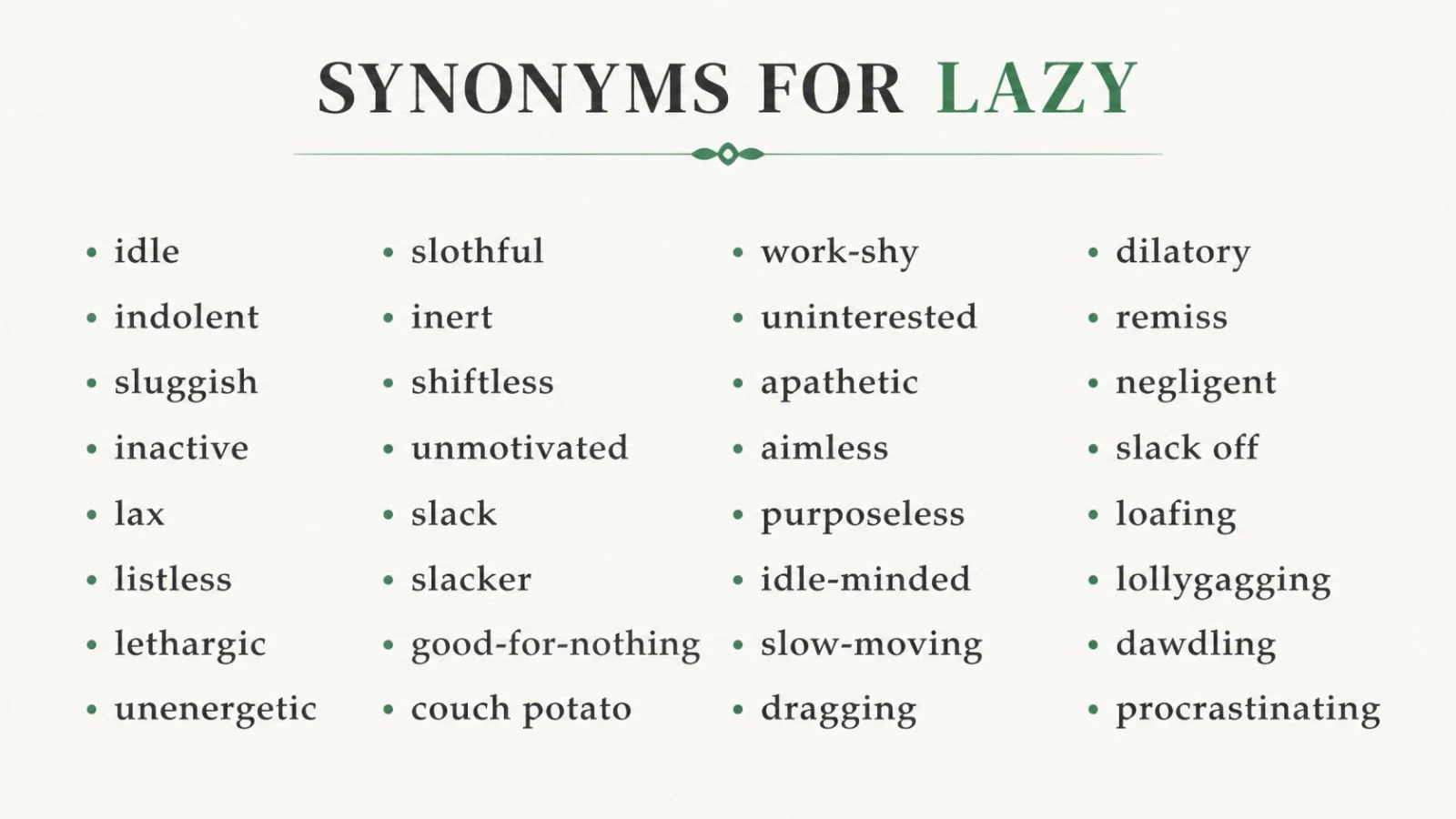
Another word for lazy is idle, indolent, or sluggish. Each one fits a slightly different case. Lazy can mean unwilling to work, low on energy, or simply relaxed.
The best choice depends on meaning and context. Idle and indolent are about avoiding work, while sluggish and lethargic are about low energy. Easygoing and laid-back sound calm, not critical.
Quick list: idle, indolent, slothful, sluggish, lethargic, listless, lax, slacker, laid-back, lackadaisical
This article looks at 30 alternatives. You will find meanings, IPA, usage notes, examples, and context for each word.
At a Glance: Lazy Synonyms and Related Alternatives
| Alternative | Part of Speech | Meaning | Register / Tone | Ideal Context |
| Idle | Adjective | Not working or not in use | Neutral | Workers, machines, free time |
| Indolent | Adjective | Fond of doing nothing | Formal | Writing about habits |
| Slothful | Adjective | Unwilling to work hard | Formal, strong | Moral judgment |
| Sluggish | Adjective | Slow and low in energy | Neutral | Bodies, machines, markets |
| Lethargic | Adjective | Very tired and slow | Neutral | Illness, heat, fatigue |
| Listless | Adjective | Without energy or interest | Neutral | Sad or bored moods |
| Lax | Adjective | Not strict or careful | Formal | Rules, checks, duty |
| Shiftless | Adjective | Lazy and without goals | Critical | Drifting people |
| Lackadaisical | Adjective | Showing little effort or interest | Formal | Careless attitudes |
| Laid-back | Adjective | Relaxed and calm | Informal, warm | Easy personalities |
Which Word Should You Use?
| If you want to… | Use | Why |
| Criticize someone who avoids work | Indolent or slothful | Both sound strong and formal |
| Describe low energy from heat or illness | Lethargic | It is about energy, not attitude |
| Describe a slow machine or market | Sluggish | It fits things as well as people |
| Praise a slow, pleasant afternoon | Leisurely | It sounds calm and positive |
| Tease a friend who sits all day | Couch potato | It is playful and informal |
| Describe careless, rushed work | Slapdash | It focuses on the results |
| Write formally about a missed duty | Negligent or remiss | Both suit serious writing |
| Describe a calm, relaxed person | Laid-back | It sounds warm, not harsh |
Exploring the Multiple Meanings of “Lazy”
1. Unwilling to work
- Meaning: Avoiding effort or work on purpose.
- Explanation: This is the main sense of laziness. It also carries blame.
- Example: My cousin is too lazy to wash his own dishes.
2. Slow and low in energy
- Meaning: Moving slowly or feeling too tired to act.
- Explanation: This sense is less about blame. It also fits heat, illness, or fatigue.
- Example: A hot afternoon makes everyone feel lazy.
3. Careless or not thorough
- Meaning: Done with little care or effort.
- Explanation: Here the word describes work, not a person. People often use it for writing and thinking.
- Example: The editor rejected the story for lazy research.
4. Relaxed and pleasant
- Meaning: Calm and free from rush.
- Explanation: This sense is positive. It often follows words like day, Sunday, or afternoon.
- Example: We spent a lazy Sunday reading in the garden.
5. Slow-moving
- Meaning: Moving at a gentle, slow pace.
- Explanation: This sense fits water and other things in nature. Nobody is to blame here.
- Example: The lazy river carried our boat past the fields.
Sources: Merriam-Webster; Collins Dictionary; Dictionary.com
Analyzing 30 Lazy Alternatives in Detail
Some alternatives are direct synonyms, while others are related words that fit only certain contexts.
Core Synonyms
1. Idle
IPA: /ˈaɪdəl/ (US and UK)
Definition: Means not working or not in use. It can also show a person who avoids work.
- Usage: First, idleness is not always negative, because workers can be idle through no fault of their own. Still, it can mean being lazy when someone chooses to do nothing.
- Example: The idle clerks chatted by the door instead of helping customers.
2. Indolent
IPA: /ˈɪndələnt/ (US and UK)
Definition: Means fond of doing nothing. It also sounds formal and a little old.
- Usage: Indolent is a formal, direct synonym. For example, writers use it for calm, slow people who avoid effort.
- Example: The indolent prince slept late and left every task to his aides.
3. Slothful
IPA: US /ˈsloʊθfəl/ · UK /ˈsləʊθfəl/
Definition: Means unwilling to work hard. It also links to sloth, one of the seven deadly sins.
- Usage: Slothful is strong and formal. In fact, it often sounds like a judgment of character.
- Example: His slothful habits cost him the job within a month.
4. Shiftless
IPA: /ˈʃɪftləs/ (US and UK)
Definition: Means lazy and without goals. It also suggests a person who drifts through life.
- Usage: Shiftless is a harsh, old-fashioned word. However, people still use it in speech and stories.
- Example: Her uncle was a shiftless man who never kept a job.
5. Work-shy
IPA: US /ˈwɜːrk ʃaɪ/ · UK /ˈwɜːk ʃaɪ/
Definition: Means avoiding work on purpose. It also appears mostly in British English.
- Usage: Work-shy is informal and critical. However, it is narrower than being lazy, because it is only about jobs.
- Example: The manager called him work-shy after he skipped three shifts.
Low-Energy Words
6. Sluggish
IPA: /ˈslʌɡɪʃ/ (US and UK)
Definition: Means slow and lacking energy. It also fits machines, markets, and traffic.
- Usage: Sluggish is about pace, not attitude. As a result, it sounds less harsh than lazy.
- Example: I felt sluggish all morning after staying up late.
7. Lethargic
IPA: US /ləˈθɑːrdʒɪk/ · UK /ləˈθɑːdʒɪk/
Definition: Means very tired and slow to move. It can also point to illness.
- Usage: Lethargic is a related alternative, not an exact synonym. However, it fits tired people who need rest.
- Example: The heat left the dog lethargic and uninterested in food.
8. Listless
IPA: /ˈlɪstləs/ (US and UK)
Definition: Means having no energy or interest. It also suggests a flat, bored mood.
- Usage: Listless fits a sad or tired mood. For example, you can use it for a bored child.
- Example: The listless students stared at the clock all afternoon.
9. Languid
IPA: /ˈlæŋɡwɪd/ (US and UK)
Definition: Means slow, calm, and relaxed in movement. It also has a graceful, dreamy feel.
- Usage: Languid is a literary, related alternative. In fact, it often sounds pretty, not critical.
- Example: She gave a languid wave from the hammock.
10. Torpid
IPA: US /ˈtɔːrpɪd/ · UK /ˈtɔːpɪd/
Definition: Means barely active or awake. It can also apply to animals in deep rest.
- Usage: Torpid is rare and formal. Still, it is a related word for very slow, sleepy states.
- Example: The torpid snake lay still on the cold rock.
Careless and Neglectful Words
11. Slack
IPA: /slæk/ (US and UK)
Definition: Means not working hard or not paying attention. It can also mean loose, like a rope.
- Usage: Slack is about low effort, not low energy. For example, a slack worker misses small details.
- Example: Slack habits at the office led to many late reports.
12. Lax
IPA: /læks/ (US and UK)
Definition: Means not strict or careful. It also fits rules and checks, not only people.
- Usage: Lax is a related alternative about weak control. However, it does not mean tired or sleepy.
- Example: The lax guard let visitors walk in without any check.
13. Negligent
IPA: /ˈneɡlɪdʒənt/ (US and UK)
Definition: Means failing to take proper care. It also has a legal sense.
- Usage: Negligent is formal and serious. However, it is a related word, because it is about careless duty.
- Example: The negligent driver ignored every warning sign on the road.
14. Remiss
IPA: /rɪˈmɪs/ (US and UK)
Definition: Means failing to do a duty. It also sounds polite and formal.
- Usage: Remiss is a related alternative for missed tasks. For example, people say they were remiss to admit a small slip.
- Example: I was remiss in not thanking you sooner for the gift.
15. Slapdash
IPA: /ˈslæpdæʃ/ (US and UK)
Definition: Means done quickly and without care. It also fits lazy work, not lazy people.
- Usage: Slapdash is a related alternative about results. In fact, you can use it for rushed work.
- Example: His slapdash repair fell apart after just one week.
Informal Labels for Lazy People
16. Slacker
IPA: US /ˈslækər/ · UK /ˈslækə/
Definition: Means a person who avoids work or effort. It is also informal and often mocking.
- Usage: Slacker is a noun, not an adjective. However, you can use it where you would say lazy person.
- Example: Nobody wanted to work with a slacker on the group project.
17. Layabout
IPA: /ˈleɪəbaʊt/ (US and UK)
Definition: Means a person who does nothing useful. It also feels informal and a little old.
- Usage: Layabout is a noun with a harsh tone. For example, an angry parent might use it.
- Example: His father called him a layabout for sleeping until noon.
18. Loafer
IPA: US /ˈloʊfər/ · UK /ˈləʊfə/
Definition: Means a person who wastes time instead of working. It also names a type of shoe.
- Usage: Loafer is a noun and sounds mild. However, the shoe meaning can cause mix-ups.
- Example: The loafer spent every afternoon on the park bench.
19. Bone idle
IPA: US /ˌboʊn ˈaɪdəl/ · UK /ˌbəʊn ˈaɪdəl/
Definition: Means extremely lazy. It also sounds British and informal.
- Usage: Bone idle is a fixed phrase, not a single word. Still, it works as a stronger form of laziness.
- Example: My brother is bone idle and never washes a dish.
20. Couch potato
IPA: US /ˈkaʊtʃ pəˌteɪtoʊ/ · UK /ˈkaʊtʃ pəˌteɪtəʊ/
Definition: Means a person who sits and watches TV for hours. It also hints at an inactive life.
- Usage: Couch potato is a playful noun and a related alternative. For example, friends use it to tease.
- Example: After work he becomes a couch potato and watches shows all night.
Relaxed and Leisurely Words
21. Leisurely
IPA: US /ˈliːʒərli/ · UK /ˈleʒəli/
Definition: Means slow and relaxed, with no rush. It also sounds pleasant, not critical.
- Usage: Leisurely fits the lazy afternoon sense of lazyness. As a result, it works well for walks and meals.
- Example: We took a leisurely walk along the river after lunch.
22. Easygoing
IPA: US /ˌiːziˈɡoʊɪŋ/ · UK /ˌiːziˈɡəʊɪŋ/
Definition: Means calm and not easily upset. It also fits people who take life slowly.
- Usage: Easygoing is a related alternative about mood, not effort. Still, it can hint at low drive.
- Example: My easygoing boss never worries about small mistakes or late emails.
23. Laid-back
IPA: /ˌleɪd ˈbæk/ (US and UK)
Definition: Means relaxed and calm. It is also informal and friendly.
- Usage: Laid-back is a related alternative that sounds warm. For example, friends use it to praise a calm person.
- Example: He is so laid-back that nothing ever seems to bother him.
24. Unhurried
IPA: US /ʌnˈhɜːrid/ · UK /ʌnˈhʌrid/
Definition: Means done without rush. It also shows a calm, steady pace.
- Usage: Unhurried is a neutral, related alternative. In fact, it suits the slow pace of being lazy.
- Example: She gave an unhurried answer and smiled at the crowd.
25. Carefree
IPA: US /ˈkɛrfriː/ · UK /ˈkeəfriː/
Definition: Means free from worry. It also suggests a simple, happy time.
- Usage: Carefree is a related alternative for mood. For example, it fits a lazy summer day.
- Example: We spent a carefree weekend doing nothing at the beach.
Attitude and Motivation Words
26. Lackadaisical
IPA: /ˌlækəˈdeɪzɪkəl/ (US and UK)
Definition: Means showing little effort or interest. It also suggests a careless attitude.
- Usage: Lackadaisical is formal but easy to use. However, it points to attitude, not tiredness.
- Example: He took a lackadaisical approach to studying for the exam.
27. Apathetic
IPA: /ˌæpəˈθɛtɪk/ (US and UK)
Definition: Means not caring about anything. It also suggests no wish to act.
- Usage: Apathetic is a related alternative about feelings. However, a lazy person may still care.
- Example: Many voters felt apathetic and stayed home on election day.
28. Inert
IPA: US /ɪˈnɜːrt/ · UK /ɪˈnɜːt/
Definition: Means not moving or acting. It can also describe objects, not just people.
- Usage: Inert is a related alternative with a science feel. For example, some gases are inert.
- Example: He lay inert on the sofa after the long trip.
29. Dilatory
IPA: US /ˈdɪləˌtɔːri/ · UK /ˈdɪlətəri/
Definition: Means slow to act, often on purpose. It also fits people who delay tasks.
- Usage: Dilatory is rare and formal. In fact, you will see it mostly in legal or formal writing.
- Example: The dilatory clerk took weeks to answer a simple request.
30. Unmotivated
IPA: US /ʌnˈmoʊtɪveɪtɪd/ · UK /ʌnˈməʊtɪveɪtɪd/
Definition: Means having no drive to start or finish tasks. It also sounds neutral and modern.
- Usage: Unmotivated is a plain, related choice. However, it blames the mood, not the character.
- Example: She felt unmotivated on Monday and put off every task.
Sources: Merriam-Webster; Collins Dictionary and Thesaurus; Dictionary.com
Lazy vs. Idle vs. Lethargic
These three words overlap, but they point to different causes. Lazy blames the person. Idle describes a state. Lethargic describes energy.
| Word | Main Idea | Blame? | Example |
| Lazy | Unwilling to make effort | Yes | He is lazy about homework. |
| Idle | Not working or in use | Sometimes | The factory sat idle for a week. |
| Lethargic | Very low energy | No | The flu left her lethargic. |
Use laziness when choice matters. Use idle when the focus is on activity. Use lethargic when the body feels heavy.
Sources: Merriam-Webster; Collins Dictionary
Lazy and Opposite Word Pairs
| Word | Paired Word | Note |
| Lazy | Hardworking | The most common opposite in daily speech |
| Lazy | Industrious | Formal and positive |
| Lazy | Diligent | Stresses care and steady effort |
| Lazy | Energetic | Opposite of the low-energy sense |
| Lazy | Motivated | Opposite of unmotivated |
No single word is the perfect opposite of lazy. The right pair depends on the sense. Hardworking fits the effort sense, while energetic fits the low-energy sense.
Sources: Merriam-Webster; Collins Thesaurus
Common Word Partners of “Lazy”
| Pattern | Common Partners | Example |
| lazy + time word | lazy afternoon, lazy day, lazy Sunday | We enjoyed a lazy afternoon at home. |
| lazy + thing | lazy river, lazy eye | Tubes floated down the lazy river. |
| lazy + work product | lazy writing, lazy thinking | The review called the plot lazy writing. |
| adverb + lazy | downright lazy, incredibly lazy | He was downright lazy about chores. |
| too lazy to + verb | too lazy to cook, too lazy to call | She was too lazy to cook dinner. |
| verb + lazy | feel lazy, get lazy, grow lazy | I always feel lazy in winter. |
Sources: Collins Dictionary; Merriam-Webster
Idiomatic Phrases Featuring “Lazy”
Lazy has few true idioms. These are established expressions, and each one has a fixed meaning.
1. Lazybones
- Meaning: A nickname for a lazy person. People often use it in a teasing way.
- Example: Get up, lazybones, the sun is already high.
2. Lazy Susan
- Meaning: A round tray that turns, so people can reach food on a table.
- Example: Please spin the lazy Susan and pass the salt.
3. Lazy eye
- Meaning: A common name for a vision problem where one eye sees poorly. Doctors call it amblyopia.
- Example: The doctor treated her son’s lazy eye with a patch.
4. Lazy days of summer
- Meaning: The slow, relaxed part of summer. It has a warm, happy tone.
- Example: We remember the lazy days of summer by the lake.
Sources: Merriam-Webster; Collins Dictionary; Dictionary.com
Word Formation of “Lazy”
Etymology & Structure: Lazy is a short adjective. Its origin is uncertain. Dictionaries link it to Low German lasich, which means feeble or weak.
Date and History: Lazy appeared in English in the mid-1500s. Early spellings differ from today’s form.
Word Class Variations:
- Adjective: lazy, lazier, laziest
- Adverb: lazily
- Noun: laziness, lazybones
- Verb: laze (a back-formation from lazy)
Sources: Etymonline; Merriam-Webster
Common Word-Choice Mistakes
- He felt laziness after lunch: He felt lazy after lunch.
- She is lethargic today: She is lethargic today.
- I am very lazily today: I am very lazy today.
- A slothful Sunday walk: A leisurely Sunday walk.
- He has a lackadaisy attitude: He has a lackadaisical attitude.
- The slow market is slothful: The slow market is sluggish.
- She is idle because she hates work: She is indolent because she hates work.
Frequently Asked Questions
What is the closest synonym for lazy?
Idle and indolent are the closest synonyms. Indolent is more formal.
What is a formal alternative to laziness?
Indolent, slothful, and lackadaisical sound formal. Dilatory is also formal but rare.
What is the difference between lazy and lethargic?
Lazy means unwilling to make an effort. Lethargic means very tired, often from illness or heat.
Is idle the same as lazy?
Not always. Idle can mean simply not working, while lazy blames the person.
What is a positive alternative to being lazy?
Leisurely, laid-back, and unhurried sound positive. They suit calm, relaxed moments.
What is a slang word for a lazy person?
Slacker and couch potato are common informal words. Layabout is also informal.
Can lazy describe things, not people?
Yes. You can say a lazy river or a lazy afternoon. In these cases, nobody takes blame.
What is the opposite of lazy?
Hardworking is the most common opposite. Industrious and diligent are more formal.
Is sluggish a good synonym for lazy?
Only in the low-energy sense. Sluggishness is about pace, not about unwillingness to work.
Does being lazy always sound negative?
No. In phrases like lazy Sunday, it sounds warm and pleasant.
Conclusion
The closest alternatives to lazy are idle, indolent, and slothful. Sluggish and lethargic fit low energy. Slacker and couch potato work well in casual talk.
Context matters most. Some words blame the person, while others describe energy, mood, or pace. Careless words like lax and slapdash focus on the work itself.
To choose the right word, first ask what you mean. Decide if you want to criticize, describe, or praise. Then pick the word with the right tone.

Olivia Martin is a passionate writer who enjoys exploring English vocabulary, synonyms, and language tips to help readers improve their writing skills.
At PressivoMedia.com, Olivia shares helpful language resources and easy-to-understand content to make communication clearer and more effective.