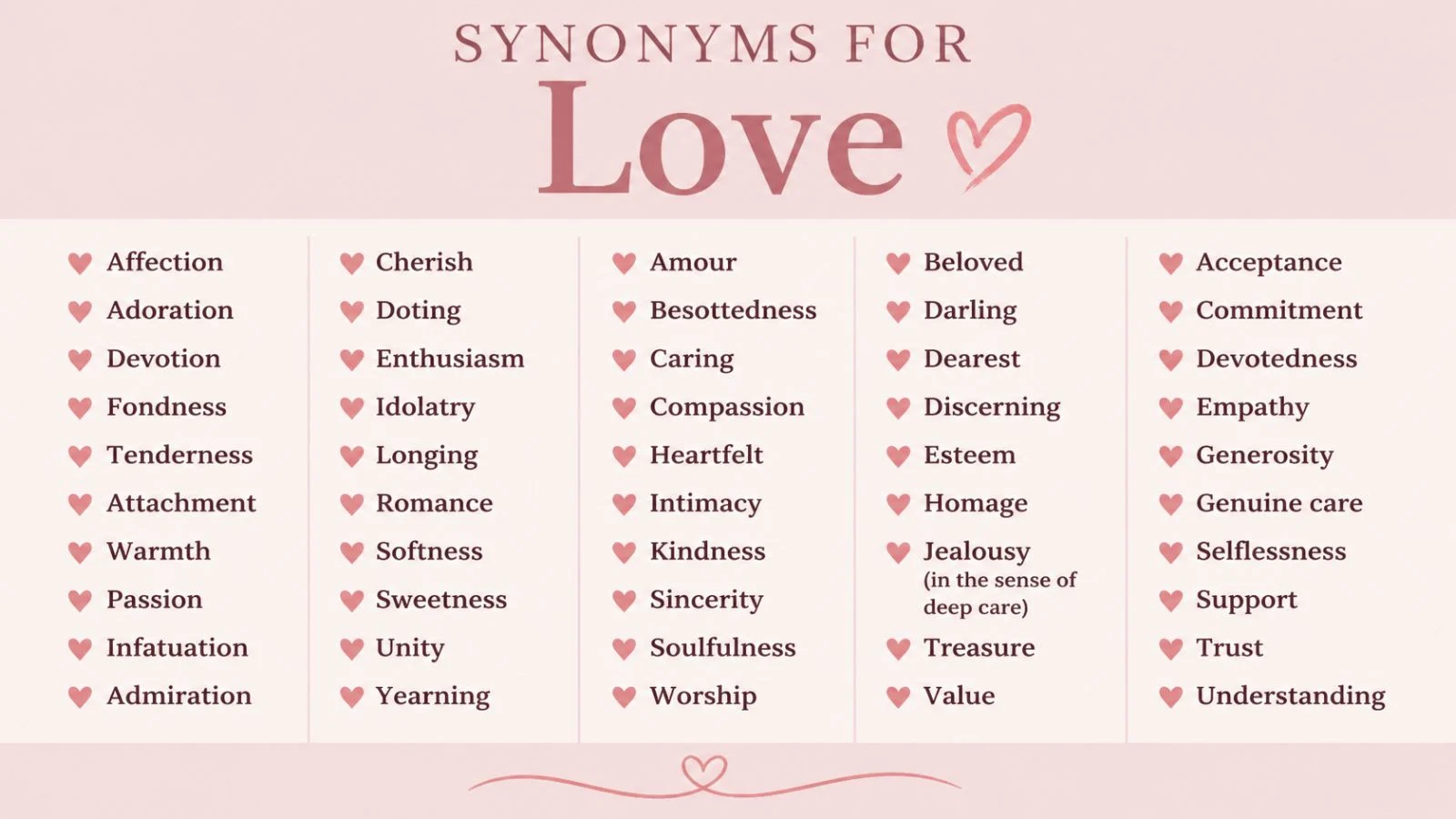
The closest everyday words for love are affection, fondness, and devotion. As a verb, you can use adore or cherish the best choice depends on the feeling you want to show it also depends on whether you mean a person, a thing, or an action.
Love covers many areas. It can mean family care, romantic passion, or a strong liking for food or hobbies. It can also be a pet name, as in “love” or “darling.”
Quick list: affection, fondness, devotion, passion, tenderness, adore, cherish, sweetheart, beloved
This guide looks at 30 alternatives. Each one has a meaning, IPA, a usage note, and an example. Some are direct synonyms, and others fit only certain contexts.
At a Glance: Love Synonyms and Related Alternatives
| Alternative | Part of Speech | Meaning | Register / Tone | Ideal Context |
| Affection | Noun | Gentle, caring feeling | Neutral, warm | Family, friends, couples |
| Devotion | Noun | Deep loyalty and love | Formal, serious | Marriage, faith, family |
| Passion | Noun | Strong romantic feeling | Neutral, intense | Romance, hobbies |
| Tenderness | Noun | Soft, gentle care | Warm, gentle | Parents, partners |
| Adore | Verb | Love and admire greatly | Warm, strong | People, pets, food |
| Cherish | Verb | Hold dear and protect | Warm, serious | People, memories |
| Infatuation | Noun | Short, intense crush | Neutral, a little critical | Early romance |
| Fancy | Verb | Like or be attracted to | Casual, mostly British | Everyday talk |
| Sweetheart | Noun | Loved person | Warm, informal | Couples, family |
| Beloved | Noun / Adjective | Deeply loved person | Formal, poetic | Vows, poems |
Which Word Should You Use?
| If you want to… | Use | Why |
| Show gentle care | Affection or tenderness | Both sound soft and safe. |
| Describe strong romantic heat | Passion | It shows intense feelings. |
| Talk about a short crush | Infatuation | It hints the feeling may fade. |
| Say you value someone for life | Cherish | It shows care that lasts. |
| Praise a hobby or food | Enjoy or relish | These fit things better than people. |
| Address your partner | Sweetheart or darling | They work as pet names. |
| Write a poetic line | Beloved or ardor | Both sound formal and old-style. |
| Show care for strangers | Compassion or goodwill | They focus on kindness, not romance. |
Exploring the Multiple Meanings of “Love”
1. Deep Affection
- Meaning: A strong feeling of care for another person.
- Explanation: This is the main sense. It covers family, friends, and partners.
- Example: A mother’s love for her child is very strong.
2. Romantic or Sexual Passion
- Meaning: Intense feeling between romantic partners.
- Explanation: This sense is about attraction and closeness. Many songs and stories use it.
- Example: They fell in love during a summer in Rome.
3. A Loved Person or Pet Name
- Meaning: A person you love, or a name you call them.
- Explanation: People use it as a noun for a partner. In British English, it can also be a friendly way to address someone.
- Example: Thank you, love, for the tea.
4. Strong Liking for Something
- Meaning: A great enjoyment of a thing or activity.
- Explanation: This sense is about hobbies and tastes. It does not need a person.
- Example: He has a deep love of old movies.
5. To Feel Love or Like Something Greatly
- Meaning: The verb for having deep care or strong enjoyment.
- Explanation: As a verb, it works for people and things. Context shows the strength.
- Example: She loves her sister and she loves hiking.
6. Zero Score in Tennis
- Meaning: No points in a game or match.
- Explanation: This sense is only about scores. It has no link to feeling in modern use.
- Example: The player won the set six to love.
Sources: Merriam-Webster; Collins Dictionary; Dictionary.com
Analyzing 30 Love Alternatives in Detail
Some alternatives below are direct synonyms. Others are related words that fit only certain contexts.
Core Noun Synonyms
1. Affection
IPA: /əˈfɛkʃən/ (US and UK)
Definition: It means a gentle feeling of caring for someone. It also shows in hugs and kind words.
- Usage: This is a close, everyday synonym. However, it feels softer than romantic love.
- Example: She showed her affection with a warm hug.
2. Fondness
IPA: US /ˈfɑːndnəs/ · UK /ˈfɒndnəs/
Definition: It means a mild, warm liking for a person or thing. It also points to happy memories.
- Usage: It fits family and old friends. However, it feels weaker than love.
- Example: He spoke of his old school with fondness.
3. Devotion
IPA: US /dɪˈvoʊʃən/ · UK /dɪˈvəʊʃən/
Definition: It means deep loyalty and love toward someone. It also shows in time and effort.
- Usage: In fact, it suits family, faith, and long marriages. It is stronger than affection.
- Example: Her devotion to her children never faded.
4. Attachment
IPA: /əˈtætʃmənt/ (US and UK)
Definition: It means a close bond between two people. It also can mean a strong tie to a place.
- Usage: This is a related word, not an exact synonym. Still, it fits friends and family.
- Example: The puppy formed a strong attachment to the boy.
5. Warmth
IPA: US /wɔːrmθ/ · UK /wɔːmθ/
Definition: It means a kind, friendly feeling toward others. It also shows in tone and smiles.
- Usage: This is a related alternative, not an exact synonym. For example, people praise a host’s warmth.
- Example: The whole family greeted us with warmth.
Romantic Feelings
6. Passion
IPA: /ˈpæʃən/ (US and UK)
Definition: It means a very strong feeling, often romantic. It also can mean deep love for an activity.
- Usage: It fits romance and hobbies. However, it suggests heat more than calm care.
- Example: Their passion showed in every letter they wrote.
7. Desire
IPA: US /dɪˈzaɪər/ · UK /dɪˈzaɪə/
Definition: It means a strong wish for someone or something. It also can have a physical sense.
- Usage: This is a related word, not a full synonym. In fact, it centers on wanting more than caring.
- Example: His desire for her grew with every meeting.
8. Infatuation
IPA: /ɪnˌfætʃuˈeɪʃən/ (US and UK)
Definition: It means a strong crush that often fades fast. It also can feel like real love at first.
- Usage: It is a related alternative. However, it hints that the feeling may not last.
- Example: Her infatuation with the singer ended after the concert.
9. Romance
IPA: US /roʊˈmæns/ · UK /rəʊˈmæns/
Definition: It means a loving bond between two people. It also can mean the exciting mood around it.
- Usage: It is a close synonym for romantic love. For example, people say a romance began at work.
- Example: Their romance began on a summer trip.
10. Ardor
IPA: US /ˈɑːrdər/ · UK /ˈɑːdə/
Definition: It means a very strong, hot feeling, often love. It also shows in words and acts.
- Usage: This is a formal, literary choice. Still, it fits poems and old-style letters. British spelling is ardour.
- Example: He wrote to her with growing ardor.
Verbs for Feeling Deeply
11. Adore
IPA: US /əˈdɔːr/ · UK /əˈdɔː/
Definition: It means to love and admire someone very much. It also can mean to like something a lot.
- Usage: It is a strong verb synonym for love. In everyday English, people also adore pets and food.
- Example: She adores her grandfather.
12. Cherish
IPA: /ˈtʃɛrɪʃ/ (US and UK)
Definition: It means to hold someone dear and care for them. It also means to keep a memory safe.
- Usage: It is a warm verb synonym. However, it sounds more serious than “love.”
- Example: He cherished every letter from home.
13. Treasure
IPA: US /ˈtrɛʒər/ · UK /ˈtreʒə/
Definition: It means to value someone or something very highly. It also means to keep it safe.
- Usage: It is a related verb. For example, people treasure friends and memories.
- Example: They treasure their time together.
14. Worship
IPA: US /ˈwɜːrʃɪp/ · UK /ˈwɜːʃɪp/
Definition: It means to love and admire with great respect. It also can mean prayer to a god.
- Usage: This is a figurative choice for love. However, it can sound too strong for normal care.
- Example: He worships his older sister.
15. Dote on
IPA: US /doʊt ɑːn/ · UK /dəʊt ɒn/
Definition: It means to show great love toward someone. It also hints at spoiling them.
- Usage: It is an informal phrasal verb. Still, it fits grandparents and pets well.
- Example: Grandparents often dote on their first grandchild.
Verbs for Liking Things
16. Like
IPA: /laɪk/ (US and UK)
Definition: It means to enjoy someone or something. It also shows a milder feeling than love.
- Usage: It sits one step below love. Still, many people use it for mild feelings.
- Example: I like my new neighbors.
17. Enjoy
IPA: /ɪnˈdʒɔɪ/ (US and UK)
Definition: It means to get pleasure from something. It also can mean to have a good time.
- Usage: It matches the “love” sense of liking activities. However, it does not fit deep feelings for people.
- Example: We enjoy a long walk after dinner.
18. Relish
IPA: /ˈrɛlɪʃ/ (US and UK)
Definition: It means to take great pleasure in something. It also shows eager joy.
- Usage: This is a slightly formal choice for things, not people. For example, you can relish a challenge.
- Example: She relishes a quiet morning with coffee.
19. Fancy
IPA: /ˈfænsi/ (US and UK)
Definition: It means to like or want someone or something. It also can mean to feel drawn to a person.
- Usage: It is common in British English. However, it is weaker than love and mostly casual.
- Example: I fancy a cup of tea.
20. Delight in
IPA: /dɪˈlaɪt ɪn/ (US and UK)
Definition: It means to get great joy from something. It also shows open, happy pleasure.
- Usage: It is a related phrase for loved activities. Still, it sounds a bit formal.
- Example: Kids delight in splashing through puddles.
Care and Kindness
21. Tenderness
IPA: US /ˈtɛndərnəs/ · UK /ˈtendənəs/
Definition: It means a soft, gentle kind of care. It also shows in touch and voice.
- Usage: It is a close synonym for gentle love. For example, parents show tenderness to babies.
- Example: He spoke with tenderness to his sick wife.
22. Compassion
IPA: /kəmˈpæʃən/ (US and UK)
Definition: It means care for someone who suffers. It also drives people to help.
- Usage: It is a related alternative, not an exact synonym. However, it covers the caring side of love.
- Example: The nurse treated every patient with compassion.
23. Goodwill
IPA: /ˌɡʊdˈwɪl/ (US and UK)
Definition: It means a kind wish for the well-being of others. It also shows friendly intent.
- Usage: This is a related, broad term. In short, it fits community spirit more than romance.
- Example: The holiday season brings goodwill among neighbors.
24. Charity
IPA: US /ˈtʃɛrɪti/ · UK /ˈtʃærɪti/
Definition: It means kind love for other people. It also has an older religious sense.
- Usage: This older sense appears in some Bible texts. However, today it mostly means aid for those in need.
- Example: The sermon spoke of faith, hope, and charity.
25. Friendship
IPA: /ˈfrɛndʃɪp/ (US and UK)
Definition: It means a close bond between friends. It also is a kind of love without romance.
- Usage: It is a related alternative. For example, people speak of the love between old friends.
- Example: Their friendship lasted more than fifty years.
Terms of Address and Loved Ones
26. Darling
IPA: US /ˈdɑːrlɪŋ/ · UK /ˈdɑːlɪŋ/
Definition: It means a person dear to you. It also works as a pet name.
- Usage: It replaces “love” as a term of address. However, some people find it too personal at work.
- Example: Come here, darling, and see this.
27. Sweetheart
IPA: US /ˈswiːthɑːrt/ · UK /ˈswiːthɑːt/
Definition: It means a person you love. It also can be a kind way to address someone.
- Usage: It fits couples and close family. Still, strangers may find it rude.
- Example: He wrote a note to his sweetheart.
28. Beloved
IPA: /bɪˈlʌvɪd/ (US and UK)
Definition: It means someone deeply loved. It also works as an adjective for dear things.
- Usage: It is a formal or poetic noun. For example, wedding vows and old poems often use it.
- Example: She wrote a letter to her beloved.
29. Dear
IPA: US /dɪr/ · UK /dɪə/
Definition: It means someone you care about. It also opens many letters.
- Usage: It is mild and warm. Still, it can sound old or bossy.
- Example: Thank you, dear, for the lovely gift.
30. Honey
IPA: /ˈhʌni/ (US and UK)
Definition: It means a sweet pet name for a loved one. It also shows a cozy, casual mood.
- Usage: It is a very informal term of address. However, it can sound too casual at work.
- Example: Honey, can you pass the salt?
Sources: Merriam-Webster; Collins Dictionary and Thesaurus; Dictionary.com; Cambridge Dictionary
Four Kinds of Love in English Writing
Writers often use four Greek words to split love into types. C. S. Lewis made the list popular in his 1960 book The Four Loves. English also has everyday words for each type.
| Greek Term | Kind of Love | English Alternatives |
| Eros | Romantic or physical love | Passion, desire, romance |
| Philia | Love between friends | Friendship, fondness |
| Storge | Family love | Affection, devotion |
| Agape | Selfless love for all | Charity, compassion, goodwill |
These types help you pick a word. For example, “passion” fits eros but not storage. In short, match the word to the bond.
Sources: Merriam-Webster; Encyclopaedia Britannica; Collins Dictionary
Love and Opposite/Paired Word Pairs
| Word | Paired Word | Note |
| Love | Hate | The most common opposite. |
| Love | Dislike | A milder contrast for the verb. |
| Love | Loathe | A strong verb opposite. |
| Love | Indifference | Some writers say this is the true opposite. |
| Affection | Coldness | Shows a lack of warmth. |
| Passion | Apathy | Shows a lack of strong feeling. |
Most people say hate is the opposite of love. However, many writers argue that indifference is a better opposite. The best pair depends on the strength you need.
Sources: Merriam-Webster; Collins Thesaurus; Dictionary.com
Common Word Partners of “Love”
| Pattern | Common Partners | Example |
| Verb + love | fall in, show, share, send | They fell in love last spring. |
| Adjective + love | true, deep, first, unconditional | Her first love was music. |
| Love + noun | story, letter, song, life | He kept her love letters. |
| Love + of / for | love of, love for | She has a great love of books. |
| Phrase | love at first sight | It was love at first sight. |
Sources: Cambridge Dictionary; Collins Dictionary; Merriam-Webster
Idiomatic Phrases Featuring “Love”
1. Love at first sight
- Meaning: Sudden love felt when two people first meet.
- Example: They met at a party, and it was love at first sight.
2. Labor of love
- Meaning: Hard work that you do because you enjoy it.
- Example: Building the old boat was a labor of love.
3. Tough love
- Meaning: Strict treatment meant to help someone in the long run.
- Example: Her father used tough love to help her stay in school.
4. Not for love or money
- Meaning: Not at any price or by any means.
- Example: You cannot get that rare coin for love or money.
Sources: Merriam-Webster; Collins Dictionary; Cambridge Dictionary
Word Formation of “Love”
Etymology and Structure
“Love” is a short, native English word. It comes from Old English lufu, which goes back to a Proto-Germanic root. That root links to an old Indo-European base meaning “to care for” or “to desire.” Related words include “life” and “belief.”
Date and History
The word has existed since Old English, the earliest stage of the language. The tennis sense of “no score” came much later. Its exact origin is unclear.
Word Class Variations
- Noun: love
- Verb: love, loves, loved, loving
- Adjective: loving, lovely, lovable, beloved
- Adverb: lovingly
- Related noun: lover
Sources: Etymonline; Merriam-Webster; Collins Dictionary
Common Word-Choice Mistakes
- I love my mother: I love my mother.
- I am in love of him: I am in love with him.
- She has a love to dance: She has a love of dancing.
- I worship my friend: I admire my friend.
- His infatuation lasted forty years: His devotion lasted forty years.
- I am fond of music: I love music, or I am fond of music.
- She is very loved: She is very loving.
Frequently Asked Questions
What is the closest synonym for love?
Affection is the closest everyday synonym for the noun. For the verb, adore is a strong match.
What is a formal alternative to love?
Devotion and ardor sound formal. Beloved is a formal word for a loved person.
What is a poetic word for love?
Ardor, rapture, and beloved often appear in poems. They sound old-style and rich.
What is the difference between love and like?
Love is deeper and stronger. Love is milder and fits everyday liking.
Is infatuation the same as love?
No. Infatuation is a short, intense crush. Love usually grows slowly and lasts longer.
What is the opposite of love?
Hate is the most common opposite. Some writers also name indifference.
Can you use love for things?
Yes. People say they love music, food, or a hobby. Enjoy and relish the work.
What does “love” mean in tennis?
It means zero points. A score of “thirty love” means thirty to nothing.
What is a sweet word for a partner?
Sweetheart, darling, and honey are common choices. They fit close, informal ties.
Which word shows care for strangers?
Compassion and goodwill fit best. Both show kindness without romance.
Conclusion
Affection, fondness, and devotion are the closest everyday words for love for the verb, adore and cherish work well. Pet names such as sweetheart and darling cover a different use.
Each word has its own strength and tone passion and infatuation are romantic, but they differ in depth. Compassion and goodwill show care without romance.
To choose well, first ask who or what you mean next, think about how strong the feeling is. Finally, match the tone to your reader.

Emily Davis is a passionate writer who enjoys exploring English vocabulary, synonyms, and language tips to help readers improve their communication skills.
At PressivoMedia.com, she focuses on creating simple, engaging, and informative content that makes learning English easier and more enjoyable.