Another word for nice is pleasant, kind, or lovely the best choice depends on what you want to describe. A nice day, a nice person, and a nice detail all need different words.
Nice can mean enjoyable, friendly, good in quality, or even exact. So one swap rarely works in every case. Pick the word that matches your meaning other words for nice.
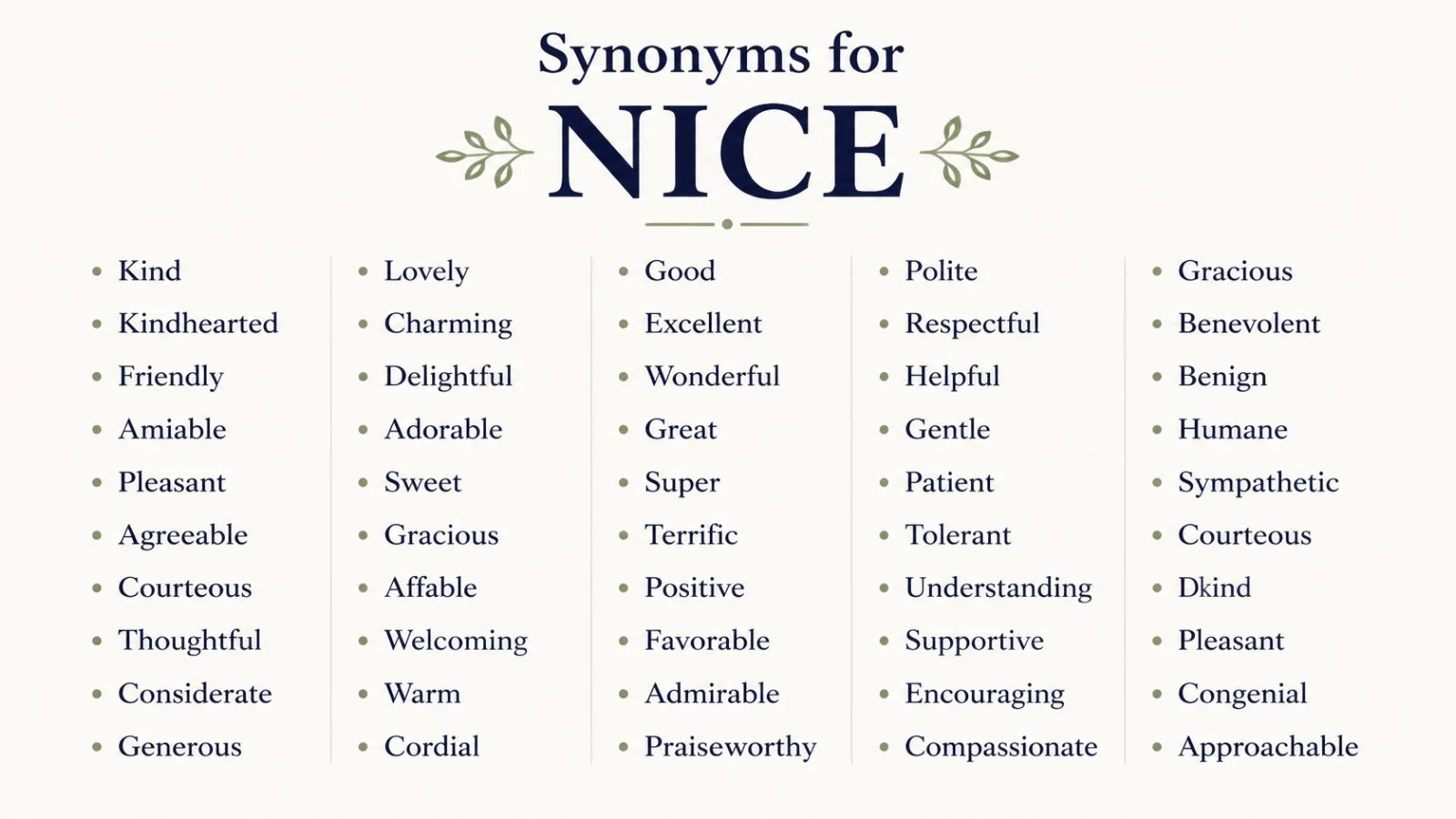
Quick list: pleasant, kind, lovely, enjoyable, friendly, delightful, charming, good, warm, decent
This article looks at 30 alternatives. Each one has a meaning, IPA, a usage note, and an example. You will also see which words fit which context.
At a Glance: Nice Synonyms and Related Alternatives
| Alternative | Part of Speech | Meaning | Register / Tone | Ideal Context |
| Pleasant | Adjective | Giving ease or joy | Neutral | Weather, trips, talks |
| Kind | Adjective | Caring and gentle | Neutral | People and their acts |
| Lovely | Adjective | Beautiful or very pleasant | Warm, common in British English | Surprises, days, gifts |
| Friendly | Adjective | Open and easy to talk to | Neutral | Staff, neighbors, places |
| Enjoyable | Adjective | Fun to do or watch | Neutral | Events, meals, trips |
| Charming | Adjective | Pleasing and attractive | Slightly formal | Places, people, manners |
| Good | Adjective | Of fair or high quality | Plain, casual | Everyday praise |
| Subtle | Adjective | Small and hard to notice | Formal | Fine differences |
| Great | Adjective | Very good | Casual, strong | Skill, ideas, results |
| Decent | Adjective | Fair or honest | Casual, mild | Basic good conduct |
Which Word Should You Use?
| If you want to… | Use | Why |
| Praise good weather or a calm trip | Pleasant or lovely | Both fit places and times |
| Describe someone who helps others | Kind | It shows care in acts |
| Describe someone easy to talk to | Friendly | It shows an open manner |
| Praise a meal or a party | Enjoyable | It focuses on fun |
| Cheer a skilled move | Great | It gives stronger praise |
| Point out a small difference | Subtle | It matches the old, exact sense |
| Write a polite, formal note | Courteous or gracious | Both sound respectful |
| Praise looks in a gentle way | Attractive or charming | They focus on appearance |
Exploring the Multiple Meanings of “Nice”
1. Pleasant or Enjoyable
- Meaning: Giving joy or comfort.
- Explanation: This is the most common sense. It fits weather, food, trips, and events.
- Example: We had a nice walk by the lake this morning.
2. Kind or Friendly
- Meaning: Caring and warm toward others.
- Explanation: This sense fits people and their acts. It often follows words like guy, girl, or person.
- Example: Our new neighbor is very nice and always says hello.
3. Good in Quality or Looks
- Meaning: Of good quality or pleasing to see.
- Explanation: Here nice praises for things like clothes, homes, and gifts. It is mild praise.
- Example: That is a nice jacket, and the color suits you.
4. Fine or Precise
- Meaning: Showing small, careful differences.
- Explanation: This older sense is rare now. You still see it in phrases like a nice distinction.
- Example: The judge made a nice distinction between the two laws.
5. Well Done or Skillful
- Meaning: Showing good skill or timing.
- Explanation: People use it as a short cheer. It often stands alone, as in “Nice shot.”
- Example: Nice catch! You saved the glass before it fell.
Sources: Merriam-Webster, Collins Dictionary, Dictionary.com
Analyzing 30 Nice Alternatives in Detail
Some alternatives below are direct synonyms, while others are related words for specific contexts.
Pleasant Experiences
1. Pleasant
IPA: /ˈplɛzənt/ (US and UK)
Definition: Pleasant means giving a feeling of ease or joy. It also fits calm people and mild weather.
- Usage: Pleasant is the closest direct synonym. It also sounds a little more polished than nice.
- Example: We spent a pleasant afternoon walking by the river.
2. Enjoyable
IPA: /ɪnˈdʒɔɪəbəl/ (US and UK)
Definition: Enjoyable means giving you fun or happy feelings. It also fits events, meals, and trips.
- Usage: Use it for events and activities. However, it rarely fits a person.
- Example: The dinner was enjoyable, and we stayed until midnight.
3. Agreeable
IPA: /əˈɡriːəbəl/ (US and UK)
Definition: Agreeable means pleasing and easy to accept. It also fits someone who is friendly and calm.
- Usage: It is a formal and slightly old-fashioned choice. Still, it works well in polite writing.
- Example: He was an agreeable guest who got along with everyone.
4. Lovely
IPA: /ˈlʌvli/ (US and UK)
Definition: Lovely means beautiful or very pleasant. It also shows warm feelings about a person or thing.
- Usage: Lovely is common in British English. It is also warmer and stronger than nice.
- Example: What a lovely surprise to see you here today!
5. Delightful
IPA: /dɪˈlaɪtfəl/ (US and UK)
Definition: Delightful means causing great joy. It also fits small things that bring a happy smile.
- Usage: It is stronger than nice. For example, you can call a garden or a child delightful.
- Example: The garden was a delightful place to rest.
Kind and Friendly People
6. Kind
IPA: /kaɪnd/ (US and UK)
Definition: Kind means caring about other people and acting gently. It also shows a helpful nature.
- Usage: Kind is the best fit when nice means good-hearted. However, it rarely suits weather or objects.
- Example: She was kind enough to drive me home.
7. Friendly
IPA: /ˈfrɛndli/ (US and UK)
Definition: Friendly means open, warm, and easy to talk to. It also fits places, dogs, and smiles.
- Usage: Use it when nice means welcoming. In fact, it works well for staff and neighbors.
- Example: Our neighbors are friendly and often wave at us.
8. Warm
IPA: US /wɔːrm/ · UK /wɔːm/
Definition: Warm means kind and full of friendly feeling. It also fits smiles, words, and welcomes.
- Usage: Warm shows a caring nature. However, it differs from literal warm, which means a little hot.
- Example: The teacher gave us a warm welcome on day one.
9. Considerate
IPA: /kənˈsɪdərət/ (US and UK)
Definition: Considerate means careful about how your acts affect others. It also shows good manners.
- Usage: It is a formal word. Still, it fits polite people who think of others first.
- Example: It was considerate of him to turn the music down.
10. Gracious
IPA: /ˈɡreɪʃəs/ (US and UK)
Definition: Gracious means polite, kind, and generous in a calm way. It also fits hosts and leaders.
- Usage: Gracious sounds formal and a bit grand. For example, you can praise a gracious host.
- Example: She was a gracious host and made everyone feel welcome.
Good Quality and Looks
11. Good
IPA: /ɡʊd/ (US and UK)
Definition: Good means of fair or high quality. It also shows that something pleases you.
- Usage: Good is plain but clear. Also, it is a safe swap for nice in most simple cases.
- Example: That was a good meal for such a low price.
12. Attractive
IPA: /əˈtræktɪv/ (US and UK)
Definition: Attractive means pleasing to look at. It also fits ideas, offers, and prices.
- Usage: Attractive is a related alternative for looks. However, it sounds a bit formal for friends.
- Example: They live in an attractive house near the park.
13. Pretty
IPA: /ˈprɪti/ (US and UK)
Definition: Pretty means pleasing to see in a soft, light way. It also fits faces, flowers, and dresses.
- Usage: It suits small things and scenes. Still, it can sound too light for serious praise.
- Example: She wore a pretty blue dress to the party.
14. Charming
IPA: US /ˈtʃɑːrmɪŋ/ · UK /ˈtʃɑːmɪŋ/
Definition: Charming means very pleasant and able to win people over. It also fits quaint places.
- Usage: Charming adds a sense of style. Still, it can sound old-fashioned in casual talk.
- Example: We stayed in a charming little cottage by the sea.
15. Elegant
IPA: /ˈɛlɪɡənt/ (US and UK)
Definition: Elegant means graceful and simple in style. It also fits clothes, rooms, and ideas.
- Usage: Elegant is a related alternative, not an exact synonym. However, it suits style and design well.
- Example: The hotel lobby looked elegant, calm, and very clean.
Praise for Skill and Results
16. Great
IPA: /ɡreɪt/ (US and UK)
Definition: Great means very good or well done. It also shows strong praise in casual talk.
- Usage: Great is stronger than nice. For example, you can cheer a great shot or a great idea.
- Example: That was a great shot, and the crowd cheered loudly.
17. Excellent
IPA: /ˈɛksələnt/ (US and UK)
Definition: Excellent means of very high quality. It also shows strong approval.
- Usage: Excellent is a formal, strong word. Still, it is a related alternative, not an exact synonym.
- Example: The service was excellent, so we left a big tip.
18. Superb
IPA: US /suːˈpɜːrb/ · UK /suːˈpɜːb/
Definition: Superb means of the very best kind. It also shows warm praise for skill or work.
- Usage: Superb is far stronger than nice. In fact, it fits best for top results.
- Example: Her singing at the show was truly superb.
19. Wonderful
IPA: US /ˈwʌndərfəl/ · UK /ˈwʌndəfəl/
Definition: Wonderful means very good and full of joy. It also fits big, happy surprises.
- Usage: It is stronger than nice. However, people say it so often that it sounds casual.
- Example: We had a wonderful holiday with our cousins.
20. Splendid
IPA: /ˈsplɛndɪd/ (US and UK)
Definition: Splendid means grand, bright, and very fine. It also fits plans, views, and days.
- Usage: Splendid sounds a bit old-fashioned. Still, it is a lively and polite way to praise.
- Example: The view from the hilltop was splendid at sunset.
Fine Detail and Refined Alternatives
21. Subtle
IPA: /ˈsʌtəl/ (US and UK)
Definition: Subtle means small and hard to notice. It also fits fine differences in meaning.
- Usage: Subtle matches the sense of nice that means fine or exact. For example, a nice distinction is a subtle one.
- Example: There is a subtle difference between these two words.
22. Fine
IPA: /faɪn/ (US and UK)
Definition: Fine means thin, small, or very careful. It also fits exact points and sharp skill.
- Usage: Fine is a close match for the careful sense of nice. For example, people say a fine point.
- Example: The lawyer pointed out a fine detail in the contract.
23. Delicate
IPA: /ˈdɛlɪkət/ (US and UK)
Definition: Delicate means soft, light, and easy to break. It also fits tricky matters that need care.
- Usage: Delicate is a related alternative for the sense of careful detail. However, it rarely means kind.
- Example: The team had a delicate talk about the budget cuts.
24. Precise
IPA: /prɪˈsaɪs/ (US and UK)
Definition: Precise means clear, exact, and free of error. It also fits careful work.
- Usage: Precise matches the sense of nice that means exact. However, it does not mean pleasant.
- Example: Give me a precise count of the boxes, please.
25. Refined
IPA: /rɪˈfaɪnd/ (US and UK)
Definition: Refined means polished and showing good taste. It also fits calm, polite manners.
- Usage: Refined is a related alternative. However, it matches the old sense of nice as well-bred.
- Example: He had refined manners and spoke in a soft voice.
Casual and Polite Choices
26. Cool
IPA: /kuːl/ (US and UK)
Definition: Cool means good or great in an easy, modern way. It also shows approval.
- Usage: Cool is informal slang. However, it is a handy swap for nice chats with friends.
- Example: Your new jacket looks really cool on you.
27. Sweet
IPA: /swiːt/ (US and UK)
Definition: Sweet means kind in a gentle, loving way. It also fits small caring acts.
- Usage: Sweet is warm and informal. For example, you can call a thoughtful gift sweet.
- Example: It was sweet of you to bring me soup.
28. Decent
IPA: /ˈdiːsənt/ (US and UK)
Definition: Decent means fair, good enough, or honest. It also shows basic good conduct.
- Usage: Decent is milder than nice. In fact, it can mean only fairly good.
- Example: He is a decent man who pays his debts.
29. Likable
IPA: /ˈlaɪkəbəl/ (US and UK)
Definition: Likable means easy to like. It also fits people with an easy, kind manner.
- Usage: Likable fits people only. Still, it is a clear and safe swap for nice people.
- Example: The new coach is likable and always listens.
30. Courteous
IPA: US /ˈkɜːrtiəs/ · UK /ˈkɜːtiəs/
Definition: Courteous means polite and respectful toward others. It also shows good manners.
- Usage: Courteous is formal. For example, it suits customer service and letters.
- Example: The courteous clerk helped us find the right form.
Sources: Merriam-Webster, Collins Dictionary and Collins Thesaurus, Dictionary.com, Oxford Learner’s Dictionaries
Nice vs. Kind vs. Friendly
These three words often swap places when people talk about others. Still, each one has its own focus.
| Word | Focus | Best Used For | Example |
| Nice | General good feeling | Quick, mild praise | She is a nice person. |
| Kind | Caring acts | Help, gifts, gentle words | She is kind to every animal. |
| Friendly | Open manner | Greetings, small talk | She is friendly with new staff. |
Nice is the widest word. It can praise a person, a day, or a meal. Kind and friendly are narrower, so they give a clearer picture.
For example, a friendly person may smile at you. A kind person may also help you carry your bags. In short, pick kind for acts and friendly for manners.
Sources: Merriam-Webster, Collins Dictionary, Dictionary.com
Nice and Opposite/Paired Word Pairs
| Word | Paired Word | Note |
| Nice | Nasty | The most common opposite for people and things |
| Nice | Mean | Means unkind when it describes a person |
| Nice | Rude | Opposes nice in manners and talk |
| Nice | Unpleasant | A neutral opposite for weather, food, and events |
| Nice | Awful | A stronger opposite for very bad results |
| Naughty | Nice | A fixed pair, as in the phrase “naughty or nice” |
Each opposite fits a different sense of nice. Nasty and unpleasant oppose the pleasant sense. Mean and rude oppose the kind sense. In fact, no single word covers every case.
Sources: Merriam-Webster, Collins Dictionary, Dictionary.com
Common Word Partners of “Nice”
| Pattern | Common Partners | Example |
| nice + person | guy, girl, man, woman, person | He is a nice guy. |
| nice + thing or place | day, weather, house, view, place | We had a nice view. |
| nice to + verb | meet, see, hear, know | It was nice to meet you. |
| nice and + adjective | warm, quiet, easy, clean | The room is nice and quiet. |
| be nice to + person | someone, your sister, others | Be nice to your sister. |
| nice of + person | you, him, her, them | It was nice of you to call. |
| have a nice + noun | day, time, weekend, trip | Have a nice weekend. |
| pretty nice | car, view, deal | That is a pretty nice car. |
Sources: Collins Dictionary, Merriam-Webster, Oxford Learner’s Dictionaries
Idiomatic Phrases Featuring “Nice”
Nice has few true idioms. These are fixed expressions that people use often.
1. Nice and easy
- Meaning: Slowly and calmly, without hurry or stress.
- Example: Take the turn nice and easy so the boat stays steady.
2. Nice try
- Meaning: A phrase for a failed effort. People also say it when they see through a trick.
- Example: Nice try, but I already know about the surprise party.
3. Nice guys finish last
- Meaning: A saying that kind people often lose to selfish ones.
- Example: Some people think nice guys finish last in business.
4. Nice work if you can get it
- Meaning: A phrase about a job or deal that looks easy and rewarding.
- Example: He earns a lot for very little effort. Nice work if you can get it.
Sources: Collins Dictionary, Merriam-Webster, Dictionary.com
Word Formation of “Nice”
Etymology & Structure
Nice comes from Old French, where it meant silly or foolish. French took the word from Latin nescius, which means ignorant. Latin nescius comes from nescire, meaning “not to know.”
In English, nice is a simple base word. It takes the endings -er, -est, -ly, and -ness.
Date and History
Etymonline dates the English word to the late 1200s. Back then it meant foolish or senseless. Over time the meaning shifted. It later meant fussy, then precise, and then pleasing.
By the late 1700s people used it for pleasant things. The sense of a kind person grew in the 1800s.
Word Class Variations
- Adjective: nice, nicer, nicest
- Adverb: nicely
- Noun: niceness, nicety (plural: niceties, meaning a fine detail)
- Verb: none
Sources: Etymonline, Merriam-Webster, Collins Dictionary
Common Word-Choice Mistakes
Kind weather: pleasant weather. Kind fits people more than weather.
Pleasant to meet you: nice to meet you. This greeting is a fixed phrase.
A friendly distinction: a subtle distinction. Friendliness does not fit ideas.
Nice at tennis: good at tennis. Use good, not nice, for skill.
Very kind from you: very kind of you. Kind takes the word off in this pattern.
A nice person: a nice person. Use the adjective before a noun.
More nicer: nicer. Do not add more to a form that already ends in -er.
Frequently Asked Questions
What is the closest synonym for nice?
Pleasant is the closest direct synonym. It fits most everyday cases.
What is a formal alternative to nice?
Agreeable, courteous, and gracious are formal choices. Use them in letters and polite notes.
What is the difference between nice and kind?
Nice is a broad word for anything pleasing. Kind focuses on caring acts toward others.
What is the opposite of nice?
Nasty is the most common opposite. Mean, rude, and unpleasant also work, depending on the sense.
Can you nicely describe objects and places?
Yes. People say a nice house, a nice view, or a nice day.
What is a casual alternative to nice?
Cool and sweet are casual choices. They suit chats with friends.
Can nice mean exact or fine?
Yes, but this sense is rare now. It appears in phrases like a nice distinction.
What is a literary alternative to nice?
Delightful, splendid, and lovely sound richer on the page. They add warmth and style.
Is nice too vague for formal writing?
It can be. Specific words, such as courteous or excellent, give a clearer meaning.
Why did nice once mean foolish?
The word came from Old French and Latin words about not knowing. Its meaning then shifted slowly over time.
Conclusion
The closest alternatives to nice are pleasant, kind, and lovely. Friendly, enjoyable, and good also work well in daily speech. Each one covers a slightly different part of nice.
Context matters most. Nice can praise a day, a person, a skill, or a fine detail. So a word that fits one case may fail in another.
To choose well, ask what you want to praise. Use kind or friendly people. Use pleasant or lovely for places and times. Use subtle or precise for fine detail.

Olivia Martin is a passionate writer who enjoys exploring English vocabulary, synonyms, and language tips to help readers improve their writing skills.
At PressivoMedia.com, Olivia shares helpful language resources and easy-to-understand content to make communication clearer and more effective.