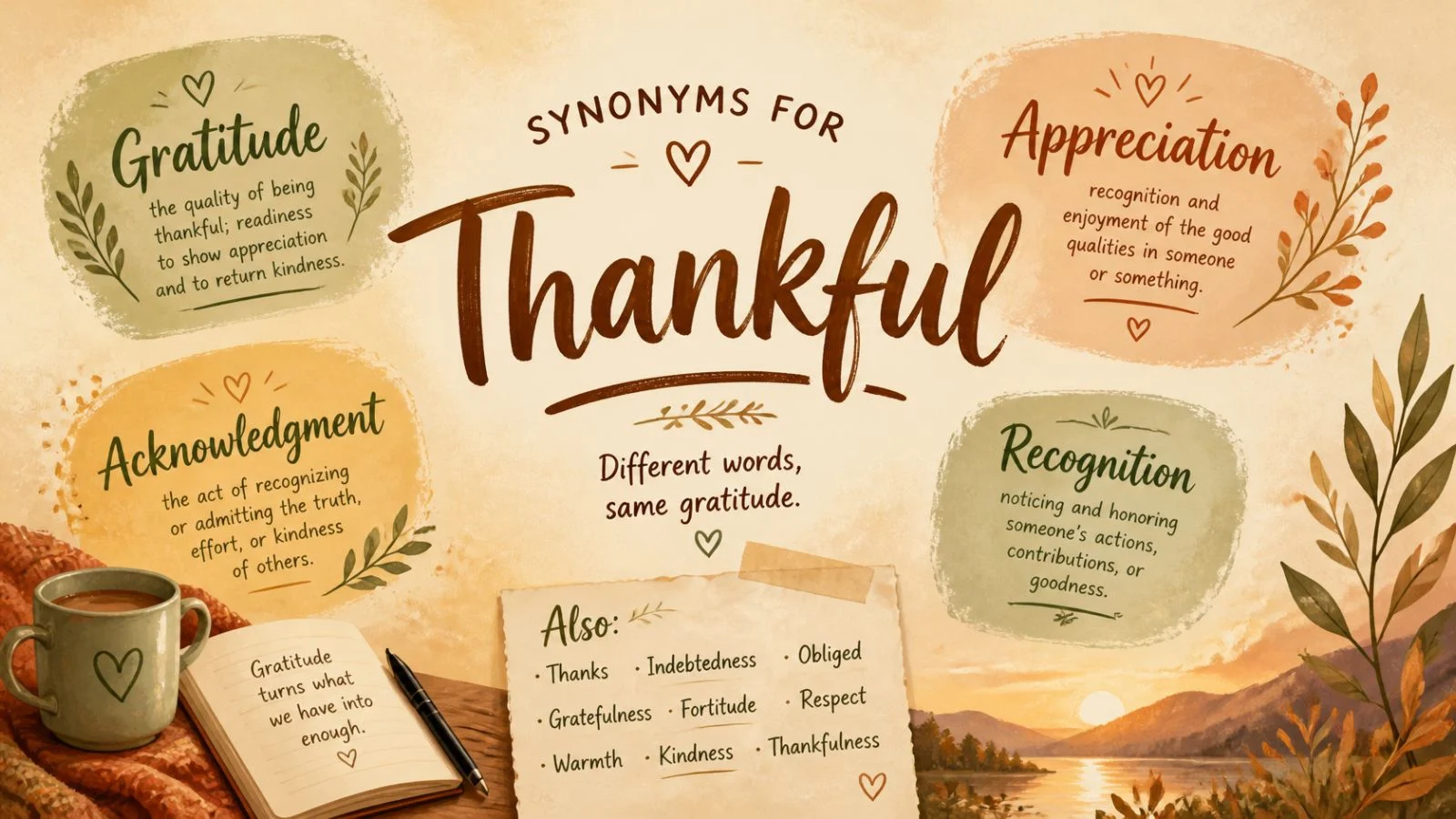
The closest word for thankful is grateful. Appreciation and obligation also work in many cases. Each word fits a slightly different mood.
Your best choice depends on meaning and context. Some words thank a person, while others show relief or luck. Formal words also suit letters and speeches.
Quick list: grateful, appreciative, obliged, indebted, relieved, glad, fortunate, blessed, touched, much obliged
This article looks at 30 alternatives. Each one has a meaning, IPA, a usage note, and an example. You will also see tables, idioms, and common mistakes.
At a Glance: Thankful Synonyms and Related Alternatives
| Alternative | Part of Speech | Meaning | Register / Tone | Ideal Context |
| Grateful | Adjective | Feeling warm thanks | Neutral, warm | Everyday and formal use |
| Appreciative | Adjective | Valuing what someone did | Warm, polite | Feedback, praise, reviews |
| Obliged | Adjective | Thankful and in the person’s debt | Formal, polite | Favors and letters |
| Indebted | Adjective | Owing thanks for a big favor | Formal | Deep thanks, speeches |
| Relieved | Adjective | Glad a worry is gone | Neutral | Safe outcomes |
| Glad | Adjective | Happy about a good result | Casual | Simple good news |
| Fortunate | Adjective | Lucky | Polished | Talking about good luck |
| Blessed | Adjective | Favored with good things | Warm, often faith-based | Family, health, life |
| Touched | Adjective | Moved by kindness | Warm, emotional | Gifts and kind acts |
| Gratified | Adjective | Pleased and satisfied | Formal | Praise and results |
Which Word Should You Use?
| If you want to… | Use | Why |
| Thank someone for a kind act | Grateful | It is warm, personal, and fits most cases. |
| Show you value someone’s effort | Appreciative | It shows you notice the work. |
| Thank someone for a big favor | Indebted | It shows you owe a lot. |
| Feel glad after a close call | Relieved | It puts the focus on a worry going away. |
| Say thanks in a casual way | Much obliged | It sounds friendly and a little old-fashioned. |
| Talk about good luck in life | Fortunate | It fits luck more than thanks to a person. |
| Show deep emotion over a kind act | Touched | It shows the kindness that reaches your heart. |
| Respond to an award or invitation | Honored | It shows thanks and pride together. |
Exploring the Multiple Meanings of “Thankful”
1. Feeling Gratitude to Someone
- Meaning: Aware of kindness and glad to show thanks.
- Explanation: This is the main sense. You often thank a person or a group.
- Example: She was thankful to her neighbors for watching the house.
2. Glad About a Good Outcome
- Meaning: Happy and relieved that something bad did not happen.
- Explanation: Here no one in particular gets the thanks. The word often comes before “that.”
- Example: We are thankful that nobody was hurt in the storm.
3. Showing or Expressing Thanks
- Meaning: Marked by thanks, as in a look, word, or prayer.
- Explanation: This sense talks about the act of thanking. It often describes a smile, nod, or heart.
- Example: He gave a thankful nod and walked away.
4. Content With What You Have
- Meaning: Pleased with your life, health, or place in the world.
- Explanation: This sense is common around holidays. It looks at what you have, not at one event.
- Example: We are thankful for our health and our home.
Sources: Merriam-Webster, Collins Dictionary, Dictionary.com.
Analyzing 30 Thankful Alternatives in Detail
Some of these words are direct synonyms. Others are related alternatives that fit only certain cases.
Core Synonyms
1. Grateful
IPA: /ˈɡreɪtfəl/ (US and UK)
Definition: Grateful means you feel warm thanks for a kindness. It also fits help, gifts, and good luck.
- Usage: This is the closest match to thankful. Still, gratitude often sounds a little more personal.
- Example: I am grateful for your help with the move.
2. Appreciative
IPA: /əˈpriːʃətɪv/ (US and UK)
Definition: Appreciative means you value what someone did. It also shows that you notice the effort.
- Usage: This is a close match with a warm tone. For example, a crowd can be appreciative.
- Example: The appreciative audience clapped for a full minute.
3. Obliged
IPA: /əˈblaɪdʒd/ (US and UK)
Definition: Obligated means you feel thankful for a favor. It also hints that you owe the person.
- Usage: The tone is polite and a bit formal. However, it can also mean being forced to do something.
- Example: I am obliged to you for lending me your car.
4. Indebted
IPA: /ɪnˈdɛtɪd/ (US and UK)
Definition: Indebted means you owe thanks for a big favor. It can also mean you owe money.
- Usage: Use it for deep thanks. However, it sounds formal in casual conversation.
- Example: We are deeply indebted to the nurses who cared for him.
5. Beholden
IPA: US /bɪˈhoʊldən/ · UK /bɪˈhəʊldən/
Definition: Beholden means you owe someone for their help. It also suggests you must repay the favor.
- Usage: It is only a related word, not a pure synonym. In fact, it often sounds negative.
- Example: She did not want to feel beholden to her boss.
Formal Alternatives
6. Gratified
IPA: /ˈɡrætɪfaɪd/ (US and UK)
Definition: Gratified means pleased and satisfied by something. It can also show thanks for good news.
- Usage: It is a related word, not an exact match. For example, you can feel gratified by praise.
- Example: He was gratified by the warm reply to his letter.
7. Obligated
IPA: US /ˈɑːblɪɡeɪtɪd/ · UK /ˈɒblɪɡeɪtɪd/
Definition: Obligated means bound to repay a favor or do a duty. It also sounds firm and formal.
- Usage: It is only a related word. However, it fits cases where thanks come with a debt.
- Example: After all her help, I felt obligated to visit.
8. Honored
IPA: US /ˈɑːnərd/ · UK /ˈɒnəd/
Definition: Honored means proud that someone treated you with respect. It also carries a sense of thanks.
- Usage: It is a related word for formal events. For example, you can say you are honored by an award.
- Example: I am honored that you chose me for the job.
9. Humbled
IPA: /ˈhʌmbəld/ (US and UK)
Definition: Humbled means moved by a gift or praise you feel you do not deserve. It also shows modesty.
- Usage: It is a related word, not a pure synonym. Still, many people use it to show deep thanks.
- Example: We felt humbled by the support from our town.
Relief and Gladness
10. Relieved
IPA: /rɪˈliːvd/ (US and UK)
Definition: Relieved means glad that a worry is gone. It also fits the second sense of thankfulness.
- Usage: Use it when the focus is relief, not thanks. For example, you feel relieved after a safe trip.
- Example: She was relieved that the test results were clear.
11. Reassured
IPA: US /ˌriːəˈʃʊrd/ · UK /ˌriːəˈʃɔːd/
Definition: Reassured means calm again after a fear or doubt. It also shows comfort, not always thanks.
- Usage: It is only a related word. However, it works when kind words made you feel safe.
- Example: He felt reassured after the doctor called with good news.
12. Glad
IPA: /ɡlæd/ (US and UK)
Definition: Glad means happy about something. It also fits a good result or a nice surprise.
- Usage: This is a simple, casual choice. In fact, glad works well after a lucky escape.
- Example: I am glad that nobody was hurt in the crash.
13. Pleased
IPA: /pliːzd/ (US and UK)
Definition: Pleased means happy and satisfied with something. It also sounds polite in work emails.
- Usage: It is a mild, related word. However, it shows less deep thanks than gratitude.
- Example: We are pleased with the quick reply from your team.
14. Happy
IPA: /ˈhæpi/ (US and UK)
Definition: Happy means full of joy or good feeling. It can also show you how things turned out.
- Usage: It is only a related word. Still, it works in casual talk about good news.
- Example: I’m happy that you made it home before the storm.
15. Delighted
IPA: /dɪˈlaɪtɪd/ (US and UK)
Definition: Delighted means very pleased. It also shows strong joy about a gift or good news.
- Usage: It is a stronger, related word. For example, you can feel delighted by a kind surprise.
- Example: She was delighted with the flowers from her class.
16. Overjoyed
IPA: US /ˌoʊvərˈdʒɔɪd/ · UK /ˌəʊvəˈdʒɔɪd/
Definition: Overjoyed means filled with great happiness. It also shows a burst of joy at good news.
- Usage: It is a related word with a very strong tone. In short, it shows more joy than thanks.
- Example: They were overjoyed when the lost dog came home.
Luck and Blessing
17. Fortunate
IPA: US /ˈfɔːrtʃənət/ · UK /ˈfɔːtʃənət/
Definition: Fortunate means lucky or blessed with good things. It also fits cases where you feel thanks for your luck.
- Usage: It is a related word that sounds polished. For example, you can say you feel fortunate to have friends.
- Example: We were fortunate to find a seat on the train.
18. Lucky
IPA: /ˈlʌki/ (US and UK)
Definition: Lucky means having good things happen by chance. It also fits a narrow escape.
- Usage: This is a casual, related word. However, it does not thank anyone.
- Example: I feel lucky to have such kind neighbors.
19. Blessed
IPA: /ˈblɛsɪd/ (US and UK)
Definition: Blessed means favored with good things in life. It also has a warm and often faith-based tone.
- Usage: It is a related word. In everyday English, many people pair it with thankfulness.
- Example: We feel blessed to have our family close by.
20. Favored
IPA: US /ˈfeɪvərd/ · UK /ˈfeɪvəd/
Definition: Favored means given special help or good luck. It also shows that fate seemed kind.
- Usage: It is a rare, related word. However, it can suit formal or literary writing.
- Example: She felt favored to receive such a rare chance.
21. Privileged
IPA: /ˈprɪvəlɪdʒd/ (US and UK)
Definition: Privileged means lucky to have a rare chance or benefit. It can also show humble thanks.
- Usage: It is a related word for formal talk. For example, you can feel privileged to attend.
- Example: I feel privileged to work with such a kind team.
Touched and Content
22. Touched
IPA: /tʌtʃt/ (US and UK)
Definition: Touched means moved by a kind act. It also shows that the kindness reached your heart.
- Usage: It is a warm, related word. In fact, people say they are touched when thanks run deep.
- Example: I was touched by the card my students made.
23. Moved
IPA: /muːvd/ (US and UK)
Definition: Moved means feeling strong emotion from something kind. It can also bring tears of thanks.
- Usage: It is a related word. However, it shows deep feelings more than polite thanks.
- Example: She was moved by the gift from her old friends.
24. Heartened
IPA: US /ˈhɑːrtnd/ · UK /ˈhɑːtnd/
Definition: Heartened means given new hope or courage. It also fits cases where kind words cheer you up.
- Usage: It is a related word. For example, you feel heartened when a stranger offers help.
- Example: We felt heartened by the support from our neighbors.
25. Content
IPA: /kənˈtɛnt/ (US and UK)
Definition: Content means calm and happy with what you have. It also shows you want nothing more.
- Usage: It is a related word, not a direct match. Still, it fits the thankful mood of having enough.
- Example: He felt content with his small home and quiet life.
26. Satisfied
IPA: /ˈsætɪsfaɪd/ (US and UK)
Definition: Satisfied means pleased that your needs are met. It also shows you feel no lack.
- Usage: It is a related word with a plain tone. However, it shows less warmth than grateful.
- Example: She was satisfied with the care she received at the clinic.
Phrases and Related Words
27. Mindful
IPA: /ˈmaɪndfəl/ (US and UK)
Definition: Mindful means being aware of something and keeping it in mind. It can also mean you remember kindness.
- Usage: It is only a related word. For example, you can be mindful of a friend’s help.
- Example: We stay mindful of all the people who helped us.
28. Much Obliged
IPA: /ˌmʌtʃ əˈblaɪdʒd/ (US and UK)
Definition: Much obliged is a polite phrase for thanks. It also sounds old-fashioned or friendly.
- Usage: It is a set phrase, not a single word. Still, it works as a casual way to say thanks.
- Example: Much obliged for the ride, and have a good night.
29. Heartfelt
IPA: US /ˈhɑːrtfɛlt/ · UK /ˈhɑːtfelt/
Definition: Heartfelt means deeply and truly felt. It also describes thanks that come from the heart.
- Usage: It is about the thanks, not the person. For example, you give heartfelt thanks.
- Example: She wrote a heartfelt note to thank her teacher.
30. Sincere
IPA: US /sɪnˈsɪr/ · UK /sɪnˈsɪə/
Definition: Sincere means honest and free of pretense. It also shows that your thanks are real.
- Usage: It is a related word about honesty. However, it pairs well with thankful in formal notes.
- Example: Please accept our sincere thanks for your quick help.
Sources: Merriam-Webster, Collins Dictionary and Thesaurus, Dictionary.com.
Thankful vs. Grateful vs. Appreciative
These three words overlap a lot. Most dictionaries treat them as close synonyms. Small shifts in tone set them apart.
| Word | Best Focus | Example |
| Thankful | A good outcome or general thanks | I am thankful that we arrived safely. |
| Grateful | Thanks to a person for a kind act | I am grateful to you for the lift. |
| Appreciative | Value placed on effort or quality | He was appreciative of the honest feedback. |
In real use, these words often swap. For example, “thankful for your help” and “grateful for your help” both sound natural. Pick grateful for personal thanks. Pick thankful for a general good outcome.
Sources: Merriam-Webster, Collins Dictionary.
Thankful and Opposite/Paired Word Pairs
| Word | Paired Word | Note |
| Thankful | Ungrateful | The most common opposite. It shows a lack of thanks. |
| Thankful | Unthankful | A direct opposite. It is less common than ungrateful. |
| Thankful | Thankless | Related, not a true opposite. It describes a task that earns no thanks. |
| Thankful | Resentful | A contrast in feeling. One feels thanks, the other feels anger. |
| Thankful | Grateful | A common pair. People often use both words together. |
| Thankful | Blessed | A common pair. Many people say “thankful and blessed.” |
Ungrateful and unthankful are the direct opposites. Thankless works differently because it describes a job or task. A thankless job gets little praise.
Sources: Merriam-Webster, Collins Dictionary.
Common Word Partners of “Thankful”
| Pattern | Common Partners | Example |
| thankful for + noun | health, family, help, friends | I am thankful for my friends. |
| thankful that + clause | you came, it worked, no one was hurt | We are thankful that you came. |
| thankful to + person | my mother, the team, the nurses | She is thankful to her teachers. |
| adverb + thankful | truly, deeply, so, very | I am truly thankful for your time. |
| feel / be / remain + thankful | feel, be, remain | They remain thankful for the support. |
| thankful + noun | heart, smile, nod | He gave her a thankful smile. |
Sources: Collins Dictionary, Merriam-Webster.
Idiomatic Phrases Featuring “Thankful”
Thankful appears in only a few true idioms. The items below are one idiom and two established expressions.
1. Be thankful for small mercies
- Meaning: Feel glad about a small good thing in a bad situation.
- Example: The car broke down, but at least it was dry, so be thankful for small mercies.
2. Thank your lucky stars
- Meaning: Feel very glad about your good luck. This idiom uses “thank,” not “thankful.”
- Example: You can thank your lucky stars that you missed the storm.
3. Thankful and blessed
- Meaning: A common expression for deep gratitude. It is an established phrase, not a true idiom.
- Example: After the long year, we feel thankful and blessed.
Sources: Collins Dictionary, Merriam-Webster, Dictionary.com.
Word Formation of “Thankful”
Etymology & Structure
Thankful joins the noun “thank” and the suffix “-ful.” The suffix means “full of.” The word “thank” comes from Old English þanc, which meant thought or gratitude.
Date and History
Thankful goes back to Old English. Merriam-Webster lists its first known use before the 12th century. Etymonline traces it to Old English þancful.
Word Class Variations
- Adjective: thankful, thankless, unthankful
- Adverb: thankfully
- Noun: thankfulness, thanks, thanksgiving
- Verb: thank
Sources: Merriam-Webster, Etymonline, Collins Dictionary.
Common Word-Choice Mistakes
- Thankful of your help: thankful for your help.
- Thankful with her: thankful to her.
- A thankful job: a thankless job.
- I am thankfully for your help: I am thankful for your help.
- Indebted for the coffee: thankful for the coffee.
- Much obliged in a formal letter: grateful or appreciative.
- Beholden for your help: grateful for your help.
Frequently Asked Questions
What is the closest synonym for thankful?
Grateful is the closest synonym. It means almost the same thing in most cases.
What is a formal alternative to thankful?
Indebted, obliged, and gratified all sound formal. They suit letters and speeches.
Is thankful the same as grateful?
They are very close. Grateful often points to a person, while thankful can point to a good outcome.
What is the opposite of thankful?
Ungrateful and unthankful are the main opposites. Both show a lack of thanks.
Can thankful mean relieved?
Yes, in one sense. You can say “thankful that no one was hurt” to show relief.
What is a casual alternative to thankful?
Glad, happy, and much obliged all sound casual. They fit everyday talk.
Which word usually follows thankful?
Thankful often takes “for,” “to,” or “that.” For example, you can be thankful for help.
What is the difference between thankful and thankless?
Thankful describes a person who feels thanks. Thankless describes a task that earns little thanks.
What is a literary alternative to thankfulness?
Blessed and favored can suit a literary tone. They often show good fortune more than thanks.
What is a stronger word than thankful?
Indebted and humbled show deeper thanks. They fit big favors or great kindness.
Conclusion
The closest alternatives to thankfulness are grateful, appreciative, and obliged. These words work in most cases. Indebted and gratified formal writing.
Context shapes the best choice. Some words thank a person, while others show relief or luck. Words like relieved, glad, and fortunate fit good outcomes more than kind acts.
To choose well, ask what you want to show. Pick grateful for warm thanks. Pick relieved for a worry that is gone. Pick a formal word when the setting calls for it.

Olivia Martin is a passionate writer who enjoys exploring English vocabulary, synonyms, and language tips to help readers improve their writing skills.
At PressivoMedia.com, Olivia shares helpful language resources and easy-to-understand content to make communication clearer and more effective.