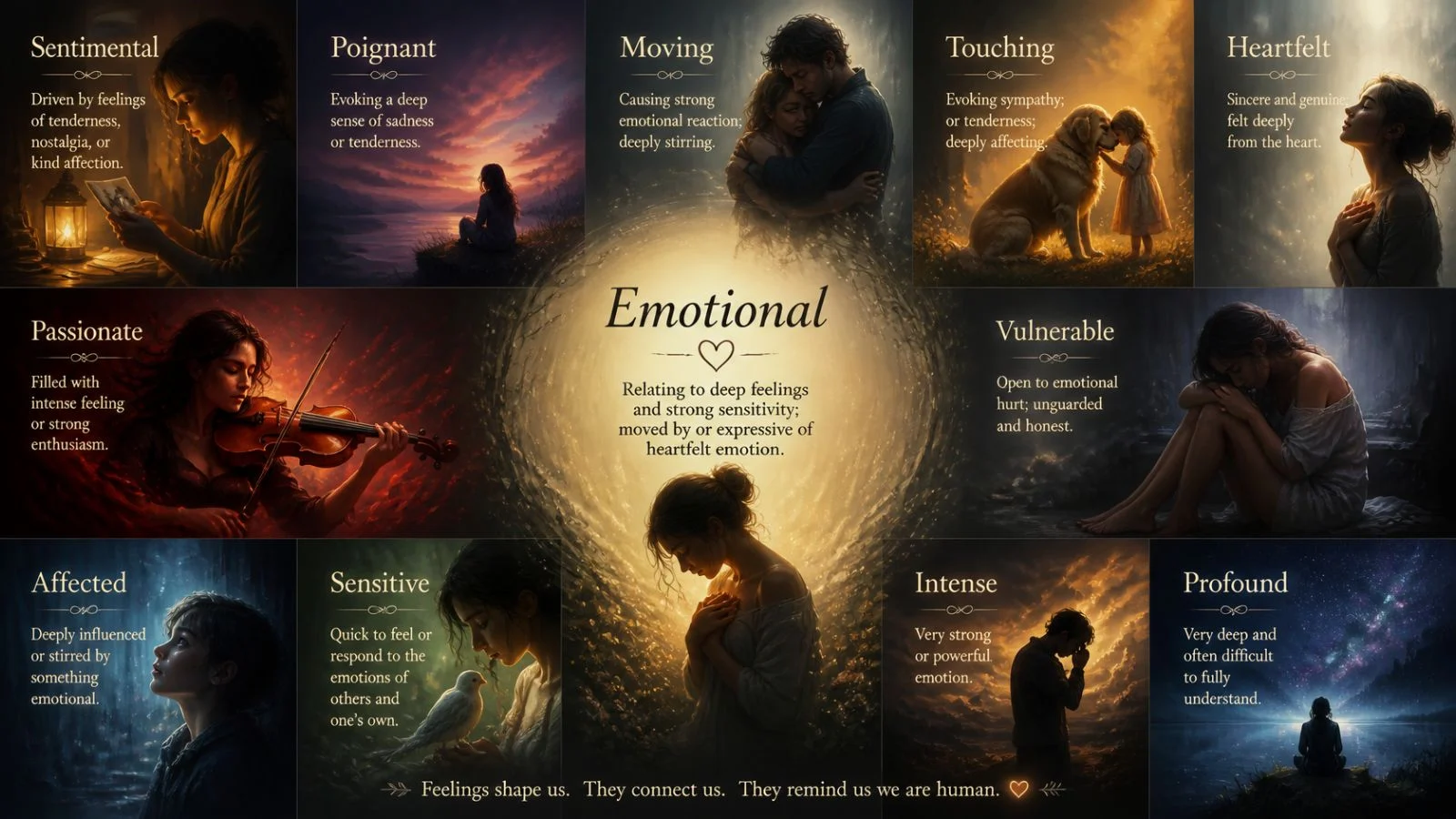
The closest everyday words for emotional are sensitive, passionate, and moving. The best choice depends on what you want to say. A person can be emotional, and so can a speech, a song, or a moment.
Some alternatives describe people who feel deeply. Others describe scenes that touch us. A few sound formal, and a few sound critical.
Quick list: sensitive, passionate, moving, touching, heartfelt, tearful, distraught, sentimental, affective, expressive
This article covers 30 alternatives. Each one has a meaning, IPA, a usage note, and an example. You will also find context tips and common mistakes.
At a Glance: Emotional Synonyms and Related Alternatives
| Alternative | Part of Speech | Meaning | Register / Tone | Ideal Context |
| Sensitive | adjective | quick to feel things | neutral | describing people |
| Passionate | adjective | full of strong feeling | neutral, warm | speeches, fans, debates |
| Moving | adjective | stirs strong feeling | neutral | films, music, speeches |
| Touching | adjective | stirs soft feeling | warm | kind acts, stories |
| Heartfelt | adjective | deeply sincere | warm | thanks, letters |
| Tearful | adjective | close to crying | neutral | goodbyes, sad news |
| Distraught | adjective | very upset | strong, serious | grief, shock |
| Affective | adjective | about feelings and moods | formal | psychology, science |
| Sentimental | adjective | tied to soft memories | mixed | keepsakes, nostalgia |
| Melodramatic | adjective | feeling shown in an extra way | critical | acting, overreaction |
Which Word Should You Use?
| If you want to… | Use | Why |
| Describe someone who feels things easily | sensitive | It fits people and sounds neutral. |
| Praise a scene or speech that stirs feeling | moving | It describes the effect on the audience. |
| Show that thanks or words are sincere | heartfelt | It stresses honest feelings. |
| Describe someone close to crying | tearful | It shows the feeling of tears. |
| Describe deep shock or grief | distraught | It is stronger than upset. |
| Write about the mind in a science text | affective | It is the formal, technical choice. |
| Show strong belief or hope | fervent | It shows warm, deep conviction. |
| Criticize feelings that seem overdone | melodramatic | It carries a clear critical tone. |
Exploring the Multiple Meanings of “Emotional”
1. Relating to feelings
- Meaning: Connected to feelings or the mind.
- Explanation: This is the neutral sense. It fits terms like emotional health.
- Example: Emotional health matters as much as physical health.
2. Easily moved
- Meaning: Quick to feel and show feelings.
- Explanation: This sense describes people. It does not always mean weak.
- Example: My sister is very emotional and cries at weddings.
3. Stirring feelings
- Meaning: Able to cause strong feelings in others.
- Explanation: This sense describes events, words, or music.
- Example: The reunion was an emotional moment for the whole family.
4. Upset or overwhelmed
- Meaning: Showing strong distress right now.
- Explanation: This sense is about a short state. It often follows big or bad news.
- Example: He got emotional when he talked about his late father.
5. Driven by feeling
- Meaning: Based on feeling instead of reason.
- Explanation: Here the word can sound critical. It often appears in conversations about choices.
- Example: Buying the house was an emotional choice, not a smart one.
Sources: Merriam-Webster; Collins Dictionary; Dictionary.com
Analyzing 30 Emotional Alternatives in Detail
Some alternatives are direct synonyms, while others are related words for specific contexts.
Core Synonyms for People Who Feel Deeply
1. Sensitive
IPA: US /ˈsɛnsətɪv/ · UK /ˈsɛnsɪtɪv/
Definition: Sensitive means quick to feel things deeply. It also shows care for how others feel.
- Usage: This is a direct synonym for people who feel easily. However, it can also easily hurt.
- Example: She is a sensitive child who cries at sad songs.
2. Passionate
IPA: (US and UK) /ˈpæʃənət/
Definition: Passionate means full of strong feelings. It also shows deep love or belief.
- Usage: It is a close synonym for strong, open feeling. However, it sounds positive, so it suits fans and debates.
- Example: He gave a passionate speech about saving the old library.
3. Expressive
IPA: (US and UK) /ɪkˈsprɛsɪv/
Definition: Expressive means clear about what you feel. It also shows feelings through the face, voice, or art.
- Usage: Use it for people who show feelings openly. However, it does not mean upset.
- Example: Her expressive eyes showed how nervous she felt.
4. Demonstrative
IPA: US /dɪˈmɑːnstrətɪv/ · UK /dɪˈmɒnstrətɪv/
Definition: Demonstrative means open about love and care. It also shows feelings through hugs and kind words.
- Usage: This is a related word, not an exact synonym. For example, it fits warm people but not sad scenes.
- Example: My uncle is demonstrative and hugs everyone at the door.
5. Temperamental
IPA: (US and UK) /ˌtɛmprəˈmɛntəl/
Definition: Temperamental means likely to change mood fast. It also shows anger that comes without warning.
- Usage: It works as a related word for moody people. Still, it sounds negative, so use it with care.
- Example: The temperamental chef shouted, then laughed ten minutes later.
Moving and Touching Alternatives
6. Touching
IPA: (US and UK) /ˈtʌtʃɪŋ/
Definition: Touching means able to stir soft feelings. It also fits stories and kind acts.
- Usage: This is a direct synonym for an emotional scene. In fact, it often means sweet and a little sad.
- Example: The video of the soldier’s return was very touching.
7. Moving
IPA: (US and UK) /ˈmuːvɪŋ/
Definition: Moving means able to stir strong feelings. It also fits music, films, and speeches.
- Usage: Pick it when a thing stirs feeling. However, it does not describe a person.
- Example: Her moving speech made the whole room go quiet.
8. Poignant
IPA: (US and UK) /ˈpɔɪnjənt/
Definition: Poignant means sharp and sad in a touching way. It also stirs pity or a sense of loss.
- Usage: This is a stronger, more formal choice. For example, writers use it for memories.
- Example: The old photo of her late father felt poignant.
9. Heartfelt
IPA: US /ˈhɑːrtfɛlt/ · UK /ˈhɑːtfɛlt/
Definition: Heartfelt means honest and deeply meant. It also shows that the feeling is real.
- Usage: It is a related word for kind words. For example, you can write a heartfelt thank-you.
- Example: He sent a heartfelt letter to thank his teacher.
10. Stirring
IPA: (US and UK) /ˈstɜːrɪŋ/
Definition: Stirring means able to rouse strong feelings. It also often brings pride or hope.
- Usage: Writers pair it with speeches, songs, and scenes. However, it hints at energy more than sadness.
- Example: The band played a stirring song at the end.
Upset and Overwhelmed Alternatives
11. Tearful
IPA: US /ˈtɪrfəl/ · UK /ˈtɪəfəl/
Definition: Tearful means close to crying or crying now. It also fits sad goodbyes.
- Usage: This is a direct synonym when tears show the feeling. It is also common in news stories.
- Example: She gave her mother a tearful hug at the station.
12. Distraught
IPA: (US and UK) /dɪˈstrɔːt/
Definition: Distraught means very upset and unable to think clearly. It also shows fear or grief.
- Usage: It is a stronger synonym for emotional after bad news. So it sounds more serious.
- Example: The distraught family waited for news outside the hospital.
13. Overwrought
IPA: US /ˌoʊvərˈrɔːt/ · UK /ˌəʊvəˈrɔːt/
Definition: Overwrought means too upset or tense. It also shows nerves close to breaking.
- Usage: This related word sounds formal. For example, an overwrought student may cry before an exam.
- Example: The overwrought mother could not stop shaking.
14. Weepy
IPA: (US and UK) /ˈwiːpi/
Definition: Weepy means ready to cry. It also sounds casual and a little playful.
- Usage: This is an informal synonym for a tearful mood. However, avoid it in formal writing.
- Example: I get weepy every time I watch that film.
15. Overcome
IPA: US /ˌoʊvərˈkʌm/ · UK /ˌəʊvəˈkʌm/
Definition: Overcome means beaten by a strong feeling. It also shows that the feeling took control.
- Usage: This related word needs a feeling after it. For example, you can say overcome with joy.
- Example: He was overcome with joy when he saw his son.
Intense and Fiery Alternatives
16. Fervent
IPA: US /ˈfɜːrvənt/ · UK /ˈfɜːvənt/
Definition: Fervent means full of warm, strong feelings. It also shows deep belief.
- Usage: This is a formal, related word for belief or hope. For example, writers use it with wishes.
- Example: She made a fervent wish for her brother’s safe return.
17. Ardent
IPA: US /ˈɑːrdnt/ · UK /ˈɑːdənt/
Definition: Ardent means very eager and full of passion. It also shows loyalty or love.
- Usage: This is a literary, related word. However, it fits fans and supporters more than sad people.
- Example: He is an ardent fan of the local team.
18. Impassioned
IPA: (US and UK) /ɪmˈpæʃənd/
Definition: Impassioned means filled with strong feelings. It also fits pleas and speeches.
- Usage: This is a close synonym for passionate. In fact, it often describes speech or writing.
- Example: The mayor made an impassioned plea for more funding.
19. Vehement
IPA: (US and UK) /ˈviːəmənt/
Definition: Vehement means strong and forceful in feeling. It also often shows anger.
- Usage: This is a related word, and it is not a warm one. For example, people use it for a vehement protest.
- Example: She gave a vehement denial of the rumor.
20. Heated
IPA: (US and UK) /ˈhiːtɪd/
Definition: Heated means full of anger or strong feeling. It also fits talks and fights.
- Usage: Use it as a related word for arguments. However, it does not describe a person’s character.
- Example: The two neighbors had a heated talk about the fence.
Formal and Psychological Alternatives
21. Affective
IPA: (US and UK) /əˈfɛktɪv/
Definition: Affective means about feelings and moods. It also works as a term in science.
- Usage: This is a formal synonym. For example, psychologists study affective disorders.
- Example: The study looked at affective responses to music.
22. Psychological
IPA: US /ˌsaɪkəˈlɑːdʒɪkəl/ · UK /ˌsaɪkəˈlɒdʒɪkəl/
Definition: Psychological means about the mind. It also covers feelings and thoughts.
- Usage: This is a related word, not an exact synonym. However, it fits phrases like psychological health.
- Example: The coach talked about the psychological side of sport.
23. Sentimental
IPA: (US and UK) /ˌsɛntɪˈmɛntəl/
Definition: Sentimental means tied to soft feelings and memories. It also can mean too soft.
- Usage: Use it as a related word for keepsakes and memories. Still, it can sound negative in some cases.
- Example: She kept the old ticket for sentimental reasons.
24. Empathetic
IPA: (US and UK) /ˌɛmpəˈθɛtɪk/
Definition: Empathetic means able to share how others feel. It also shows care.
- Usage: This is a related word, not an exact synonym. For example, an empathetic nurse feels with the patient.
- Example: An empathetic teacher listened to the boy’s worries.
25. Subjective
IPA: (US and UK) /səbˈdʒɛktɪv/
Definition: Subjective means based on personal feelings. It also means not based on proof alone.
- Usage: This related word fits opinions and judgments. However, it does not describe crying or upset.
- Example: Taste in music is subjective, so people often disagree.
Excessive or Easily Stirred Alternatives
26. Volatile
IPA: US /ˈvɑːlətl/ · UK /ˈvɒlətaɪl/
Definition: Volatile means likely to change fast and burst out. It also fits moods and tempers.
- Usage: This is a related word for unstable feeling. However, it sounds strong and negative.
- Example: His volatile mood kept everyone on edge.
27. Excitable
IPA: (US and UK) /ɪkˈsaɪtəbəl/
Definition: Excitable means quick to get thrilled or upset. It also fits children and pets.
- Usage: Use it as a related word for lively, easy feeling. For example, an excitable puppy jumps on guests.
- Example: The excitable crowd cheered before the game began.
28. Melodramatic
IPA: (US and UK) /ˌmɛlədrəˈmætɪk/
Definition: Melodramatic means showing feelings in a loud, extra way. It also suggests acting.
- Usage: This related word has a negative tone. So it can sound rude.
- Example: Stop being so melodramatic, because it is only a scratch.
29. Mawkish
IPA: (US and UK) /ˈmɔːkɪʃ/
Definition: Mawkish means sweet and sad in a weak, fake way. It also sounds insulting.
- Usage: This is a related word for too much sentiment. In fact, critics use it for films and songs.
- Example: The film ended with a mawkish speech about friendship.
30. Intense
IPA: (US and UK) /hɪˈstɛrɪkəl/
Definition: Intense means out of control with feeling. It also can be very funny in casual conversation.
- Usage: This is a related word for extreme feeling. However, it can sound rude, so use it with care.
- Example: The intense fans screamed when the singer arrived.
Sources: Merriam-Webster; Collins Dictionary and Collins Thesaurus; Dictionary.com; Oxford Learner’s Dictionaries
Emotional vs. Sensitive vs. Sentimental
These three words overlap, but they do not mean the same thing.
| Word | Core Idea | Tone | Example |
| Emotional | Strong feeling in general | Neutral | The farewell was emotional. |
| Sensitive | Quick to feel or get hurt | Neutral | He is sensitive about his height. |
| Sentimental | Tied to memories, or too soft | Mixed | She keeps sentimental letters. |
Emotional is the widest word. It covers people, events, and states of mind.
Sensitive is about how easily someone feels. Sentimental is about soft feelings and the past. However, sentimentalism can also be a mild insult.
Sources: Merriam-Webster; Collins Dictionary; Dictionary.com
Emotional and Opposite/Paired Word Pairs
| Word | Paired Word | Note |
| Emotional | Unemotional | This is the plain opposite. It means showing little emotion. |
| Emotional | Rational | This pair sets feelings against reason. |
| Emotional | Logical | It fits choices and arguments. |
| Emotional | Stoic | A stoic person hides pain and stays calm. |
| Emotional | Detached | A detached person stays apart from feelings. |
| Emotional | Physical | People pair them in phrases like emotional and physical pain. |
Most opposites focus on reason or calm. Choose the one that fits your meaning. For example, rational suits a choice, while stoic suits a person.
Sources: Merriam-Webster; Collins Thesaurus; Dictionary.com
Common Word Partners of “Emotional”
| Pattern | Common Partners | Example |
| emotional + noun | support, health, intelligence, damage, distress | She gave her friend emotional support. |
| emotional + noun | moment, scene, farewell, reunion | The reunion was an emotional moment. |
| adverb + emotional | deeply, highly, extremely, overly | He felt deeply emotional at the end. |
| verb + emotional | feel, get, become, sound | She got emotional during the toast. |
| emotional response | reaction, response, state | The song caused a strong emotional response. |
Sources: Oxford Learner’s Dictionaries; Collins Dictionary; Merriam-Webster
Idiomatic Phrases Featuring “Emotional”
Emotional has few true idioms. These are strong, established expressions rather than strict idioms.
1. Emotional rollercoaster
- Meaning: A time of fast swings between high and low feelings.
- Example: The final week of the trial was an emotional rollercoaster.
2. Emotional baggage
- Meaning: Past hurts that still affect your life now.
- Example: He left the job but kept the emotional baggage.
3. Emotional blackmail
- Meaning: Using guilt or fear to control another person.
- Example: She said it was emotional blackmail when he threatened to cry.
4. Emotional wreck
- Meaning: A person who is very upset and worn out.
- Example: After the news, she was an emotional wreck.
Sources: Merriam-Webster; Cambridge Dictionary; Collins Dictionary
Word Formation of “Emotional”
Etymology and Structure
Emotional joins the noun emotion with the suffix -al. Emotion comes from French émotion. The French word comes from émouvoir, meaning to stir up. That verb goes back to Latin emovere, which means to move out or stir.
Date and History
Emotion entered English in the 1570s. Dictionaries date emotionally to the early 1800s.
Word Class Variations
- Adjective: emotional, unemotional, overemotional, emotionless
- Adverb: emotionally
- Noun: emotion, emotionality, emotionalism
- Verb: emote, emotionalize
Sources: Etymonline; Merriam-Webster
Common Word-Choice Mistakes
An emotional person: an emotional person.
An emotional speech: an emotional speech.
An emotive person: an emotional person (emotive usually describes words or topics).
An effective thank-you letter: a heartfelt thank-you letter.
A sentimental speech, when you mean powerful: a moving speech.
A hysteric crowd: a intense crowd.
He was very sensitive at the funeral, when you mean upset: he was very tearful.
Frequently Asked Questions
What is the closest synonym for emotional?
Sensitivity fits people best. Moving fits scenes, songs, and speeches.
What is a formal alternative to emotional?
Effectiveness is the formal choice in science. Psychology also works in formal writing about the mind.
What is a poetic alternative to emotional?
Poignant and impassioned both sound literary. Poignant adds a sense of loss.
What is the opposite of emotional?
Unemotional is the plain opposite. Rational, stoic, and detached also work.
Is emotional the same as sensitive?
Not always. Sensitive means quick to feel, while emotional can describe any strong feeling.
What is the difference between emotional and emotive?
Emotive describes things that cause feeling, such as words. Emotional describes feelings or people who feel strongly.
Can emotions describe things as well as people?
Yes. A song, a letter, or a moment can be emotional.
Is emotional a negative word?
Not by itself. However, it can sound critical when it means ruled by feeling.
What is a casual alternative to emotional?
Weepy is casual and means ready to cry. Sensitivity also sounds natural in everyday speech.
What is a stronger word for emotional after bad news?
Distraught is stronger. Overwrought also fits a person near breaking point.
Conclusion
The closest everyday alternatives to emotion are sensitive, moving, and passionate. Touching, heartfelt, and tearful also work well in common cases. Each word covers a different part of the meaning.
Context decides the best choice. Some words describe people, and others describe scenes or speeches. A few carry a critical tone, such as melodramatic and mawkish.
Start by asking what you want to describe. Then match the word to the feeling and the tone. Use formal words like affective only when the setting calls for them.

Olivia Martin is a passionate writer who enjoys exploring English vocabulary, synonyms, and language tips to help readers improve their writing skills.
At PressivoMedia.com, Olivia shares helpful language resources and easy-to-understand content to make communication clearer and more effective.