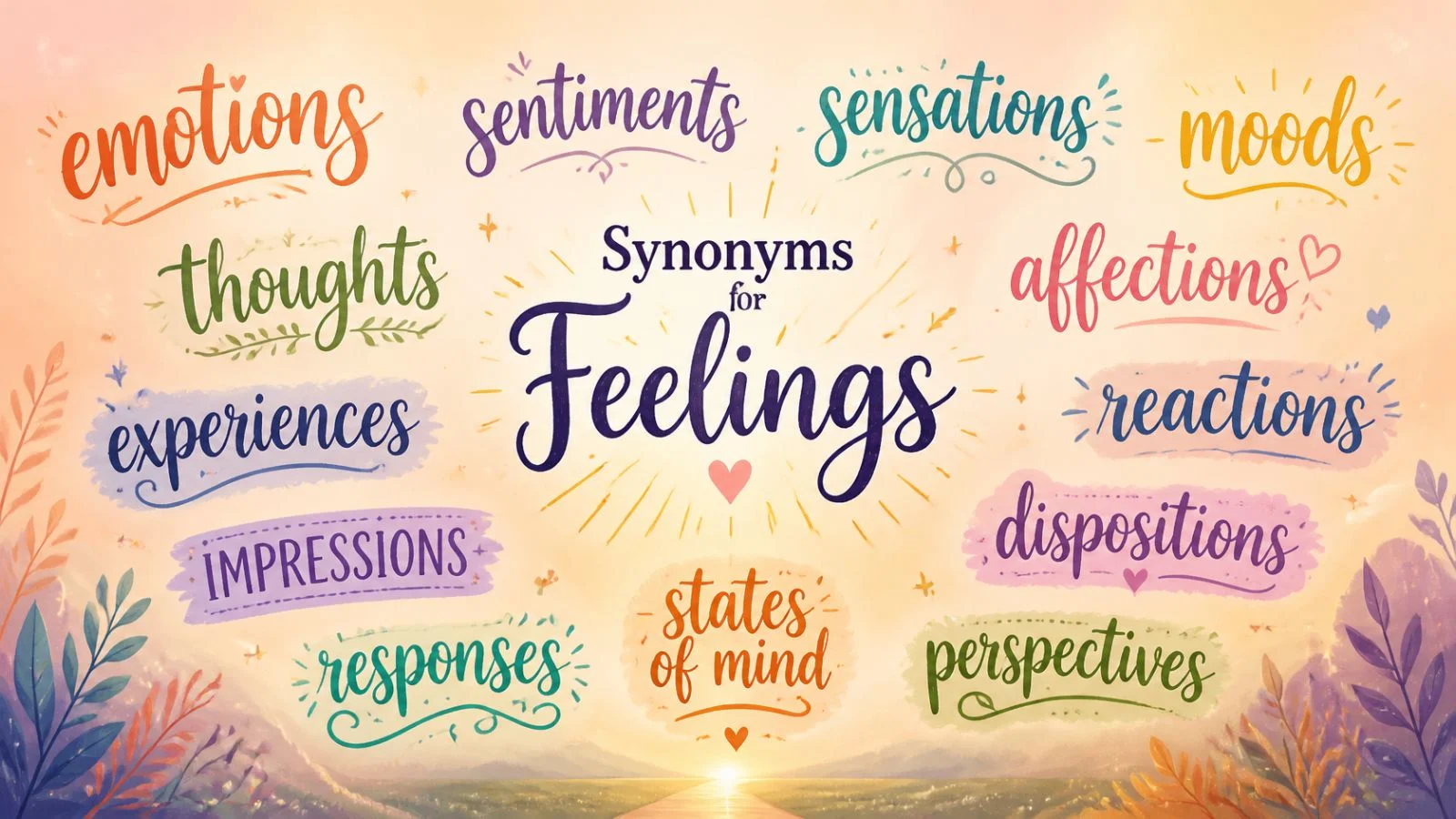
The closest everyday words for feelings are emotions, sentiments, and moods. Other good choices include sensations, impressions, and attitudes. Each one fits a slightly different meaning.
The best word depends on context. “Emotions” fits joy, fear, or anger. “Sensations” fits the body. “Affection” fits love, and “opinions” fits views.
Quick list: emotions, sentiments, moods, passions, sensations, impressions, instincts, affection, attitudes, vibes
This article looks at 30 alternatives. Each one has a meaning, IPA, a usage note, and an example. You will also see which words are direct synonyms and which are only related.
At a Glance: Feelings Synonyms and Related Alternatives
| Alternative | Part of Speech | Meaning | Register / Tone | Ideal Context |
| Emotions | Noun | Strong inner states like joy or fear | Neutral | Daily talk, writing |
| Sentiments | Noun | Thoughts shaped by feeling | Formal | Speeches, cards |
| Moods | Noun | A short state of mind | Neutral | Describing a day or scene |
| Passions | Noun | Very strong feelings | Dramatic | Love, anger, drive |
| Sensations | Noun | Body feelings like touch or pain | Neutral | Health, science |
| Impressions | Noun | First ideas about something | Neutral | Reviews, meetings |
| Affection | Noun | Gentle, caring love | Warm | Family, friends |
| Attitudes | Noun | Ways of thinking about something | Neutral | Work, school |
| Sensibilities | Noun | How easily you feel or get hurt | Formal | Essays, culture |
| Vibes | Noun | The feel of a person or place | Slang | Casual chats |
Which Word Should You Use?
| If you want to… | Use | Why |
| Name strong inner states | Emotions | It is the closest direct match. |
| Write a kind message in a card | Sentiments | It sounds warm and a bit formal. |
| Describe a short state of mind | Moods | It shows one state at a time. |
| Talk about the body | Sensations | It means what you sense by touch. |
| Share a first reaction | Impressions | It suits early, light opinions. |
| Show love or care | Affection | It is gentle and kind. |
| Describe a sense without proof | Intuitions | It means knowing without clear facts. |
| Sound casual with friends | Vibes | It is relaxed slang. |
Exploring the Multiple Meanings of “Feelings”
1. Emotions or inner states
- Meaning: Inner states such as joy, fear, or anger.
- Explanation: This is the most common sense. People often use the plural form.
- Example: She could not hide her feelings any longer.
2. Physical sensations
- Meaning: What the body senses, like touch, heat, or pain.
- Explanation: This sense is the oldest one. It links to the sense of touch.
- Example: He lost all feeling in his cold fingers.
3. Opinions or views
- Meaning: Your views or beliefs about a topic.
- Explanation: People say “feelings about” for this sense. It sounds softer than “opinions.”
- Example: What are your feelings about the new schedule?
4. Sensitivity
- Meaning: How easily a person gets upset.
- Explanation: People use it in phrases like “hurt feelings.” It points to a person’s pride or care.
- Example: I did not mean to hurt your feelings.
5. Hunches
- Meaning: A sense that something is true or will happen.
- Explanation: The singular form fits best here. People say “a feeling that.”
- Example: I have a feeling it will rain later.
6. Love or deep care
- Meaning: Love or deep care for another person.
- Explanation: People say “feelings for” someone. It often hints at romance.
- Example: He still has feelings for his old friend.
Sources: Merriam-Webster; Collins English Dictionary; Dictionary.com
Analyzing 30 Feelings Alternatives in Detail
Some alternatives below are direct synonyms. Others are related words that fit only one sense of feelings.
Core Synonyms
1. Emotions
IPA: US /ɪˈmoʊʃənz/ · UK /ɪˈməʊʃənz/
Definition: Emotions are strong inner states like joy or fear. They also include calm and soft states.
- Usage: This is the closest direct synonym. However, it sounds a bit more formal than “feelings.”
- Example: She hid her emotions during the long meeting.
2. Sentiments
IPA: (US and UK) /ˈsɛntɪmənts/
Definition: Sentiments are thoughts shaped by feeling. They also show a view that people share.
- Usage: This is a formal choice. For example, cards and speeches often carry warm sentiments.
- Example: We all share your sentiments about the new rule.
3. Moods
IPA: (US and UK) /muːdz/
Definition: A mood is a short state of mind. It also can last a few hours or days.
- Usage: This is a related word, not an exact match. However, it names one state at a time.
- Example: His moods change fast on rainy days.
4. Passions
IPA: (US and UK) /ˈpæʃənz/
Definition: Passions are very strong feelings. They also drive what people love to do.
- Usage: Use it for deep love, anger, or drive. Still, it can sound dramatic in daily talk.
- Example: Poets often write about love and other passions.
5. Affect
IPA: (US and UK) /ˈæfɛkt/
Definition: In psychology, affect means the outward show of feeling. It also covers mood.
- Usage: This is a technical, related term. In fact, you will see it mostly in science texts.
- Example: The doctor noted the patient’s flat affect during the visit.
Body and Inner Sense
6. Sensations
IPA: (US and UK) /sɛnˈseɪʃənz/
Definition: Sensations are body feelings like pain, heat, or touch. They also can mean a quick rush of emotion.
- Usage: This is a related alternative for the physical sense. However, it rarely fits love or anger.
- Example: He felt strange sensations in his legs.
7. Impressions
IPA: (US and UK) /ɪmˈprɛʃənz/
Definition: Impressions are first ideas about a person or place. They also come from small signs.
- Usage: This is a related word for mild opinions. For example, you can share your first impressions.
- Example: My first impressions of the town were very good.
8. Intuitions
IPA: US /ˌɪntuˈɪʃənz/ · UK /ˌɪntjuˈɪʃənz/
Definition: Intuitions are quick inner senses that come without proof. They also feel like quiet certainty.
- Usage: This is a related alternative. However, it fits only the “sense of knowing” meaning.
- Example: Her intuitions about people were rarely wrong.
9. Instincts
IPA: (US and UK) /ˈɪnstɪŋkts/
Definition: Instincts are natural urges that guide how you act. They also work without much thought.
- Usage: It is related, not exact. Still, people say “trust your instincts” for gut feelings.
- Example: His instincts told him to leave the room.
10. Hunches
IPA: (US and UK) /ˈhʌntʃɪz/
Definition: Hunches are guesses that come from a feeling, not facts. They also seem to come from nowhere.
- Usage: Use it for casual feelings about what may happen. However, it does not mean emotions.
- Example: I had a hunch that she would call today.
Warm and Caring Feelings
11. Affection
IPA: (US and UK) /əˈfɛkʃən/
Definition: Affection is a gentle, caring feeling for someone. It also shows in small kind acts.
- Usage: This is a close match for warm feelings. However, it does not cover anger or fear.
- Example: She spoke of her grandmother with great affection.
12. Compassion
IPA: (US and UK) /kəmˈpæʃən/
Definition: Compassion means feeling sorry for someone and wanting to help. It also moves people to act.
- Usage: Use it for kind feelings toward people who suffer. In fact, it goes beyond simple pity.
- Example: The nurse treated every patient with compassion.
13. Sympathy
IPA: (US and UK) /ˈsɪmpəθi/
Definition: Sympathy is sorrow for another person’s trouble. It also shows that you care.
- Usage: It is a related word for caring feelings. For example, people send it after a loss.
- Example: We sent our sympathy to the family after the funeral.
14. Empathy
IPA: (US and UK) /ˈɛmpəθi/
Definition: Empathy is the power to share another person’s feelings. It also helps you see their view.
- Usage: This is a related term about understanding feelings. However, it names a skill more than a feeling.
- Example: Good teachers show empathy when students feel afraid.
15. Warmth
IPA: US /wɔːrmθ/ · UK /wɔːmθ/
Definition: Warmth is a friendly, kind feeling toward others. It also shows in the tone of your voice.
- Usage: This is a soft, figurative alternative. Still, it works only for kind feelings.
- Example: Her voice carried real warmth when she thanked us.
Opinions and Reactions
16. Attitudes
IPA: US /ˈætɪtuːdz/ · UK /ˈætɪtjuːdz/
Definition: Attitudes are the ways you think or feel about something. They also show in how you act.
- Usage: This is a related alternative. In everyday English, it fits feelings about people or ideas.
- Example: Their attitudes toward work changed after the move.
17. Opinions
IPA: (US and UK) /əˈpɪnjənz/
Definition: Opinions are views you hold about a topic. They also may rest on feeling more than facts.
- Usage: This is a related word. However, it points to thoughts more than emotions.
- Example: Everyone shared opinions about the new school plan.
18. Reactions
IPA: (US and UK) /riˈækʃənz/
Definition: Reactions are how you feel or act after something happens. They also can be very quick.
- Usage: Use it when feelings follow an event. For example, news stories report public reactions.
- Example: Fans shared their reactions after the final goal.
19. Responses
IPA: US /rɪˈspɑːnsɪz/ · UK /rɪˈspɒnsɪz/
Definition: Responses are answers to an event, in words or in feeling. They also may be planned.
- Usage: This is a more neutral, related word. Still, it works well in work and school writing.
- Example: The song drew warm responses from the crowd.
20. Leanings
IPA: (US and UK) /ˈliːnɪŋz/
Definition: Leanings are mild pulls toward one choice or view. They also form slowly over time.
- Usage: This is a related alternative for light feelings. However, it fits tastes more than emotions.
- Example: Her leanings toward art showed early in school.
Formal and Literary Alternatives
21. Sensibilities
IPA: US /ˌsɛnsəˈbɪlətiz/ · UK /ˌsensɪˈbɪlɪtiz/
Definition: Sensibilities are how easily you feel or get hurt by things. They also include your taste.
- Usage: Use it in formal writing. For example, people say a joke “offends their sensibilities.”
- Example: The joke offended the sensibilities of some guests.
22. Temperament
IPA: US /ˈtɛmpərəmənt/ · UK /ˈtemprəmənt/
Definition: Temperament is your natural way of feeling and reacting. It also stays steady over the years.
- Usage: This is a related word for your usual emotional style. However, it is not a passing feeling.
- Example: She has a calm temperament even under stress.
23. Disposition
IPA: (US and UK) /ˌdɪspəˈzɪʃən/
Definition: Disposition is your usual mood or nature. It also hints at how you tend to act.
- Usage: It is formal and related. In fact, it says more about character than feeling.
- Example: He has a cheerful disposition in the morning.
24. Heart
IPA: US /hɑːrt/ · UK /hɑːt/
Definition: In figures of speech, the heart is where deep feelings live. It also stands for love or courage.
- Usage: This is a figurative alternative. Still, it works best in warm, poetic phrases.
- Example: She spoke straight from the heart.
25. Spirits
IPA: (US and UK) /ˈspɪrɪts/
Definition: Spirits are your mood or level of cheer. They also rise and fall with events.
- Usage: This is a related alternative. However, it works mainly in set phrases like “high spirits.”
- Example: Everyone was in good spirits at the party.
Casual and Context-Specific Alternatives
26. Vibes
IPA: (US and UK) /vaɪbz/
Definition: Vibes are the mood or feel of a person or place. They also show up in casual talk.
- Usage: This is slang, so keep it for informal chats. Also, it is a related word, not an exact match.
- Example: This café has really relaxed vibes.
27. Misgivings
IPA: (US and UK) /mɪsˈɡɪvɪŋz/
Definition: Misgivings are small doubts or worries about a plan. They also tend to come before a big step.
- Usage: This is a related alternative for uneasy feelings. However, it fits only doubt.
- Example: She had misgivings about moving so far away.
28. Resentment
IPA: (US and UK) /rɪˈzɛntmənt/
Definition: Resentment is anger that stays after unfair treatment. It also grows when no one talks about it.
- Usage: Use it for bitter feelings. Still, it is a narrow, related word.
- Example: He felt resentment when his boss ignored his work.
29. Fervor
IPA: US /ˈfɜːrvər/ · UK /ˈfɜːvə/
Definition: Fervor is a warm, intense feeling about a cause. It also shows in a person’s energy.
- Usage: This is a formal, literary alternative. However, it fits only strong feelings.
- Example: The crowd cheered with great fervor.
30. Tenderness
IPA: US /ˈtɛndərnəs/ · UK /ˈtendənəs/
Definition: Tenderness is a soft, gentle feeling of care. It also shows in touch and voice.
- Usage: This is a close alternative for loving feelings. However, it does not cover harsh emotions.
- Example: He held the baby with great tenderness.
Sources: Merriam-Webster; Collins English Dictionary and Collins Thesaurus; Dictionary.com; Cambridge Dictionary (pronunciation checks)
Feelings vs. Emotions vs. Moods
These three words overlap, but they are not the same. “Feelings” is the widest word. “Emotions” is narrower, and “moods” is about longer states.
| Word | How Long It Lasts | Typical Cause | Example |
| Feelings | Short or long | Events, the body, or thoughts | I have mixed feelings about it. |
| Emotions | Often short | A clear event | Anger rose in her at once. |
| Moods | Hours or days | Often unclear | He was in a gloomy mood all week. |
In short, “feelings” can name emotions, body sensations, or opinions. Psychology texts often treat moods as longer and less tied to one cause. Everyday speakers still mix the words freely.
Sources: Merriam-Webster; APA Dictionary of Psychology; Collins English Dictionary
Feelings and Opposite/Paired Word Pairs
| Word | Paired Word | Note |
| Feelings | Facts | People use this pair to contrast emotion with proof. |
| Feelings | Thoughts | It sets the heart against the mind. |
| Feelings | Reason | It often appears in debates about choices. |
| Feelings | Indifference | This is the closest opposite in meaning. |
| Positive feelings | Negative feelings | It is a common, natural pair. |
| Feelings | Logic | Writers use it to show a split between mind and heart. |
Feelings has no single true antonym. Instead, writers set it against ideas like facts or reason. “Indifference” is the best opposite when you mean a lack of feeling.
Sources: Merriam-Webster Thesaurus; Collins English Thesaurus
Common Word Partners of “Feelings”
| Pattern | Common Partners | Example |
| Adjective + feelings | strong, deep, genuine, warm, conflicting | She has strong feelings about the plan. |
| Verb + feelings | express, share, hide, bottle up | He finds it hard to express his feelings. |
| Feelings + preposition | about, for, toward, of | They share feelings of hope. |
| Noun + of + feelings | a mix of, a range of, a flood of | She felt a flood of feelings at the news. |
| Feelings + verb | change, fade, grow | Over time, her feelings began to fade. |
Sources: Collins English Dictionary (collocations); Cambridge Dictionary; Oxford Collocations Dictionary
Idiomatic Phrases Featuring “Feelings”
1. No hard feelings
- Meaning: A phrase that means you are not angry after a fight or loss.
- Example: You won the game, and there are no hard feelings.
2. Hurt someone’s feelings
- Meaning: This is an established expression. It means to make someone sad or upset.
- Example: She hurt his feelings without meaning to.
3. Feelings run high
- Meaning: This idiom means people are very emotional about an issue.
- Example: Feelings ran high during the town vote.
4. Mixed feelings
- Meaning: This is a fixed expression. It means you feel two things at once.
- Example: He has mixed feelings about leaving his job.
Sources: Merriam-Webster; Collins English Dictionary; Cambridge Dictionary; Dictionary.com
Word Formation of “Feelings”
Etymology and Structure
“Feelings” is built from the verb feel, the ending -ing, and the plural -s. Etymonline traces the verb to Old English fēlan. That word meant to touch or sense.
Date and History
The verb goes back to Old English. The noun feeling appears later, in Middle English. At first it meant the sense of touch, and then it grew to mean emotion.
Word Class Variations
- Verb: feel, feels, felt
- Noun: feeling, feelings, feeler
- Adjective: feeling (as in “a feeling person”), unfeeling
- Adverb: feelingly
Sources: Etymonline; Merriam-Webster; Collins English Dictionary
Common Word-Choice Mistakes
- My feelings are hurt: my feelings are hurt.
- I feel sympathy for him: I feel sympathy for him.
- She has empathy for her friends: she has empathy for her friends.
- His sensations of love grew: his feelings of love grew.
- She has moods about him: she has feelings about him.
- Effect for strong emotions in chat: use “feelings” or “emotions.”
- Vibes in a formal essay: use “mood” or “atmosphere.”
Frequently Asked Questions
What is the closest synonym for feelings?
Emotions is the closest synonym. It fits most cases where feelings means inner states.
What is the difference between feelings and emotions?
Emotions are clearer states, like anger or joy. Feelings are wider and can also mean body sensations or opinions.
What is a formal alternative to feelings?
Sentiments and sensibilities work well in formal writing. Both sound polished and careful.
What is a poetic alternative to feelings?
Passions, fervor, and heart suit poetic writing. They add depth and color.
Is a mood the same as a feeling?
Not quite. A mood is a state of mind that lasts longer than a single feeling.
Can feelings mean opinions?
Yes. People say “my feelings about the plan” to share a soft view.
What is the opposite of feelings?
Indifference is the closest opposite. Writers also set feelings against facts or logic.
What is a casual word for feelings?
Vibes is a casual choice. Use it with friends, not in formal work.
Can I use “feeling” for one emotion?
Yes. The singular form names one state, as in “a feeling of joy.”
Which word fits body feelings best?
Sensations is the best word. It means what you sense by touch, heat, or pain.
Conclusion
The closest everyday words for feelings are emotions, sentiments, and moods. Affection and compassion fit warm feelings. Sensations fit the body.
Context matters most. Some words show opinions, like attitudes or opinions. Others show hunches, like instincts or intuitions. A few, like vibes, work only in casual talk.
To choose well, first ask what kind of feeling you mean. Next, check how formal your writing is. Finally, read the example sentences to test how the word sounds.

Olivia Martin is a passionate writer who enjoys exploring English vocabulary, synonyms, and language tips to help readers improve their writing skills.
At PressivoMedia.com, Olivia shares helpful language resources and easy-to-understand content to make communication clearer and more effective.