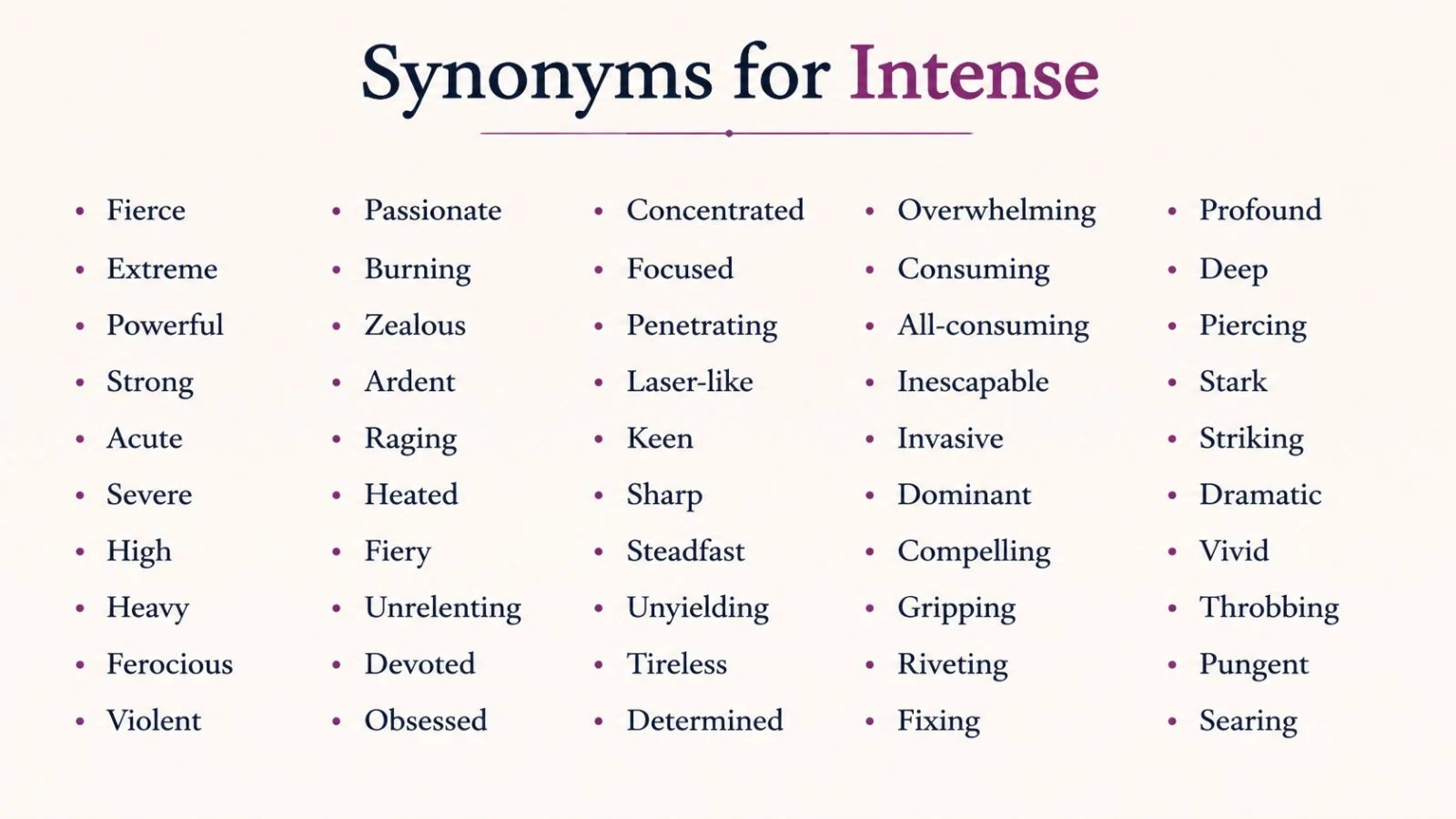
Another word for intense is strong, extreme, or severe. Fierce, vivid, and passionate also work. The best choice depends on what you want to describe.
Intense can talk about feelings, pain, heat, focus, color, and effort. Each area needs a different word.
For example,
you can say fierce competition but not fierce color.
Quick list: strong, extreme, severe, fierce, passionate, acute, vivid, profound, keen, vigorous
This guide looks at 30 alternatives. Each one has a meaning, IPA, usage note, and example. You will also see which words fit which context.
At a Glance: Intense Synonyms and Related Alternatives
| Alternative | Part of Speech | Meaning | Register / Tone | Ideal Context |
| Strong | Adjective | Great in force or degree | Neutral | Everyday speech |
| Extreme | Adjective | Far past the usual level | Neutral | Weather, pain, risk |
| Severe | Adjective | Very bad or hard to bear | Neutral to formal | Pain, storms, illness |
| Fierce | Adjective | Wild and strong | Neutral | Rivalry, wind, heat |
| Passionate | Adjective | Full of strong feeling | Warm | People, speech, belief |
| Acute | Adjective | Sharp and serious | Formal | Pain, need, danger |
| Vivid | Adjective | Bright and clear | Neutral | Color, memory, image |
| Profound | Adjective | Very deep in effect | Formal | Loss, change, thought |
| Keen | Adjective | Eager and sharp | Neutral | Interest, senses |
| Vigorous | Adjective | Full of energy and force | Neutral | Exercise, debate |
Which Word Should You Use?
| If you want to… | Use | Why |
| Keep it plain and simple | Strong | It fits almost every case |
| Describe sudden physical pain | Acute or sharp | Both show a hard, quick hit |
| Show warm, deep feeling | Passionate | It fits people and beliefs |
| Describe a hard, packed course | Intensive | It means a lot of work in a short time |
| Describe very hot weather | Scorching | It shows heat that feels like fire |
| Describe a bright color | Vivid | It fits color and images |
| Describe a tough contest | Fierce | It shows a wild fight to win |
| Sound formal about deep effects | Profound | It suits serious writing |
Exploring the Multiple Meanings of “Intense”
1. Very Strong in Degree
- Meaning: Having a great amount of force, heat, or strength.
- Explanation: This is the most common sense. It fits heat, pain, light, and pressure.
- Example: The intense heat made everyone leave the beach early.
2. Deep or Strong Feeling
- Meaning: Full of strong emotion.
- Explanation: Here the word shows how deeply someone feels. It can be good or bad.
- Example: She felt intense joy when she saw her family.
3. Serious and Focused
- Meaning: Showing close attention or a serious mood.
- Explanation: This sense fits looks, talks, and study. It also shows a calm but heavy focus.
- Example: He gave her an intense stare across the table.
4. Strong in Color, Light, or Taste
- Meaning: Rich and powerful to the senses.
- Explanation: People use this sense for color, flavor, and smell. It means “not faint.”
- Example: The soup had an intense garlic flavor.
5. Hard and Demanding
- Meaning: Needing great effort.
- Explanation: This sense fits work, training, and school. It also hints at stress.
- Example: The team had an intense week of practice.
6. Having Strong Feelings as a Trait
- Meaning: Describing a person who takes things very seriously.
- Explanation: People use this sense for personality. It can be praise or a mild warning.
- Example: My brother is an intense person who hates losing.
Sources: Merriam-Webster; Collins Dictionary; Dictionary.com
Analyzing 30 Intense Alternatives in Detail
Some words below are direct synonyms. Others are related words that fit only certain contexts.
Core Synonyms
1. Strong
IPA: US /strɔːŋ/ · UK /strɒŋ/
Definition: Strong means having great power or force. It also fits feelings, tastes, and smells.
- Usage: Strong is the closest everyday synonym. However, it sounds plainer than intense.
- Example: She felt a strong urge to call home.
2. Extreme
IPA: /ɪkˈstriːm/ (US and UK)
Definition: Extreme means far beyond the usual level. It also shows a very high degree.
- Usage: Extreme is a direct synonym for heat, cold, and pain. Still, it can sound harsher than intense.
- Example: The hikers faced extreme cold on the mountain.
3. Severe
IPA: US /səˈvɪr/ · UK /sɪˈvɪə/
Definition: Severe means very bad or hard to bear. It also fits pain, storms, and illness.
- Usage: Use severe for harm or danger. For example, you would not call joy severe.
- Example: The storm caused severe damage along the coast.
4. Powerful
IPA: US /ˈpaʊərfəl/ · UK /ˈpaʊəfəl/
Definition: Powerful means full of force or strength. It also fits feelings that hit hard.
- Usage: Powerful is a direct synonym for emotions, scenes, and speeches. However, it has a positive tone.
- Example: The movie ended with a very powerful final scene.
5. Fierce
IPA: US /fɪrs/ · UK /fɪəs/
Definition: Fierce means wild and strong in force. It also shows great effort or heat.
- Usage: Fierce fits fights, rivals, and winds. In fact, it sounds more combative than intense.
- Example: The two teams had a fierce rivalry for years.
Sources: Merriam-Webster; Collins Thesaurus; Dictionary.com
Emotional and Figurative Alternatives
6. Passionate
IPA: /ˈpæʃənət/ (US and UK)
Definition: Passionate means full of strong feelings. It also shows deep love or belief.
- Usage: Passionate is a related word for people and speech. However, it does not fit heat or pain.
- Example: He gave a passionate speech about saving the river.
7. Ardent
IPA: US /ˈɑːrdnt/ · UK /ˈɑːdənt/
Definition: Ardent means full of warm and eager feeling. It also sounds formal.
- Usage: Ardent is a related word for love and support. For example, writers use it for fans.
- Example: She is an ardent fan of the local team.
8. Fervent
IPA: US /ˈfɜːrvənt/ · UK /ˈfɜːvənt/
Definition: Fervent means showing deep and sincere feelings. It also fits prayers and hopes.
- Usage: Fervent is a formal, related word for belief. Also, it rarely fits pain or heat.
- Example: They all shared a fervent hope for peace this year.
9. Fiery
IPA: US /ˈfaɪri/ · UK /ˈfaɪəri/
Definition: Fiery means full of anger or hot feeling. It also means like fire.
- Usage: Fiery is a figurative, related word. In fact, it fits tempers and speeches best.
- Example: The coach gave a fiery talk at halftime.
10. Heartfelt
IPA: US /ˈhɑːrtfelt/ · UK /ˈhɑːtfelt/
Definition: Heartfelt means deeply and truly felt. It also shows honest care.
- Usage: Heartfelt is a related word for thanks and wishes. However, it fits warm feelings only.
- Example: Please accept my heartfelt thanks for your help.
Sources: Merriam-Webster; Collins Dictionary; Dictionary.com
Pain, Heat, and Weather Alternatives
11. Acute
IPA: /əˈkjuːt/ (US and UK)
Definition: Acute means very sharp or serious. It also fits pain and needs.
- Usage: Acute is a close synonym for pain and shortage. However, it can sound medical.
- Example: He felt acute pain in his left knee.
12. Sharp
IPA: US /ʃɑːrp/ · UK /ʃɑːp/
Definition: Sharp means sudden and strong. It also fits pain and change.
- Usage: Sharp is a related word for short, stabbing pain. Still, it does not fit long feelings.
- Example: A sharp pain shot through her ankle during the run.
13. Searing
IPA: US /ˈsɪrɪŋ/ · UK /ˈsɪərɪŋ/
Definition: Searing means burning hot or very strong. It also fits pain and words.
- Usage: Searing is a vivid, figurative word. For example, you can say searing heat.
- Example: The searing heat forced everyone indoors by noon.
14. Scorching
IPA: US /ˈskɔːrtʃɪŋ/ · UK /ˈskɔːtʃɪŋ/
Definition: Scorching means hot enough to burn. It also shows very high heat.
- Usage: Scorching is a related word for heat only. However, it works well in daily conversation.
- Example: We stayed inside during the scorching summer afternoon.
15. Harsh
IPA: US /hɑːrʃ/ · UK /hɑːʃ/
Definition: Harsh means rough and unpleasant. It also fits light, sound, and weather.
- Usage: Harsh is related, not exact. In fact, it adds a bad tone that intense lacks.
- Example: The harsh light in the room hurt her eyes.
Sources: Merriam-Webster; Collins Thesaurus; Dictionary.com
Focus and Effort Alternatives
16. Intensive
IPA: /ɪnˈtensɪv/ (US and UK)
Definition: Intensive means done with great effort in a short time. It also means focused.
- Usage: Intensive is related, not a true synonym. However, people often mix it up with intense.
- Example: She took an intensive course in Spanish last summer.
17. Rigorous
IPA: /ˈrɪɡərəs/ (US and UK)
Definition: Rigorous means strict and very careful. It also shows hard work.
- Usage: Rigorous fits tests, rules, and training. However, it does not fit my feelings.
- Example: The team follows a rigorous training plan every week.
18. Vigorous
IPA: /ˈvɪɡərəs/ (US and UK)
Definition: Vigorous means full of energy and force. It also fits action and debate.
- Usage: Vigorous is a related word for effort. For example, you can say vigorous exercise.
- Example: He gave the thick dough a vigorous stir.
19. Concentrated
IPA: US /ˈkɑːnsntreɪtɪd/ · UK /ˈkɒnsntreɪtɪd/
Definition: Concentrated means focused in one place. It also means strong and not watered down.
- Usage: Concentrated is related to effort and flavor. In short, it means packed into one point.
- Example: The team made a concentrated effort to finish early.
20. Earnest
IPA: US /ˈɜːrnɪst/ · UK /ˈɜːnɪst/
Definition: Earnest means serious and sincere. It also shows a steady aim.
- Usage: Earnest fits people and efforts. However, it is milder than intense.
- Example: He made an earnest attempt to fix the problem.
Sources: Merriam-Webster; Collins Dictionary; Dictionary.com
Color, Light, and Sound Alternatives
21. Vivid
IPA: /ˈvɪvɪd/ (US and UK)
Definition: Vivid means bright and strong to the eye. It also fits clear memories.
- Usage: Vivid is a close fit for color and images. Still, it does not fit heat or pain.
- Example: She wore a vivid red scarf to the party.
22. Brilliant
IPA: /ˈbrɪljənt/ (US and UK)
Definition: Brilliant means very bright and shining. It also fits a strong color.
- Usage: Brilliant is related and fits light. However, it also means very smart, so check the context.
- Example: The brilliant sun lit up the whole valley.
23. Deep
IPA: /diːp/ (US and UK)
Definition: Deep means strong and rich in degree. It also fits color and feeling.
- Usage: Deep is a plain, close word for feelings and color. For example, you can say deep sorrow.
- Example: She felt deep sorrow after hearing the sad news.
24. Piercing
IPA: US /ˈpɪrsɪŋ/ · UK /ˈpɪəsɪŋ/
Definition: Piercing means sharp and hard to ignore. It also fits sound, cold, and looks.
- Usage: Piercing fits loud sounds and sharp looks. However, it does not fit slow feelings.
- Example: A piercing scream cut through the quiet night.
25. Glaring
IPA: US /ˈɡlerɪŋ/ · UK /ˈɡleərɪŋ/
Definition: Glaring means too bright and harsh. It also means it is very easy to see.
- Usage: Glaring is related and often shows a flaw. For example, people say a glaring error.
- Example: The glaring headlights made it hard to see the road.
Sources: Merriam-Webster; Collins Thesaurus; Dictionary.com
Formal and Literary Alternatives
26. Profound
IPA: /prəˈfaʊnd/ (US and UK)
Definition: Profound means very deep in effect. It also fits strong thought and feeling.
- Usage: Profound is a formal, close word for emotion. However, it rarely fits the heat.
- Example: The loss had a profound effect on the family.
27. Keen
IPA: /kiːn/ (US and UK)
Definition: Keen means eager and strong. It also fits sharp senses and interest.
- Usage: Keen is related, with a bright tone. For example, you can say keen interest.
- Example: He has a keen interest in space travel.
28. Heightened
IPA: /ˈhaɪtnd/ (US and UK)
Definition: Heightened means raised to a higher level. It also fits senses and alert states.
- Usage: Heightened is a formal, related word. It also suggests a rise, not a steady state.
- Example: The news led to a heightened sense of worry.
29. Overpowering
IPA: US /ˌoʊvərˈpaʊərɪŋ/ · UK /ˌəʊvəˈpaʊərɪŋ/
Definition: Overpowering means too strong to resist. It also fits smells and feelings.
- Usage: Overpowering is a close word with a heavy tone. However, it often feels negative.
- Example: The overpowering smell of paint filled the whole house.
30. Consuming
IPA: US /kənˈsuːmɪŋ/ · UK /kənˈsjuːmɪŋ/
Definition: Consuming means taking up all your time or thought. It also fits a strong need.
- Usage: Consuming is a literary, related word. For example, writers use consuming passion.
- Example: Music became a consuming passion in her later years.
Sources: Merriam-Webster; Collins Dictionary; Dictionary.com
Intense vs. Intensive vs. Intensely
These three words look close, but they do different jobs. Intense shows strength. Intensive shows a lot of work in a short time. Intensely is the adverb form.
| Word | Part of Speech | Meaning | Example |
| Intense | Adjective | Very strong or deep | The pain was intense. |
| Intensive | Adjective | Packed with effort or focus | She joined an intensive course. |
| Intensely | Adverb | In a very strong way | He stared intensely at the screen. |
Intense describes how strong something feels. Intensive describes how much work happens in a set time. Doctors also use intensive in the term “intensive care.”
Sources: Merriam-Webster; Collins Dictionary; Dictionary.com
Intense and Opposite/Paired Word Pairs
| Word | Paired Word | Note |
| Intense | Mild | The most common opposite for pain, flavor, and weather |
| Intense | Faint | Fits light, sound, and smell |
| Intense | Weak | Fits force and feeling |
| Intense | Moderate | Fits levels of heat or effort |
| Intense | Calm | Fits mood and people |
| Intense | Relaxed | Fits people and talks |
| Intense | Pale | Fits color |
| Intensive | Extensive | A common pair in farming and research |
No single word is the opposite of intense in every case. The best opposite depends on the sense. Mild fits taste and pain, while pale fits color.
Sources: Merriam-Webster; Collins Thesaurus; Dictionary.com
Common Word Partners of “Intense”
| Pattern | Common Partners | Example |
| intense feeling | emotion, anger, fear, love, jealousy | She felt intense fear before the exam. |
| intense + body sensation | pain, heat, cold, pressure, light | The intense heat made us stop. |
| intense attention | scrutiny, focus, interest, debate, concentration | The plan faced intense scrutiny. |
| intense contest | competition, rivalry, pressure, training | The two firms face intense competition. |
| intense + look | gaze, stare, look, eyes | He gave her an intense look. |
| intense + sense | flavor, aroma, color, sweetness | The sauce has an intense flavor. |
| adverb + intense | extremely, very, incredibly, quite | The match was incredibly intense. |
| verb + intense | become, grow, get, remain | The storm grew more intense. |
Sources: Collins Dictionary; Merriam-Webster; Oxford Collocations Dictionary
Idiomatic Phrases Featuring “Intense”
Intense has very few true idioms. The items below are established expressions. They are not idioms in the strict sense.
1. Under intense scrutiny
- Meaning: Being checked very closely by many people.
- Example: The new law is under intense scrutiny from experts.
2. Come under intense fire
- Meaning: To face strong attack or harsh blame.
- Example: The mayor came under intense fire over the new tax.
3. Intensive care
- Meaning: A hospital unit for people who need constant, close care. It uses the related form intensive.
- Example: He spent two days in intensive care after the crash.
Sources: Merriam-Webster; Collins Dictionary; Cambridge Dictionary
Word Formation of “Intense”
Etymology & Structure
Intense comes from Old French intense. That word comes from Latin intensus, which means “stretched” or “strained.” Latin intensus is the past participle of intendere, which joins in- (“toward”) and tendere (“to stretch”).
Date and History
Intense entered English in the 15th century. It first described things stretched tight or strong in degree. The sense of deep feeling grew later.
Word Class Variations
- Adjective: intense, intensive
- Adverb: intensely, intensively
- Noun: intensity, intenseness, intensifier, intensification
- Verb: intensify
Sources: Etymonline; Merriam-Webster; Collins Dictionary
Common Word-Choice Mistakes
- “Intensive pain”: use “intense pain.”
- “An intense course in one week”: use “an intensive course.”
- “Intense happy”: use “intensely happy.”
- “Intensity heat”: use “intense heat.”
- “A sharp person”: use “an intense person” for someone who takes things seriously.
- “A fierce color”: use “a vivid color.”
- “An extreme sauce flavor”: use “an intense flavor” for taste.
Frequently Asked Questions
What is the closest synonym for intense?
Strong is the closest everyday synonym. Extreme and severe also fit many cases.
What is a formal alternative to intense?
Profound and acute are good formal choices. Both suit serious writing.
What is a literary alternative to intense?
Consuming, searing, and fervent suit literary writing. They add a rich, vivid tone.
What is the opposite of intense?
Mild is the most common opposite. Faint, weak, and calm fit other senses.
What is the difference between intense and intensive?
Intense shows strength or depth. Intensive shows a lot of work in a short time.
Can intense describe a person?
Yes. An intense person takes things seriously and feels strongly. The tone can be good or bad.
Is intense a positive or negative word?
It can be either. Intense joy is good, but intense pain is not.
Can intense describe color or taste?
Yes. People say intense blue or intense flavor. Vivid and rich are close choices.
What is the adverb form of intense?
The adverb is intense. For example, you can say intensely focused.
Is intense the same as extreme?
Not always. Extreme means beyond the usual level, while intense means strong or deep.
Conclusion
The closest alternatives to intense are strong, extreme, and severe. Fierce, passionate, and vivid also fit many cases. Each one works best in a certain context.
Context is the key. Use acute or sharp for pain and scorching for heat. Choose passionate for feeling and vivid for color. Pick intensive hard work in a short time.
To choose the right word, ask what you want to describe. Then match the word to that sense. Use the tables and examples above to check your choice.

Olivia Martin is a passionate writer who enjoys exploring English vocabulary, synonyms, and language tips to help readers improve their writing skills.
At PressivoMedia.com, Olivia shares helpful language resources and easy-to-understand content to make communication clearer and more effective.