Note: I read “Synonyms for Soft” as “Synonyms for Soft” and wrote the article for the keyword soft.
The best other word for soft depends on what you mean. Gentle, tender, smooth, and mild are the closest everyday choices. A soft pillow, a soft voice, and a soft heart each need a different word.
Soft can talk about touch, sound, light, colour, or manner. It can also mean weak or too easy. This guide shows which word fits each case.
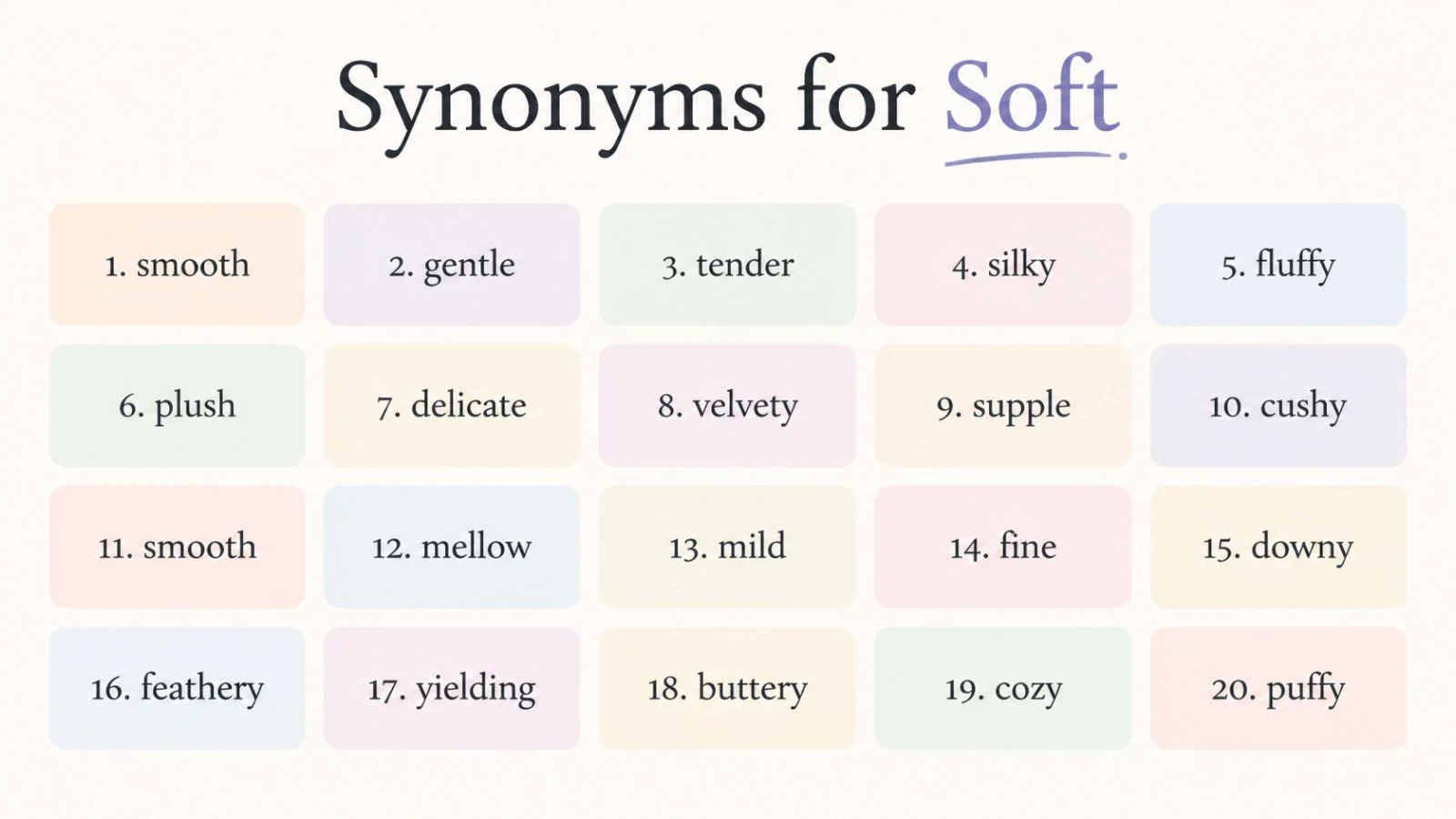
Quick list: gentle, tender, smooth, silky, fluffy, mild, quiet, mellow, lenient, squishy
This article looks at 30 alternatives. Each one has a meaning, IPA, a usage note, and an example. You will also find tables, word pairs, and common mistakes.
At a Glance: Soft Synonyms and Related Alternatives
| Alternative | Part of Speech | Meaning | Register / Tone | Ideal Context |
| Gentle | Adjective | Soft and kind in touch or manner | Neutral, warm | People, touch, breezes |
| Tender | Adjective | Easy to chew or cut, or caring | Neutral, warm | Food, feelings |
| Smooth | Adjective | Even and free of rough spots | Neutral | Surfaces, skin, textures |
| Silky | Adjective | Soft and shiny like silk | Descriptive | Hair, fur, fabric |
| Fluffy | Adjective | Light, soft, and full of air | Casual | Towels, pillows, pancakes |
| Squishy | Adjective | Soft enough to squeeze | Casual, playful | Toys, ripe fruit |
| Quiet | Adjective | Making little noise | Neutral | Voices, music, rooms |
| Mellow | Adjective | Soft, warm, and rich | Warm, literary | Light, sound, colour |
| Mild | Adjective | Not strong or harsh | Neutral | Weather, taste, soap |
| Lenient | Adjective | Not strict | Formal | Rules, teachers, judges |
Which Word Should You Use?
| If you want to… | Use | Why |
| Praise a smooth, shiny fabric | Silky | It adds a slippery, shiny feel. |
| Describe something light and airy | Fluffy | It shows air inside the item. |
| Describe an item that gives under your hand | Squishy | It is casual and clear. |
| Praise meat that is easy to chew | Tender | It is the usual word for food. |
| Describe a voice that is very low | Hushed | It adds a secret or calm mood. |
| Describe warm, calm light | Mellow | It suggests gold, gentle tones. |
| Describe a kind manner | Gentle | It fits people and touches them best. |
| Describe rules that are not strict | Lenient | It fits judges, teachers, and rules. |
Exploring the Multiple Meanings of “Soft”
1. Not Hard or Firm
- Meaning: Gives way easily when you press it.
- Explanation: This sense covers pillows, dough, and ripe fruit. It is the most common sense of soft.
- Example: She pressed the soft dough with her thumb.
2. Smooth and Pleasant to Touch
- Meaning: Feels fine, smooth, and nice on the skin.
- Explanation: People use this sense for fur, cloth, and skin. It also stresses comfort.
- Example: This soft blanket keeps the baby warm at night.
3. Quiet or Low in Sound
- Meaning: Not loud.
- Explanation: This sense fits voices and music. It can also show a calm mood.
- Example: He spoke in a soft voice so nobody woke.
4. Dim or Pale
- Meaning: Not bright or harsh to the eye.
- Explanation: Soft light and soft colours feel calm. Harsh light is the opposite.
- Example: Soft light came through the thin white curtains.
5. Gentle or Not Strict
- Meaning: Kind, mild, or easy on others.
- Explanation: This sense can be praised or blamed. For example, “soft on crime” often sounds like a complaint.
- Example: The coach was soft on players who came late.
6. Weak or Out of Shape
- Meaning: Lacking strength or toughness.
- Explanation: This sense is often an insult. It can also describe an easy life.
- Example: Years of easy living had made him soft.
Sources: Merriam-Webster, Collins English Dictionary, Dictionary.com, Etymonline.
Analyzing 30 Soft Alternatives in Detail
Some of these words are direct synonyms, while others are related words for one sense.
Touch and Texture
1. Silky
IPA: /ˈsɪlki/ (US and UK)
Silky means smooth, soft, and shiny like silk cloth. It also fits hair, skin, and liquids.
- Usage: It is a close match for a soft touch. However, it adds a shiny, slippery feel.
- Example: She loved the silky fur of her new kitten.
2. Smooth
IPA: /smuːð/ (US and UK)
Smooth shows a surface free of bumps or rough spots. It also describes things that glide under your hand.
- Usage: It is a related word, not an exact match. For example, a smooth stone feels even but not always soft.
- Example: The smooth sand felt cool under my bare feet.
3. Fluffy
IPA: /ˈflʌfi/ (US and UK)
Fluffy is about things that are light, soft, and full of air. It also fits items with many tiny fibres.
- Usage: Use it for towels, pillows, and clouds. In fact, it also hints at a puffy shape.
- Example: The baker made fluffy pancakes for the whole family.
4. Downy
IPA: /ˈdaʊni/ (US and UK)
Downy means covered in fine, soft hair or feathers. People also use it for things that feel that light.
- Usage: Writers use it for chicks, peaches, and baby hair. For example, a downy blanket sounds very cosy.
- Example: The chick had downy yellow feathers all over its tiny body.
5. Velvety
IPA: US /ˈvɛlvəti/ · UK /ˈvɛlvɪti/
Velvety means smooth and soft like velvet cloth. It also fits rich foods, skin, and voices.
- Usage: It sounds warmer and fancier than soft. For example, chefs call a smooth soup velvety.
- Example: The velvety petals felt cool against her fingertips.
6. Supple
IPA: /ˈsʌpəl/ (US and UK)
Supple means able to bend easily without breaking. It also fits soft skin and leather.
- Usage: It is a good formal choice. However, it stresses the bend more than the softness.
- Example: Good leather boots stay supple for many years.
Not Firm or Hard
7. Squishy
IPA: /ˈskwɪʃi/ (US and UK)
Squishy shows something soft enough to give way when you squeeze it. It can also be a bit wet.
- Usage: This word is casual and playful. Kids use it often, so it suits a light tone.
- Example: The ripe peach felt squishy in his hand.
8. Spongy
IPA: /ˈspʌndʒi/ (US and UK)
Spongy means soft and full of tiny holes. It also describes things that spring back.
- Usage: Spongy fits cake, moss, and bread. Still, it can sound negative for wet ground.
- Example: The spongy moss soaked up the rain overnight.
9. Pliable
IPA: /ˈplaɪəbəl/ (US and UK)
Pliable means easy to bend or shape. It also fits people who follow others easily.
- Usage: This is a related word, not a direct synonym. For example, warm clay is pliable but not always soft.
- Example: Warm the wax until it turns pliable.
10. Mushy
IPA: /ˈmʌʃi/ (US and UK)
Mushy means soft and wet, often in a bad way. It also describes food that is too soft.
- Usage: It is a related word with a negative tone. So avoid it when you want praise.
- Example: The overcooked rice turned mushy in the pot.
11. Yielding
IPA: /ˈjiːldɪŋ/ (US and UK)
Yielding means giving way when you press it. This word also describes people who give in easily.
- Usage: It sounds formal and a little literary. Also, it fits the ground, beds, and character.
- Example: She sank into the yielding mattress with a sigh.
12. Tender
IPA: US /ˈtɛndər/ · UK /ˈtɛndə/
Tender means soft enough to cut or chew with ease. It also means gentle and caring.
- Usage: It is a strong match for food. However, tender skin means sore skin.
- Example: The slow-cooked beef was tender and full of flavour.
Quiet Sounds
13. Quiet
IPA: /ˈkwaɪət/ (US and UK)
Quiet means making little or no noise. It also fits calm places and low voices.
- Usage: It is the plainest choice for sound. In fact, soft voice and quiet voice mean nearly the same.
- Example: Please keep your voice quiet near the sleeping baby.
14. Hushed
IPA: /hʌʃt/ (US and UK)
Hushed means very quiet, as if people want silence. It also shows a calm or secret mood.
- Usage: This word adds drama to a soft sound. For example, writers use hushed tones in stories.
- Example: They spoke in hushed voices outside the sleeping child’s room.
15. Muted
IPA: /ˈmjuːtɪd/ (US and UK)
Muted means made quieter or less strong. It also describes dull colours and feelings.
- Usage: It is a related word for sound, light, and colour. However, it suggests something held back.
- Example: The trumpet played with a muted sound in the old song.
16. Low
IPA: US /loʊ/ · UK /ləʊ/
Low means not loud and often deep in tone. It also fits dim light.
- Usage: It works for music, voices, and radio volume. Still, low can mean deep rather than soft.
- Example: Turn the radio low so the baby can sleep.
Light and Colour
17. Mellow
IPA: US /ˈmɛloʊ/ · UK /ˈmɛləʊ/
Mellow is about things that are soft, warm, and rich but never harsh. It also describes calm, relaxed people.
- Usage: It fits light, sound, and colour. For example, mellow gold looks warm and soft.
- Example: Mellow lamplight filled the small cafe on the quiet street.
18. Pastel
IPA: US /pæˈstɛl/ · UK /ˈpæstəl/
Pastel means pale and soft in colour. It also names chalk-like crayons that artists use.
- Usage: It fits colour only. However, it is a precise word for pale pink, mint, and sky blue.
- Example: She painted the nursery wall in pastel blue and pink.
19. Subtle
IPA: /ˈsʌtəl/ (US and UK)
Subtle means gentle and hard to notice. It also fits delicate shades and flavours.
- Usage: This is a related alternative, not a true synonym. In fact, subtle stresses are what you barely see.
- Example: The room had a subtle scent of fresh lavender.
20. Dim
IPA: /dɪm/ (US and UK)
Dim means not bright or clear. It also describes low light that feels soft.
- Usage: Use it for light only. However, dim can sound gloomy instead of cosy.
- Example: We ate dinner by dim candlelight in the old farmhouse.
21. Subdued
IPA: US /səbˈduːd/ · UK /səbˈdjuːd/
Subdued means calm and less strong than usual. It also fits quiet light, colour, and mood.
- Usage: It suits careful writing. For example, subdued lighting feels soft and calm.
- Example: The restaurant used subdued lighting to set a calm mood.
Gentle Manner
22. Gentle
IPA: /ˈdʒɛntəl/ (US and UK)
Gentle means soft, calm, and kind in touch or manner. It also describes mild forces like a breeze.
- Usage: It is the closest match for soft in manner. Also, it fits touch, sound, and weather.
- Example: He gave the sleepy puppy a gentle pat on the head.
23. Mild
IPA: /maɪld/ (US and UK)
Mild means not strong, harsh, or extreme. It also describes soft weather and gentle people.
- Usage: It is a related word for weather, taste, and soap. However, it feels less warm than gentle.
- Example: We had a mild winter with very little snow.
24. Lenient
IPA: /ˈliːniənt/ (US and UK)
Lenient means not being strict when you judge or punish. It also fits easy rules.
- Usage: It matches the sense of soft on rules. However, it fits people and rules only, never things.
- Example: The teacher was lenient about late homework this week.
25. Indulgent
IPA: /ɪnˈdʌldʒənt/ (US and UK)
Indulgent means too ready to give people what they want. It also describes rich treats.
- Usage: This is a related word, not an exact match. For example, an indulgent parent is soft with kids.
- Example: His indulgent grandmother always gave him extra sweets.
26. Kind
IPA: /kaɪnd/ (US and UK)
Kind means caring and good to others. It also describes warm, helpful acts.
- Usage: Kind is a plain word for a soft heart. Still, it does not suit touch or sound.
- Example: She gave the shy new student a kind smile.
Weak or Too Easy
27. Flabby
IPA: /ˈflæbi/ (US and UK)
Flabby means soft and loose, with no firm muscle. It also describes weak ideas.
- Usage: It is a related word with a rude tone. So use it with care.
- Example: He felt flabby after a long year behind a desk.
28. Weak
IPA: /wiːk/ (US and UK)
Weak means lacking strength or power. It also describes people who give in too fast.
- Usage: It matches the insulting sense of softness. However, it never means soft to the touch.
- Example: Critics called the new rules weak and easy to dodge.
29. Cushy
IPA: /ˈkʊʃi/ (US and UK)
Cushy shows a life or job that is easy and comfortable. It also hints at good pay for little effort.
- Usage: This word is informal and often a little envious. For example, a cushy job is easy, not soft.
- Example: He found a cushy job with short hours and great pay.
30. Lax
IPA: /læks/ (US and UK)
Lax shows a lack of care or strictness. It also describes loose rules.
- Usage: It is a related word with a negative tone. In fact, it shows blame, not praise.
- Example: The lax guard let the visitors walk straight in.
Sources: Merriam-Webster, Collins English Dictionary and Thesaurus, Dictionary.com.
Soft vs. Gentle vs. Tender vs. Mild
These four words overlap, but each one has a home turf. The table shows where each fits best.
| Word | Best For | Example Phrase |
| Soft | Touch, sound, and light | A soft pillow |
| Gentle | Manner, touch, and light forces | A gentle breeze |
| Tender | Food, feelings, and sore skin | Tender steak |
| Mild | Weather, taste, and soap | Mild soap |
Be careful with tender skin. It often means skin that hurts. Soft skin feels nice.
Sources: Merriam-Webster, Collins English Dictionary.
Soft and Opposite/Paired Word Pairs
| Word | Paired Word | Note |
| Soft | Hard | The main opposite for touch. |
| Soft | Firm | Fits mattresses, fruit, and handshakes. |
| Soft | Rough | Fits skin, cloth, and surfaces. |
| Soft | Loud | Fits voices, music, and noise. |
| Soft | Harsh | Fits light, colour, and words. |
| Soft | Strict | Fits teachers, parents, and rules. |
| Soft | Tough | Fits people, as in “soft or tough on crime.” |
The best opposite depends on the sense. Hard fits touch, but loud fits sound. Harsh fits light and tone.
Sources: Merriam-Webster, Collins English Thesaurus, Dictionary.com.
Common Word Partners of “Soft”
| Pattern | Common Partners | Example |
| soft + texture noun | skin, fur, blanket, cheese | The soft fur felt warm. |
| soft + sound noun | voice, music, knock, laugh | She gave a soft laugh. |
| soft + light or colour | light, glow, focus, colours | The lamp gave a soft glow. |
| soft + food or drink | drink, cheese, toy | He ordered a soft drink. |
| soft + abstract noun | landing, skills, power, spot | Good manners are key soft skills. |
| adverb + soft | very, incredibly, wonderfully, ultra | The towel was incredibly soft. |
| verb + soft | feel, go, turn, stay | The butter will turn soft in the sun. |
Sources: Collins English Dictionary, Merriam-Webster, Cambridge Dictionary.
Idiomatic Phrases Featuring “Soft”
Soft has few true idioms. The last item below is a fixed expression rather than an idiom.
1. Soft spot
- Meaning: A special fondness for someone or something.
- Example: I have a soft spot for old movies.
2. Soft touch
- Meaning: A person who gives in easily, often about money.
- Example: My uncle is a soft touch for any good story.
3. Soft-pedal
- Meaning: To make something sound less serious or important.
- Example: The company tried to soft-pedal the bad news.
4. Soft landing
- Meaning: A gentle outcome after a risky change, like a slowdown without a crash.
- Example: Experts hope for a soft landing for the economy.
Sources: Merriam-Webster, Cambridge Dictionary, Collins English Dictionary.
Word Formation of “Soft”
Etymology & Structure
Soft is a short, simple word with no prefix or suffix. It comes from Old English softe. That form changed from an earlier word, sefte, which meant gentle or calm. Related words include Dutch zacht and German sanft.
Date and History
The word dates to the Old English period, before the 12th century. Its first sense was “gentle” or “pleasant.” The sense of “giving way to touch” came later.
Word Class Variations
- Adjective: soft, softer, softest, softish
- Verb: soften (to make or grow soft)
- Noun: softness, softie or softy (a gentle or weak person), softener
- Adverb: softly (and, rarely, soft, as in “speak soft”)
- Compounds: software, softball, soft-spoken
Sources: Etymonline, Merriam-Webster, Collins English Dictionary.
Common Word-Choice Mistakes
A lenient pillow: a soft pillow. Lenient fits only people and rules.
A silky steak: a tender steak. Silky does not describe food that you chew.
Dim music: quiet music. Dim fits only light.
A mushy towel: a soft or fluffy towel. Mushy sounds wet and unpleasant.
A tender towel: a soft towel. Tender often means sore.
A flabby pillow: a squishy or soft pillow. Flabby describes loose flesh.
Frequently Asked Questions
What is the closest synonym for soft?
Gentle and tender are the closest choices. Smooth is also close to touch.
What is the difference between soft and gentle?
Soft often describes how something feels. Gentle usually describes how a person acts or touches.
What is a formal alternative to soft?
Supple and pliable suit formal writing about materials. Subdued suits light, colour, and mood.
What is a poetic alternative to soft?
Velvety, downy, and hushed sound poetic. Writers also use mellow for warm light.
What is the opposite of soft?
It depends on the sense. Hard is the opposite for touch, and loud is the opposite for sound.
Can soft describe people?
Yes. It can praise a kind person. It can also insult someone who seems weak.
Is soft the same as quiet?
For voices, the two are close. Soft also shows a gentle tone, while quiet only shows low noise.
What is the difference between soft and smooth?
Smooth means free of bumps. Soft means pleasant and yielding, so a smooth stone is not soft.
What is another word for soft food?
Tender fits meat and vegetables. Mushy fits food that is too soft.
What is another word for soft light?
Mellow, subdued, and dim all fit. Mellow sounds warm, but dim can sound gloomy.
Conclusion
Gentle, tender, smooth, and mild are the closest everyday alternatives to soft. Silky, fluffy, and quiet add more detail for touch and sound each word fits a different sense.
Context decides the best word. Soft can mean touch, sound, light, or manner. A word that fits one sense may fail in another.
First, ask what you want to describe. Next, pick the word that matches that sense. Finally, test it in a short sentence.

Emily Davis is a passionate writer who enjoys exploring English vocabulary, synonyms, and language tips to help readers improve their communication skills.
At PressivoMedia.com, she focuses on creating simple, engaging, and informative content that makes learning English easier and more enjoyable.