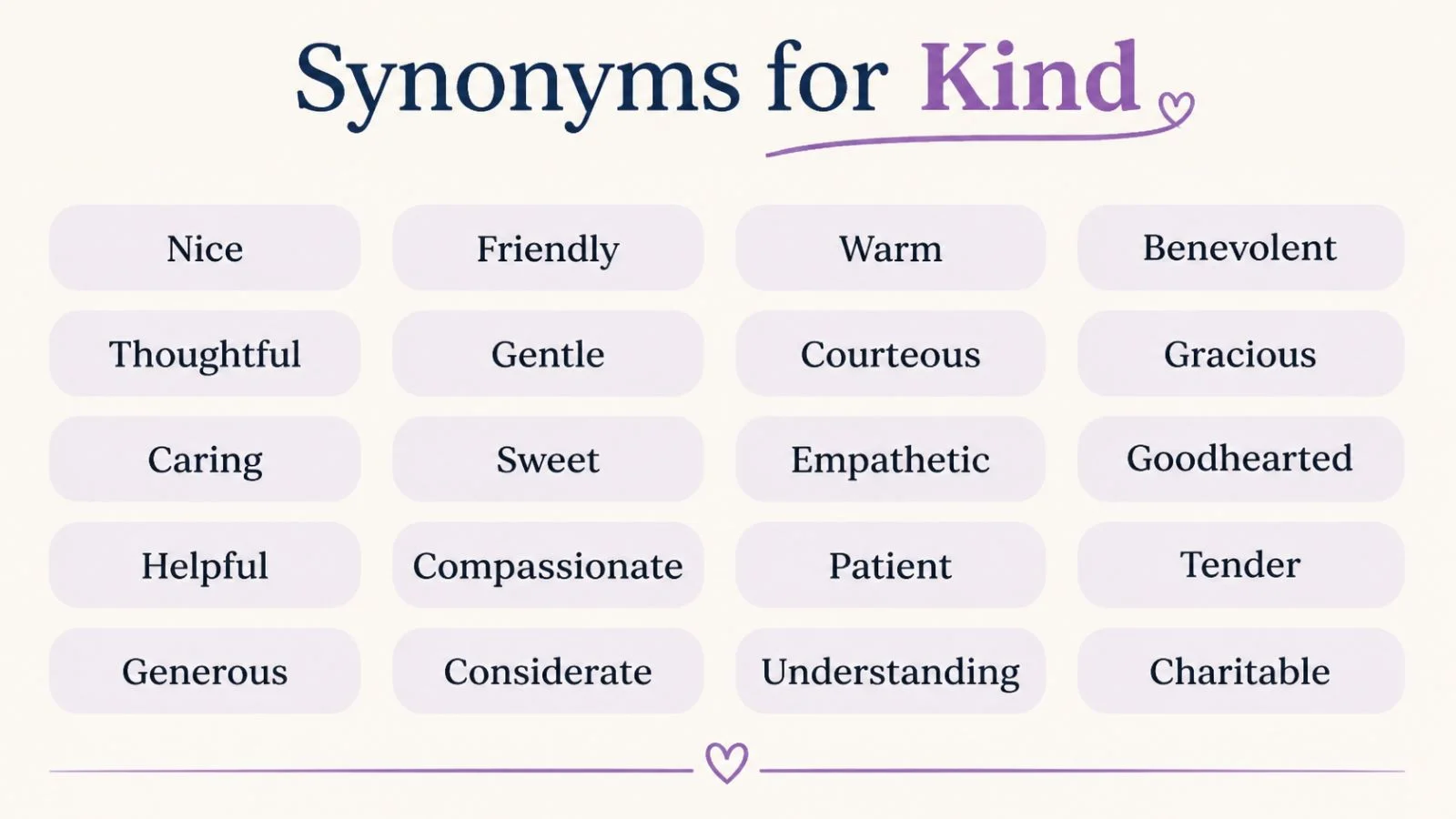
Another word for kind is nice, caring, or considerate. You can also say thoughtful, generous, or gentle. The best choice depends on what you want to say. Some words fit warm people. Others fit gifts, acts, or soft treatment.
Kind also has a second meaning. As a noun, it means a type or sort of thing. In that case, words like type and variety work better.
Quick list: nice, caring, considerate, thoughtful, generous, gentle, compassionate, helpful, benevolent, type.
This article covers 30 alternatives. Each one has a meaning, IPA, a usage note, and an example. You will also see tables, word pairs, idioms, and common mistakes.
At a Glance: Kind Synonyms and Related Alternatives
| Alternative | Part of Speech | Meaning | Register / Tone | Ideal Context |
| Nice | Adjective | Pleasant and friendly | Informal | Everyday talk |
| Caring | Adjective | Shows concern for others | Neutral, warm | Family, health, support |
| Considerate | Adjective | Thinks about others’ needs | Neutral | Manners, shared spaces |
| Thoughtful | Adjective | Shows care through small acts | Neutral, warm | Gifts, messages |
| Generous | Adjective | Gives freely | Neutral | Money, time, praise |
| Gentle | Adjective | Soft and careful | Neutral | People, touch, voice |
| Compassionate | Adjective | Feels and acts on others’ pain | Formal, warm | Suffering, care work |
| Helpful | Adjective | Ready to assist | Neutral | Service, teamwork |
| Benevolent | Adjective | Wishing and doing good | Formal | Leaders, charities |
| Type | Noun | A group with shared traits | Neutral | Sorting, describing |
Which Word Should You Use?
| If you want to… | Use | Why |
| Praise someone in casual talk | Nice | It is short and common. |
| Show someone cares about feelings | Caring | It stresses concern. |
| Thank someone for a small act | Thoughtful | It shows they noticed your need. |
| Describe a person who gives a lot | Generous | It focuses on giving. |
| Describe soft treatment | Gentle | It shows low force and care. |
| Describe a leader or donor | Benevolent | It sounds formal and fits power. |
| Describe care for someone in pain | Compassionate | It shows deep feeling for suffering. |
| Mean “sort” instead of “caring” | Type | It fits the noun sense. |
Exploring the Multiple Meanings of “Kind”
1. Caring and Friendly
- Meaning: Having a warm nature and wanting to help others.
- Explanation: This is the most common sense. It describes a person’s character, not one single act.
- Example: She is kind to everyone she meets.
2. A Helpful or Generous Act
- Meaning: Done to help or please someone.
- Explanation: Here, kind describes an act, not a person. People often use it in polite requests.
- Example: Thank you for your kind offer to drive me home.
3. Gentle or Not Harmful
- Meaning: Mild and not harsh on a person or thing.
- Explanation: This sense often follows “to.” It also fits products and weather.
- Example: This soap is kind to sensitive skin.
4. Type or Sort (Noun)
- Meaning: A group of people or things with shared traits.
- Explanation: This noun sense is common in speech. It often appears in “this kind of” or “all kinds of.”
- Example: What kind of music do you like?
5. Basic Nature or Quality (Noun)
- Meaning: The core nature of a thing.
- Explanation: This sense is more formal. It appears in phrases like “different in kind.”
- Example: The two problems differ in kind, not just in size.
6. Payment With Goods or Acts (Noun)
- Meaning: Goods or services given instead of money.
- Explanation: This sense appears almost only in the phrase “in kind.”
- Example: The farmer paid the workers in kind with food.
Sources: Merriam-Webster; Collins English Dictionary; Dictionary.com; Etymonline.
Analyzing 30 Kind Alternatives in Detail
Some words below are direct synonyms of kind. Others are related words that fit only certain contexts.
Everyday Alternatives
1. Nice
IPA: (US and UK) /naɪs/
Definition: Means pleasant and friendly. It also shows that someone treats others well.
- Usage: This is the most common everyday choice. However, it is vague, so “kind” often says more.
- Example: My neighbor is nice to everyone on our street.
2. Friendly
IPA: (US and UK) /ˈfrɛndli/
Definition: Means warm and easy to talk to. It also shows a person welcomes others.
- Usage: This is a related word, not an exact synonym. A friendly person is not always kind in deeds.
- Example: The friendly clerk helped me find my seat.
3. Considerate
IPA: (US and UK) /kənˈsɪdərət/
Definition: Means careful about how your acts affect others. It also shows respect for their needs.
- Usage: This word fits manners and shared spaces. For example, a considerate guest keeps the noise down.
- Example: He was considerate and turned his music down at night.
4. Thoughtful
IPA: US /ˈθɔtfəl/ · UK /ˈθɔːtfʊl/
Definition: Means showing care through small, well-chosen acts. It also shows you noticed what someone needs.
- Usage: This word fits gifts and messages. In fact, it can also mean “deep in thought.”
- Example: The card was a thoughtful way to say thanks.
5. Good-Natured
IPA: US /ˌɡʊd ˈneɪtʃərd/ · UK /ˌɡʊd ˈneɪtʃəd/
Definition: Means calm, friendly, and slow to get angry. It also shows an easy temper.
- Usage: This is a related word. It shows a mild nature, but not always active care.
- Example: Our good-natured teacher laughed at the mistake.
Caring and Warm Alternatives
6. Caring
IPA: US /ˈkɛrɪŋ/ · UK /ˈkeərɪŋ/
Definition: Means showing concern for other people. It also shows a wish to look after them.
- Usage: This is a close synonym. It fits family, health care, and close bonds.
- Example: She is a caring nurse who knows every patient’s name.
7. Kind-Hearted
IPA: US /ˌkaɪnd ˈhɑːrtɪd/ · UK /ˌkaɪnd ˈhɑːtɪd/
Definition: Means kind by nature. It also shows deep, true goodwill.
- Usage: This is a direct synonym. However, it describes a person’s character, not a single act.
- Example: A kind-hearted stranger gave us a ride in the rain.
8. Warm-Hearted
IPA: US /ˌwɔːrm ˈhɑːrtɪd/ · UK /ˌwɔːm ˈhɑːtɪd/
Definition: Means full of love and goodwill. It also shows an open, welcoming nature.
- Usage: This word sounds a little old-fashioned. Still, it fits stories and warm praise.
- Example: The warm-hearted baker gave free bread to the people .
9. Compassionate
IPA: (US and UK) /kəmˈpæʃənət/
Definition: Means feeling sorrow for another person’s pain. It also shows a wish to help.
- Usage: This word is stronger than “kind.” For example, it suits care for people who suffer.
- Example: The compassionate doctor sat with the family for an hour.
10. Sympathetic
IPA: (US and UK) /ˌsɪmpəˈθɛtɪk/
Definition: Means showing that you understand someone’s trouble. It also shows you share their feelings.
- Usage: This is a related word. However, it does not mean “likable” in English.
- Example: Her sympathetic friend listened to the whole story.
Generous and Helpful Alternatives
11. Generous
IPA: (US and UK) /ˈdʒɛnərəs/
Definition: Means happy to give more than you need to. It also covers money, time, and praise.
- Usage: This fits kind acts that cost something. In fact, a generous person may also be kind.
- Example: He left a generous tip for the waiter.
12. Helpful
IPA: (US and UK) /ˈhɛlpfəl/
Definition: Means ready to give help. It also shows that an act made things easier.
- Usage: This is a related word. It shows use, but not always warm feeling.
- Example: The guide was helpful and answered all our questions.
13. Obliging
IPA: (US and UK) /əˈblaɪdʒɪŋ/
Definition: Means glad to do a favor. It also shows a person who does not make trouble.
- Usage: This word sounds polite and a bit formal. For example, an obliging host says yes to small requests.
- Example: The obliging driver waited while we found the keys.
14. Charitable
IPA: US /ˈtʃɛrɪtəbəl/ · UK /ˈtʃærɪtəbəl/
Definition: Means kind in how you judge others. It also means giving to people in need.
- Usage: This is a related word. However, it often points to giving or fair judgment.
- Example: Be charitable and give her one more chance.
15. Selfless
IPA: (US and UK) /ˈsɛlfləs/
Definition: Means putting other people’s needs first. It also shows no wish for reward.
- Usage: This is a related word. It is stronger than “kind” because it shows real sacrifice.
- Example: The selfless nurse worked a double shift for her team.
Gentle and Mild Alternatives
16. Gentle
IPA: (US and UK) /ˈdʒɛntəl/
Definition: Means soft and careful in how you act. It also fits quiet voices and light touch.
- Usage: This word fits acts, not only people. For example, you can use a gentle voice with a scared child.
- Example: He gave the puppy a gentle pat.
17. Tender
IPA: US /ˈtɛndər/ · UK /ˈtɛndə/
Definition: Means soft and loving in a caring way. It also shows deep care.
- Usage: This word is warmer and closer than “kind.” Still, it often fits moments, not whole people.
- Example: She gave her baby a tender kiss.
18. Soft-Hearted
IPA: US /ˌsɔft ˈhɑrtɪd/ · UK /ˌsɒft ˈhɑːtɪd/
Definition: Means moved easily by other people’s pain. It also shows a weak will to refuse.
- Usage: This is a related word. However, it can hint that someone is too easy to move.
- Example: My soft-hearted dad cannot say no to stray cats.
19. Sweet
IPA: (US and UK) /swiːt/
Definition: Means pleasant and kind in a charming way. It also shows small, caring acts.
- Usage: This word is informal and warm. In everyday English, it often fits small acts.
- Example: It was sweet of you to call me.
20. Mild
IPA: (US and UK) /maɪld/
Definition: Means gentle and not harsh in nature. It also fits weather and soft treatment.
- Usage: This is a related word. However, it shows low force more than active care.
- Example: He has a mild manner and never raises his voice.
Formal and Polished Alternatives
21. Benevolent
IPA: (US and UK) /bəˈnɛvələnt/
Definition: Means wishing to do good for others. It also shows a giving spirit.
- Usage: This word is formal. For example, writers use it for leaders, donors, and charities.
- Example: The benevolent owner paid for the town’s new library.
22. Gracious
IPA: (US and UK) /ˈɡreɪʃəs/
Definition: Means polite, calm, and kind, often to people of lower rank. It also shows good manners.
- Usage: This is a related word. However, it stresses manners more than warm feeling.
- Example: She was gracious in defeat and thanked the winner.
23. Humane
IPA: (US and UK) /hjuːˈmeɪn/
Definition: Means showing care and no cruelty to people or animals. It also fits fair laws.
- Usage: This word fits rules and treatment, not close friends. For example, groups talk about humane care for animals.
- Example: The farm follows humane rules for its animals.
24. Magnanimous
IPA: (US and UK) /mæɡˈnænɪməs/
Definition: Means kind and fair toward a rival or a weaker person. It also shows a big heart.
- Usage: This word is rare and formal. In fact, it often follows a win or a fight.
- Example: The winner was magnanimous and praised her rival.
25. Benign
IPA: (US and UK) /bɪˈnaɪn/
Definition: Means gentle and harmless in nature. It also fits mild people and calm acts.
- Usage: This is a related word. However, it often describes harmless things, such as a benign smile.
- Example: He gave the children a benign smile.
Noun Alternatives (Type or Sort)
26. Type
IPA: (US and UK) /taɪp/
Definition: Means a group of things with shared traits. It also helps you sort things.
- Usage: This is a direct synonym for the noun sense. It works in most settings.
- Example: What type of coffee do you want?
27. Sort
IPA: US /sɔrt/ · UK /sɔːt/
Definition: Means a kind or type of person or thing. It also feels casual.
- Usage: This is a close synonym of the noun “kind.” However, it sounds more relaxed than “type.”
- Example: She is the sort of person who always helps.
28. Variety
IPA: (US and UK) /vəˈraɪəti/
Definition: Means one form within a larger group. It also fits plants and food.
- Usage: This is a related word. For example, a variety of apple is one kind of apple.
- Example: This variety of tomato grows well in hot weather.
29. Category
IPA: US /ˈkætəɡɔri/ · UK /ˈkætəɡəri/
Definition: Means a named group in a system. It also helps you sort and file things.
- Usage: This is a related word. However, it sounds more formal and exact than “kind.”
- Example: The prize has a category for young writers.
30. Class
IPA: US /klæs/ · UK /klɑːs/
Definition: Means a group of things that share key traits. It also suits science and school.
- Usage: This is a related word. In fact, it often points to a formal grouping.
- Example: Birds belong to the same class of animals.
Sources: Merriam-Webster; Collins English Dictionary and Collins Thesaurus; Dictionary.com.
Kind vs. Nice vs. Generous
These three words overlap, but each has its own focus. First, check what you want to stress.
| Word | Core Idea | Example |
| Kind | Warm care shown in character or acts | He is kind to every child he meets. |
| Nice | Pleasant and easy to like | She seems nice at first meeting. |
| Generous | Giving freely, often more than needed | The generous donor paid the school fees. |
“Nice” is the weakest of the three. Also, “nice” can mean “good” for things, but “kind” fits people and acts only.
Sources: Merriam-Webster; Collins English Dictionary.
Kind and Opposite/Paired Word Pairs
| Word | Paired Word | Note |
| Kind | Unkind | This is the direct opposite. It is mild in tone. |
| Kind | Cruel | This pair is much stronger. It shows harm on purpose. |
| Kind | Mean | This is the common everyday contrast. |
| Gentle | Harsh | This pair fits touch, voice, and treatment. |
| Generous | Selfish | This pair contrasts giving with keeping. |
| Considerate | Thoughtless | This pair fits manners and small acts. |
Not every opposite fits every sense. For example, “unkind” fits acts and words. However, “cruel” fits only serious harm.
Sources: Merriam-Webster; Collins Thesaurus.
Common Word Partners of “Kind”
| Pattern | Common Partners | Example |
| kind + noun | words, heart, gesture, offer, person | A few kind words made her smile. |
| adverb + kind | very, so, incredibly, exceptionally | You are so kind to help us. |
| kind to + noun | animals, skin, others, yourself | Be kind to yourself when you fail. |
| kind of + noun | music, food, person, car | What kind of car do you drive? |
| all/this/that kind of | all kinds of, this kind of | We sell all kinds of fruit. |
| kind enough to | + verb | Would you be kind enough to wait here? |
Sources: Collins English Dictionary; Merriam-Webster; Oxford Collocations Dictionary.
Idiomatic Phrases Featuring “Kind”
1. In kind
- Meaning: With goods or acts instead of money. It can also mean to answer in the same way.
- Example: The shop paid the artist in kind with free meals.
2. One of a kind
- Meaning: Unique, with no equal.
- Example: Her hand-sewn quilt is truly one of a kind.
3. Two of a kind
- Meaning: Two people who are very much alike.
- Example: My brother and his best friend are two of a kind.
4. Nothing of the kind
- Meaning: Not at all, or the opposite of what you said.
- Example: He said he was sick, but he was nothing of the kind.
Sources: Merriam-Webster; Collins English Dictionary; Cambridge Dictionary.
Word Formation of “Kind”
Etymology & Structure
Kind is a short, base word. It comes from Old English gecynde, which meant natural or born in. It is linked to cynn, the root of “kin.” So the old idea was “of the same family.”
Date and History
The noun is very old and goes back to Old English. The modern meaning “caring” grew from the idea of acting in a natural, family way. Etymonline places this sense around 1300.
Word Class Variations
- Adjective: kind, kinder, kindest, unkind
- Noun: kind (type); kindness
- Adverb: kindly
- Related forms: kindly (adjective), kindliness, kind-hearted
Sources: Etymonline; Merriam-Webster; Collins English Dictionary.
Common Word-Choice Mistakes
- Kind with her: kind to her.
- These kind of books: these kinds of books (or this kind of book).
- Kindness person: kind person.
- Kind regard: kind regards.
- She is kindly: she is kind (kindly is mostly an adverb).
- He is sympathetic, so he agrees with me: sympathetic means he understands your pain.
- Pay kindly: pay in kind (goods or acts instead of money).
Frequently Asked Questions
What is the closest synonym for kind?
The closest synonyms are caring, kind-hearted, and considerate. Nice is the most common everyday choice.
What is a formal word for kind?
Benevolent is a formal choice. Magnanimous and gracious also sound formal.
What is the difference between kind and nice?
Kind shows real care. Nice only means pleasant and easy to like.
Is kind the same as generous?
No. Generous means giving freely. A kind person may not give a lot.
What is the opposite of kind?
The common opposites are unkind, mean, and cruel. Cruel is the strongest.
Can kind be used for things?
Yes. You can say a soap is kind to skin. It then means gentle.
What does “kind of” mean?
It can mean “type of.” In casual talk, it also means “a little” or “somewhat.”
What is a gentle word for kind?
Gentle, tender, and soft-hearted all fit. They stress soft care.
What is another word for kind as a noun?
Type and sort are the closest choices. Variety and category fit in some cases.
Is kindly the same as kind?
Not always. Kindly is mostly an adverb. It means “in a kind way” or “please.”
Conclusion
The closest alternatives to kind are caring, considerate, and thoughtful. Nice is the easiest everyday choice. Generous and gentle cover giving and soft care.
Context matters most. Compassionate fits pain, while benevolent fits leaders and donors. For the noun sense, use type or sort.
To choose well, ask what you want to stress. Think about the person, the act, and the setting. Then pick the word that fits best.

Emily Davis is a passionate writer who enjoys exploring English vocabulary, synonyms, and language tips to help readers improve their communication skills.
At PressivoMedia.com, she focuses on creating simple, engaging, and informative content that makes learning English easier and more enjoyable.